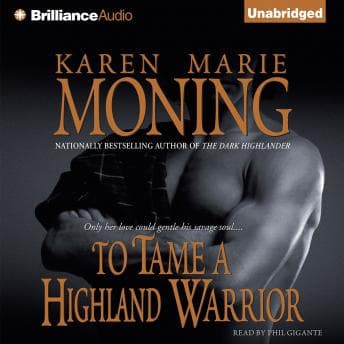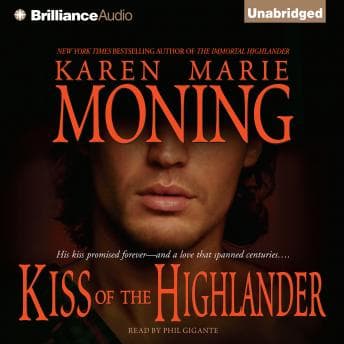

What happens when you throw a fifth-century Highland laird into the modern world and pair him with a woman who says things like 'cherry pickers'? Apparently, you get one of the most entertaining fish-out-of-water romances I've stumbled into in a long time - and I stumbled into it the same way Gwen Cassidy stumbles into that cave. Completely by accident.
I was deep into a late-night coding session, trying to debug a procedural terrain generator for my thesis (Dr. Patel, if you're reading this, I was working), and I needed something to keep my brain from melting. I'd just finished a Sanderson reread and wanted something lighter. A palate cleanser. Something that wouldn't require me to track seventeen magic system rules and a glossary. Kiss of the Highlander showed up in my recommendations, and look - I'm not usually a romance guy. But time travel? Magic? A laird enchanted by a spell and sleeping in a cave for five centuries? That's basically a D&D backstory. I was in.
Drustan MacKeltar Is Basically a Level 20 Fighter With Max Charisma
Karen Marie Moning does something clever here that I didn't expect. The time travel isn't just a gimmick to get a hot Highlander into modern clothes (though there are some genuinely funny scenes of Drustan reacting to modern clothing that had me snort-laughing at 2 AM). The temporal displacement actually matters to the plot. Drustan needs to get back to the sixteenth century to save his people, and the stakes feel real because Moning builds out the MacKeltar world with actual care. The Druids, the magic, the clan politics - it's not Sanderson-level world-building, but it's way more than I expected from a paranormal romance. Though honestly, when I need my post-apocalyptic world-building fix with a bit less romance and a lot more survival grimness, Wasteland Chronicles scratches a completely different itch - proof that genre fiction can pack in real stakes without Sanderson-tier complexity. There's a magic system here, folks. It's soft magic, sure, but it has rules and consequences, and my fantasy-poisoned brain appreciated that.
Gwen is... fine. She's the modern everywoman who's come to Scotland for adventure and gets way more than she bargained for. Some of her dialogue feels dated - the 'cherry pickers' slang thing is a choice that pulled me out of the story a couple times. But her dynamic with Drustan works because the cultural contrast is genuinely entertaining. He's this massive, bewildered warrior trying to process centuries of change, and she's trying to process the fact that she's fallen for a man who doesn't know what a car is. The romantic tension builds well. The progression is satisfying - Moning doesn't rush it, and when Gwen gets swept back to sixteenth-century Scotland, the stakes shift in a way that kept me listening through what should've been my bedtime.
And then there's Dageus MacKeltar, who shows up and immediately steals scenes like a recurring NPC your DM clearly likes more than the main quest. My D&D group would love this guy.
Phil Gigante's Scottish Brogue Is Doing Heavy Lifting
Here's where it gets interesting. Phil Gigante's narration is genuinely the reason this works as an audiobook rather than just a decent read. His Scottish brogue for Drustan and the MacKeltar men is - okay, I'll say it - pretty damn sexy. And I say that as a straight dude from rural Georgia who grew up thinking Sean Connery was peak accent work. Gigante makes you hear the Highlands. The way he drops into that low, rolling burr for Drustan's dialogue, you understand why Gwen loses her mind. The accent creates an atmosphere that I don't think the text alone could fully deliver.
But - and this is real - his female voices are a weak spot. Gwen sometimes sounds a little too high-pitched, a little too breathy, like he's doing "woman" as a concept rather than a specific character. It's not deal-breaking, but coming from someone who worships at the altar of Steven Pacey (who walked so other narrators could run), I notice these things. Pacey does women who sound like actual human beings. Gigante does women who sound like a man doing a pretty good impression of women. There's a gap there.
Still, the emotional beats land. The humor lands especially well - Gigante has good comic timing, and the scenes where Drustan is baffled by modernity get an extra layer of funny through his delivery.
Who's Rolling Initiative on This One
If you're a fantasy reader who's never dipped into paranormal romance, this is actually a solid entry point. The time travel and magic elements give you something to chew on beyond the love story. If you're already a Moning fan, Gigante's narration is apparently the gold standard for her Highlander series, and I get why. If you need hard magic systems and detailed world-building to function, this probably isn't your thing - but it's softer fantasy done with more care than you'd expect.
Skip it if male narrators doing female voices is a dealbreaker for you, or if modern slang in your historical fantasy makes you twitch.
I Should've Been Writing My Thesis
I read this instead of writing my thesis. (I read most things instead of writing my thesis.) But at 11 hours, it's a perfect length - substantial enough to feel like a real commitment, short enough that you don't lose a whole week. I burned through it across two late-night sessions and one long walk across campus, and I don't regret a minute. It's fun. It's warm. The magic has rules. The Highlander is absurdly charming. And Phil Gigante's voice is going to live in my head for a while, right next to Steven Pacey's Logen Ninefingers.
Dr. Patel, I promise I'm getting back to procedural generation tomorrow.