
When did we collectively decide that teenagers should just... coast? Like, at what point did we look at a 16-year-old and think, yeah, Netflix and vibes is a solid developmental plan?
I picked this up because Emma is seven and Lucas is five, and I know the teen years are barreling toward me like a shopping cart with a wobbly wheel. I figured I'd get a head start. And honestly? This book gave me some things to chew on - but also left me chewing my lip a bit.
The "Your Kids Are Capable of More" Pep Talk I Didn't Know I Needed
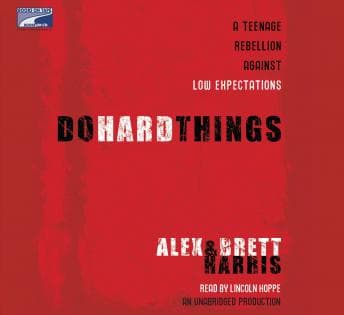
Alex and Brett Harris wrote this as teenagers themselves, and the core message is genuinely good: stop treating adolescence like a waiting room. They push back hard against the cultural expectation that teens should just survive high school, maybe do some extracurriculars for the college app, and otherwise exist in this holding pattern until "real life" starts. They back it up with historical examples - kids in previous centuries running farms, apprenticing, taking on serious responsibility way before 18. And modern examples too, like teens who started nonprofits or organized community campaigns.
The practical framework they lay out - doing hard things in five categories from stepping outside your comfort zone to doing things better than expected - is actually pretty useful. I could see myself referencing this when my kids are older and claiming they "literally cannot" empty the dishwasher. (Lucas already says this about picking up Legos. He's five. We're in trouble.)
Lincoln Hoppe narrates, and the man is solid. He's got that warm, slightly energetic tone that works for motivational content without veering into infomercial territory. Nine AudioFile Earphones Awards, and you can hear why. He keeps the pace conversational, which helps because at under six hours, this is a quick listen. I knocked it out across three nap times and one very generous car-sitting session.
The Part Where It Gets a Little... "Us, Though"
Here's where I have to be honest. The Harris twins were homeschooled, raised by a well-known Christian author (their dad is Gregg Harris), and had access to platforms and networks that most teens simply don't. And while they acknowledge privilege in passing, there's this undercurrent of "look what WE did at 16" that can feel - how do I put this - a little tone-deaf? Like, yes, you organized a political campaign as teenagers. That's impressive. But also, not every kid has parents who can facilitate that kind of thing.
Some sections read like a highlight reel more than a how-to. The writing sometimes rushes past the HOW to get to the WHAT, and as a former marketing manager, I recognize that move. It's the sizzle reel without the full strategy deck. You get pumped up, but then you're left wondering about the actual playbook for a regular kid in a regular school with regular resources.
The Christian framework is woven throughout - this isn't a secular motivational book wearing a faith-adjacent jacket. It's firmly rooted in doing hard things "for the glory of God," with biblical references and church community examples. If that's your family's lens, great. If it's not, some sections will feel like they're speaking past you.
Who Should Press Play (And Who Should Keep Scrolling)
This is genuinely good for Christian families with kids approaching or in their teen years. It's a conversation starter more than a comprehensive guide. I could see handing this to a 13-year-old and then actually talking about it together - the conversation guide they added helps with that.
But if you're looking for something with real tactical depth on teen development, or if you want a perspective that accounts for kids who don't have a built-in support structure, you might finish this feeling a little hungry. Not bad-hungry. Just... "okay, now what?" hungry. That gap between inspiration and practical scaffolding is something I kept bumping into — I Need Your Love - Is That True? left me with a similar itch, that feeling of being handed a compelling reframe without quite enough handholds for the climb down.
The audiobook length is perfect for busy parents - under six hours means you can actually finish it, which in my world is high praise. Hoppe's narration is clean and engaging. At 1.25x it flew by.
My Minivan Verdict
I'm glad I listened to this. The core message - that we're underselling our kids by expecting so little of them - genuinely shifted something in how I'm thinking about parenting even my little ones. But the execution wobbles between inspiring and self-congratulatory in ways that kept pulling me out. It's a good book with a great thesis and an okay follow-through. Survived 47 pauses and still made sense. Worth the nap times, but probably not a credit when your library app can handle it.