
Look, I need to get something off my chest. I'm a fantasy guy. Dragons, magic systems, 40-hour epics about chosen ones—that's my wheelhouse. So when I tell you I just burned through a Louis L'Amour western in basically two sittings, you should understand how weird that feels. Like finding out your D&D dungeon master secretly runs a book club for romance novels.
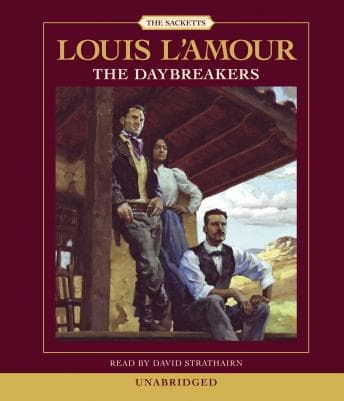
But here we are. Daybreakers got me.
The Sackett Brothers Are Basically a D&D Party
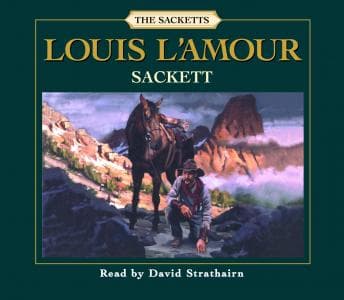
Okay, hear me out. Tyrel and Orrin Sackett are the classic fighter-paladin duo. Tye's the quick-draw specialist with a dark past (had to kill a man back in Tennessee, as one does), and Orrin's the charisma-based lawman who brings order to chaos. They even pick up allies along the way—it's a party composition, I'm telling you. L'Amour was writing campaign notes before campaign notes were cool.
The world-building here is... different from what I'm used to. There's no 200-page appendix on the history of the frontier. No magic system to diagram. But the sense of place is real. The dust, the danger, the way every stranger could be your last conversation. L'Amour drops you into 1870s New Mexico Territory and trusts you to figure it out. It's economical storytelling—something I should probably learn from instead of writing thesis chapters that my advisor keeps calling "unnecessarily elaborate." Comstock Lode has that same trust-the-reader energy, but with even more historical texture baked in.
(Don't tell Dr. Patel I said that.)
David Strathairn's Voice Is Pure Campfire
So the narration. David Strathairn has this smooth, almost hypnotic quality that some listeners apparently found too slow. And yeah, I get it—if you're coming from a thriller or something action-heavy, this pacing might feel like molasses. But here's the thing: westerns are supposed to breathe. The slow burn is the point.
Strathairn doesn't do the wild character differentiation that someone like Steven Pacey would bring. He's not giving you twelve distinct voices for twelve distinct characters. It's more... atmospheric. Like he's the old-timer at the bar telling you what really happened out there. The characters come through, but it's subtle. Some folks want fireworks; this is more like a steady flame.
I listened to most of this while debugging a procedural generation algorithm that was spawning trees inside buildings. (The thesis, she calls.) Something about Strathairn's delivery made the frustration bearable. That's worth something.
Where It Drags (And Where It Doesn't)
I'm not gonna pretend this is flawless. Some reviewers complained about character development, and... they're not entirely wrong? L'Amour is more interested in action and atmosphere than deep psychological portraits. Tye tells you who he is through what he does, not through internal monologue. If you need your protagonists to have therapy sessions, this isn't for you.
The pacing criticism is fair in spots. There are stretches where the journey from point A to point B feels exactly as long as it would actually take. At six hours and change, it's not a huge commitment, but I can see someone bouncing off the slower sections. I'd actually recommend 1.25x speed if you're an impatient listener—keeps the vibe without the drag.
But when things pop off? They pop off. Gunfights are quick and brutal. L'Amour doesn't linger on violence the way modern grimdark does, but there's weight to it. Consequences. My D&D group would love this energy for our next campaign.
Who Should Saddle Up (And Who Should Stay in Town)
Fantasy readers looking for a palette cleanser between massive epics—this is your jam. Same goes for anyone who wants something to throw on during a long drive or while pretending to work on their thesis. Skip it if you need deep psychological character work or can't handle pacing that actually breathes.
Rolling a Natural 20 on the Reread?
Here's my honest take: Daybreakers isn't going to replace Stormlight Archive in my rotation. It's not trying to. But as something between massive fantasy epics? As background for debugging sessions? It's solid.
The Sackett series apparently has like seventeen books, and I can see myself dipping back in. There's something comforting about L'Amour's world—good guys are good, bad guys get what's coming, and justice has a fast draw. It's not complicated. Sometimes that's exactly what you need.
Strathairn's narration won't blow your mind, but it'll carry you through. If you've never tried a western audiobook, this is a decent entry point. If you're already a L'Amour fan, you probably don't need me to tell you anything.
Now if you'll excuse me, I have a thesis to ignore and a Sanderson reread calling my name.