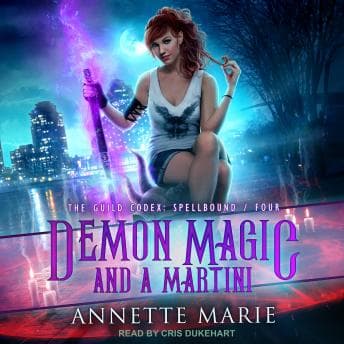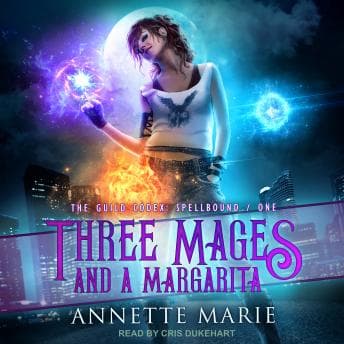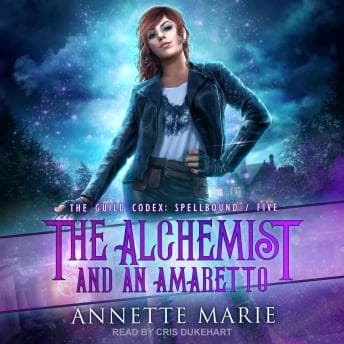
Look, I need to be upfront about something: this is not my usual lane. I'm the guy who will spend forty-five minutes explaining Allomancy to someone who didn't ask. I read thousand-page epic fantasies for fun. So when I say I burned through Dark Arts and a Daiquiri in basically one sitting while sorting my board game shelf at 1 AM (the Gloomhaven insert wasn't going to organize itself), you should understand what that means coming from me.
People compare this to The Dresden Files a lot, and I get why - human protagonist navigating a magical underworld, first-person snark, escalating danger. But that comparison kind of undersells what Annette Marie is actually doing here. Dresden is a wizard solving problems. Tori, the protagonist of this book, is a completely mundane human who accidentally stumbles into a bartending gig at a mage guild and just... rolls with it. She has zero powers. None. She's the bard who dumped all her stats into Charisma and is somehow still alive at the end of the session. The closest comparison I can think of for that "completely out of their depth but somehow thriving" energy is actually HALO: Hunters in the Dark, where the human characters are constantly negotiating survival inside a world of forces that vastly outclass them — though that one swaps cocktails for Forerunner ruins.
The "Human in a Mage Bar" Setup Actually Works
Here's what I didn't expect: the guild itself is genuinely fun world-building. Not Sanderson-level world-building - the magic system doesn't have hard rules that get explained in detail, and if you're looking for that, this isn't for you (but you're wrong). It's more like... the vibe of walking into a really specific local bar where everyone knows each other and you're the new person. The Crow and Hammer guild operates with its own internal politics, hierarchy, and culture. Tori learns about different magical classifications - mages, sorcerers, alchemists, witches, psychics - and they're treated as distinct social groups within the guild rather than just different flavors of spell-slinging. The way guild members talk about "MPD" (the magical police, basically) feels lived-in, like how my D&D group talks about the town guard - with a mix of grudging respect and "please don't notice us."
The three male leads - Aaron, Kai, and Ezra - could easily have blurred together into generic Hot Magic Guys, but Marie gives them distinct dynamics. Aaron is the impulsive golden retriever of the trio. Kai is colder, more calculating, the one who actually thinks through plans. And Ezra is quieter, with something clearly wrong underneath the surface that the book keeps hinting at without fully revealing. That slow drip of "what is Ezra's deal" is genuinely the thing that made me queue up book two immediately.
Cris Dukehart Nails the Snark, Wobbles on the Dudes
Dukehart's performance is solid for what this book needs. Her Tori voice - dry, self-deprecating, a little incredulous at the magical nonsense happening around her - lands really well. The comedic timing on Tori's internal monologue is good. When Tori's narrating her own terrible decisions in real time (volunteering as bait for a dark-magic criminal, for instance), Dukehart hits that "I know this is dumb but I'm doing it anyway" energy that the character requires.
Where it gets a little wobbly is the male characters. The three guys don't sound as distinct from each other as I'd like. Aaron and Kai especially kind of blend together vocally - I sometimes had to rely on context clues and dialogue content to figure out who was talking rather than the voice itself. It's not a dealbreaker, but if you're someone who needs instant vocal recognition for every character (and I am that person, Steven Pacey ruined me), it might bug you.
The pacing of the narration is mostly smooth, though there are stretches in the middle - when Tori's settling into guild life before the main plot kicks in - where I bumped it up to 1.25x and didn't miss a thing.
So Who's This Actually For?
If you want gritty, dark urban fantasy, this ain't it. The tone is light. Fun. The stakes are real but the voice is breezy. Think of it as comfort-food fantasy with a side of slow-burn romance setup. At 7 hours and 40 minutes, it's practically a palate cleanser between bigger series. I read this instead of writing my thesis, which - okay, that's true of literally everything I consume, but the point is it went down easy.
If you're a Dresden Files fan who wishes Harry had less brooding and more cocktail-mixing, you'll dig this. If you've ever played a non-magical character in a D&D campaign full of wizards and just leaned into the chaos, Tori is your spirit animal. My D&D group would love this - specifically our rogue who keeps trying to open a tavern mid-dungeon.
But if you need hard magic systems, deep lore, or something that challenges you? Skip this one. It's candy. Good candy. The kind you eat the whole bag of and don't regret.
The progression is satisfying - Tori goes from terrified outsider to someone who belongs in this world, and book one is clearly setup for a longer arc. That Ezra mystery alone is enough to keep pulling me through the series. Already started book two during my morning code compile. Dr. Patel can wait.