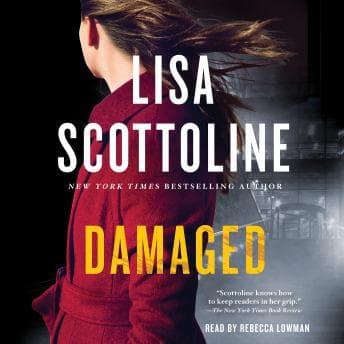

This is not a horror book. Let me get that out of the way. But I'm also a librarian, and when a legal thriller about a dyslexic ten-year-old fighting the system lands on my desk - metaphorically, since I listened to this during a late shift at the branch while reshelving the YA section - I'm going to pay attention. Because kids like Patrick O'Brien? They come into my library every single day.
The Case That Hooks You (And The Details That Won't Let Go)
Scottoline does something clever here. She takes a premise that sounds like a Lifetime movie - shy kid gets accused of attacking a school aide, aide sues, family hires scrappy lady lawyer - and layers it with enough legal specificity and emotional weight that you actually start caring. Mary DiNunzio is the kind of protagonist who overthinks everything, over-cares about everything, and still somehow manages to be effective. She reminded me of the best librarians I know (myself not included, I'm too busy arguing about Shirley Jackson on the internet).
Patrick's characterization is where the book earns its keep. His dyslexia isn't a plot device - it's rendered with enough behavioral detail that you understand how a kid can be simultaneously intelligent and unable to read at grade level, how shame compounds into silence, how adults keep failing him in small, specific ways. The scene where his grandfather tries to help with homework and gets it completely wrong? That one sat with me.
But here's where I have to be honest: Scottoline has a habit of explaining things you've already figured out. She'll set up a great emotional beat and then spend two paragraphs making sure you understood it. It's the literary equivalent of someone telling a joke and then explaining why it's funny. At thirteen and a half hours, this book could've been ten with tighter editing. The legal procedural sections - depositions, discovery motions, courtroom maneuvering - are detailed to the point where you either love that kind of granularity or you start mentally reorganizing your bookshelves.
(I literally started reorganizing my bookshelves. At the library. During my shift. The pacing broke me for about forty minutes in the middle stretch.)
Rebecca Lowman Does The Heavy Lifting
Here's the thing about narrating a legal thriller with a child at its center: you have to thread a very specific needle. Too much emotion and it becomes manipulative. Too clinical and you lose the human stakes entirely. Lowman finds a middle ground that mostly works. Her enunciation is precise - almost surgically so - and she handles the courtroom scenes with the kind of measured clarity that makes you feel like you're actually sitting in on proceedings.
Her male voices are competent without being cartoonish. Patrick's grandfather sounds appropriately weathered. Mary DiNunzio gets this warm Philadelphia energy that feels lived-in. Where Lowman stumbles is in some of the dialogue exchanges, particularly when Scottoline's writing gets a little stilted. There are moments where characters say things no human would actually say - legal exposition disguised as conversation - and no narrator alive could make those lines land naturally. Lowman tries. You can hear her trying. Sometimes she saves it, sometimes it just sounds like someone reading a textbook with feeling.
The narrator commits in the emotional scenes, though. That's rare. The sections dealing with Patrick's distress, with the family secrets that start surfacing in the second half - Lowman handles those with restraint that actually amplifies the impact. She doesn't push for tears. She lets the silence between sentences do the work.
Who This Is Actually For (And Who Should Walk Away)
If you're a Scottoline fan, you already know what you're getting and you're going to enjoy this. If you're new to the Rosato & DiNunzio series, this works fine as a standalone - the firm dynamics are sketched in quickly enough that you won't feel lost.
But if slow pacing makes you reach for the skip button, or if detailed legal procedure isn't your thing, bump this to 1.25x speed minimum. I'm serious. The story underneath the procedural padding is genuinely affecting - it's about who protects kids when every system designed to help them fails. That's a story worth telling. It just takes its time getting there.
If you scare easily - wait, wrong genre. If you bore easily during discovery motions, skip. If you don't, and you want a legal thriller with actual emotional stakes about actual vulnerable people, this is solid work.
Closing Arguments
Shirley (my cat, not Jackson) fell asleep on my lap during the middle section, and honestly, same energy. But by the final two hours, I was locked in. The twists aren't shocking so much as they're satisfying - pieces clicking into place that you half-suspected but couldn't prove. Like a good closing argument, Scottoline saves her best material for last. It's not the tightest legal thriller I've listened to this year, but it might be the most humane one. And sometimes that's enough. The only other thriller I've finished recently that prioritized emotional stakes over clockwork plotting was Kill Alex Cross — different genre energy entirely, but that same insistence that the human cost of a case matters more than the procedural machinery around it.