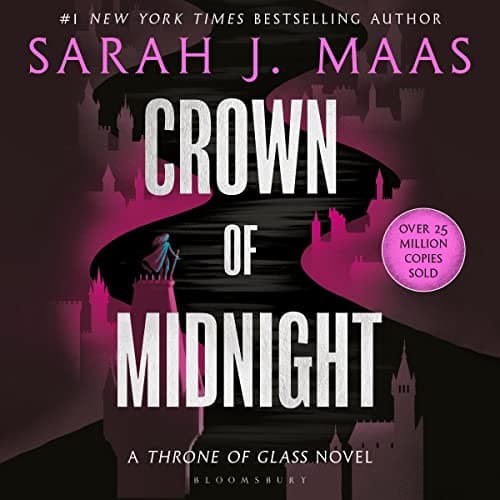

I was supposed to be debugging a procedural dungeon generator for my thesis at 1 AM. That was the plan. Instead I was three hours deep into Crown of Midnight, sitting cross-legged on my apartment floor surrounded by a graveyard of empty Dr Pepper cans, whispering "no no no no" at my phone like a lunatic. Dr. Patel, if you're reading this — I regret nothing.
So look, I came into this one a little skeptical. I read Throne of Glass (book one) and thought it was fine — fun assassin premise, decent setup, but it felt like Maas was still figuring out what kind of story she wanted to tell. My full thoughts on that one are over in my Throne of Glass review, where I also got into Evans's narration at that earlier, rougher stage. Crown of Midnight is where she decides. And she decides to rip your heart out.
Celaena Stops Playing Pretend
The thing that surprised me most about this book is how much darker it gets compared to the first one. Celaena is technically the King's Champion now, which means she's supposed to be his attack dog — killing whoever he points her at. But she's been faking the kills, and the tension of that double life is the engine driving everything forward. You feel the walls closing in. Every chapter, the lie gets harder to maintain, the stakes get nastier, and Maas keeps layering in political intrigue and hints of something much bigger and more magical lurking underneath.
And then there's The Scene. If you've read it, you know exactly which one I mean — the Nehemia chapter. I'm not going to spoil it, but I will say this: the way Celaena's entire worldview cracks open in that moment, and the rage and grief that follows, is genuinely affecting. It's not Sanderson-level world-building (we'll get there), but Maas does something Sanderson doesn't always do — she makes the emotional devastation feel personal and immediate. Like someone punched through the page and grabbed you.
The magic system starts to take shape here too. There are Wyrdmarks, Wyrdkeys, portals to other dimensions, ancient evils — and I'll be honest, it's still a little fuzzy around the edges. If you're someone who needs hard magic rules, Brandon-style, with clear costs and limitations? This ain't that. It's more of a "vibes and lore" system right now, which works for the story Maas is telling but might frustrate the spreadsheet-magic crowd. (I am the spreadsheet-magic crowd. I survived.)
Elizabeth Evans Levels Up Her Build
Elizabeth Evans's narration noticeably improves from book one. Her Celaena has this cold, controlled edge when she's performing for the court, and then cracks into something raw and desperate in the private moments — especially after Nehemia. The pacing shifts are smart too; Evans speeds up during the action sequences without losing clarity, and slows down when Maas wants you to sit in the emotional wreckage.
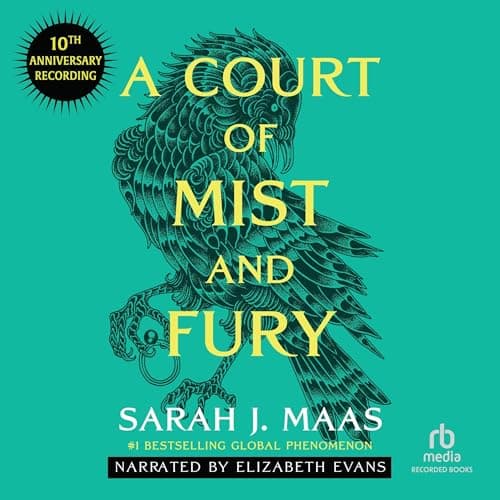
Here's where I have to be fair though: the male voices are a weak point. Chaol and Dorian sound pretty similar — both land in this sort of low, generically masculine register, and in scenes where they're talking to each other, I occasionally lost track of who was speaking. It's not a dealbreaker, but when you've been spoiled by Steven Pacey giving every single character in First Law a voice so distinct you could identify them blindfolded? You notice the gap. Evans is genuinely good — her Celaena and Nehemia voices are clearly differentiated and emotionally true — but the male side of the cast needed more work. You can hear how much she grows into a larger, more demanding cast later — check out A Court of Silver Flames (10th Anniversary Recording), where the emotional range she brings to Nesta is something else entirely.
No sound effects, no music, no full cast. Just Evans and the text. Standard production, clean audio, no complaints on the technical front.
The Romantasy Question (And Why I Don't Hate It)
Okay yes, there's a love triangle. Yes, there are feelings. Yes, Tom Bradley, D&D nerd and LitRPG defender, listened to the Chaol romance scenes and felt things. The relationship stuff actually works because Maas ties it directly into the political stakes — Celaena's feelings for Chaol are dangerous specifically because of their positions, and the tension between trust and duty gives the romance actual weight instead of just being decorative. It's not Legends & Lattes cozy — it's more like "we might both die because of this" romance, which hits different.
The book does have a cliffhanger ending that sets up Heir of Fire pretty aggressively. There's a major identity reveal near the end that recontextualizes a LOT of what came before, and if you're not planning to continue the series, this book will leave you dangling. Consider yourself warned.
Who Gets the Loot (And Who Should Pass)
Pick this up if you liked the first Throne of Glass and want to see Maas actually commit to the darkness. If you're a fantasy romance reader who wants real political stakes with your ship, this delivers. Skip it if you need hard magic systems with clear rules, or if similar-sounding male character voices are going to drive you up the wall during long listening sessions.
At 12 hours and 43 minutes, it's a reasonable commitment — not the 40-hour behemoth I usually recommend, but solid for a road trip or a week of commutes. I read this instead of writing my thesis. My D&D group would love the Wyrdmark lore. Dr. Patel would not love my productivity chart this week.