
So here's the thing everyone tells you about A Court of Silver Flames: it's Nesta's book, it's spicy, it's a redemption arc. What nobody prepared me for is how much it feels like watching someone build a character sheet from scratch - and I mean that in the most complimentary, progression-fantasy-adjacent way possible.
I started this one at 2 AM, deep in a coding session where my procedural terrain generation was producing what can only be described as eldritch nightmares instead of mountains. Dr. Patel would not have been proud. But Nesta Archeron spiraling through her own personal abyss while I debugged mine? Oddly appropriate. We were both staring into the void. She was just doing it with more alcohol and spite.
Nesta Archeron Is a Barbarian With a 20 in Charisma She Refuses to Use
Let me be real - I didn't expect to connect with Nesta. In the previous ACOTAR books she's basically the NPC who keeps rolling Intimidation checks against the party. But Maas does something genuinely clever here: she strips Nesta down to nothing - no allies, no purpose, barely any self-preservation instinct - and then rebuilds her through physical training, the Blood Rite, and a friendship with Emerie and Gwyn that sneaks up on you like a rogue with Expertise in Stealth.
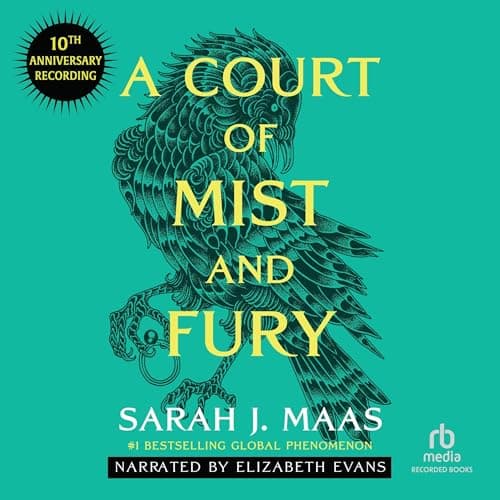
The training montage structure is where this book surprised me. Nesta climbing the ten thousand steps of the House of Wind, gaining strength session by session, failing and trying again - the progression is satisfying in a way that scratches the same itch as good LitRPG. You're watching stats go up. Endurance, confidence, the ability to not tell Cassian to go die every five minutes. That same slow-burn sense of a character earning every upgrade is something I tracked obsessively in A Court of Mist and Fury, where Feyre's arc does something structurally similar - though Nesta's version hits harder because you spend more time actively rooting against her before the turn lands. It's not a magic system exactly, but the Cauldron-forged power she's carrying and learning to wield has that Sanderson-adjacent vibe where the rules matter and the payoff lands harder because of them.
And Cassian. Look, I'm a guy who primarily reads books where people hit each other with swords, and Cassian is the himbo warrior I didn't know I needed as a romantic lead. His patience with Nesta isn't doormat patience - it's "I've fought in centuries of wars and I know when someone is fighting themselves" patience. Their dynamic has genuine friction, not manufactured drama. When they finally stop circling each other, you've earned it.
Elizabeth Evans and the Case for Re-Recording Everything
This is the 10th anniversary recording, and from what listeners are saying, it's a significant step up from the original. Elizabeth Evans was handpicked by Maas herself, and you can feel the intentionality. There's a warmth to her read that fits the emotional core of this book - Nesta's inner monologue doesn't come across as whiny or self-pitying, which is a tightrope act when your protagonist spends the first several hours actively self-destructing.
I'll be honest: my research didn't turn up the granular narrator details I usually want - specific accent choices, voice differentiation between, say, Rhysand and Cassian, how she handles the Illyrian war camps versus the velvet-and-starlight Night Court scenes. What I can say is that listener consensus lands firmly on "this is how these characters should sound," and the 4.86 rating backs that up. Evans clearly understood the assignment. I just wish I had more specifics on the vocal mechanics to give you.
At nearly 23 hours, this is a commitment. Yes, it's 40 hours if you count the ones I spent thinking about it afterward. Yes, it's worth it. But I'd be lying if I said the middle doesn't sag a bit - there's a stretch where the training-and-bickering rhythm gets repetitive before the Blood Rite sequence kicks the stakes back up to eleven. If you're listening at 1x, you might feel it. I bumped to 1.15x during those middle chapters and didn't lose anything.
Who Gets to Sit at This Table (And Who Should Find Another Campaign)
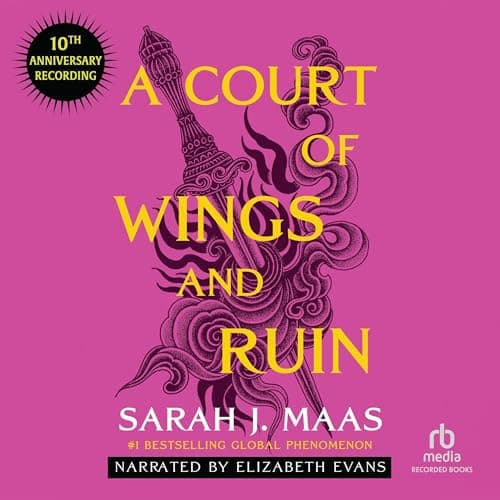
If you're already in the ACOTAR world, this is essential. Full stop. But if you're coming in cold - don't. This is book five in the series and it assumes you know these people, this world, and the events of A Court of Wings and Ruin. You will be lost. Skip this if you haven't read the earlier books, or if slow-burn character rehabilitation bores you more than a four-hour session of inventory management.
If you don't like info-dumps, this isn't for you (but you're wrong). Maas spends real estate on the world-building here - the politics of the human queens, the Illyrian training grounds, the sentient House of Wind that keeps leaving Nesta books and running her baths like an architectural emotional support animal. (My D&D group would love this as a setting detail. A mimic that's actually nice? Revolutionary.)
Content warning: this book has explicit sexual content, descriptions of trauma and self-harm through substance abuse, and graphic violence during the Blood Rite. It doesn't shy away from darkness.
Roll for Emotional Damage
I read this instead of writing my thesis. Again. But here's what sticks with me: Nesta's arc isn't about becoming likable. It's about becoming functional. About choosing to live when living is the harder option. The scene where she finally faces what the Cauldron took from her - not in battle, but in quiet acknowledgment - hit harder than most fight scenes I've listened to this year.
Is this Sanderson-level world-building? No. The magic system is softer, the politics less detailed. But the character work is fierce, the romance earns its payoff, and Elizabeth Evans delivers a performance that makes 23 hours feel like a campaign you don't want to end. If you've been putting off the re-recordings, this is the one to jump back in with.