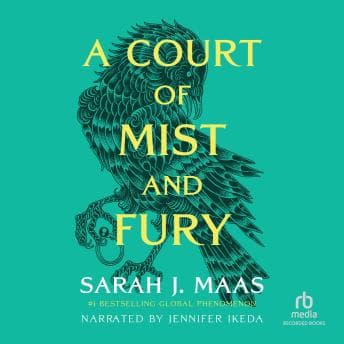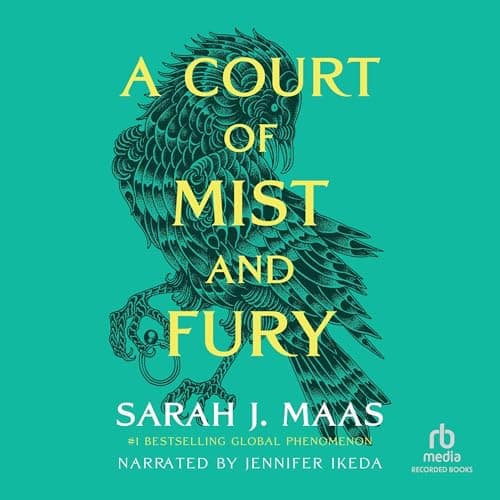

I hit the wedding scene while washing paintbrushes in my kitchen, and I had to just stand there with my hands dripping blue water into the sink because Feyre's dread felt that real. Not cold feet. Not pre-wedding jitters. Full-body spiritual suffocation. And when Rhysand enters that moment like a door getting kicked open in a room with no air left? Yeah. That was when I knew this sequel was doing something way messier and more interesting than the first book.
This book felt like a panic attack slowly turning into a pulse again.
When the fairy-tale dress starts to choke
What Sarah J. Maas does really well here is let Feyre's damage stay ugly for a while. The first third is slow, yes. She's moping, dissociating, having nightmares, barely holding herself together in the Spring Court while everyone around her seems more invested in appearances than in whether she is actually okay. I get why some listeners bounced off that section. If you want immediate action, this opening is going to test your patience.
But emotionally? I needed that drag. I needed the trapped feeling of wedding planning pressing against PTSD, the sense that she's becoming two different people — the one who is supposed to smile beside Tamlin, and the one still tethered to her bargain with Rhysand. That split is the whole engine of the book. If Maas had rushed past Feyre's hollowness, the rest of the story wouldn't land half as hard.
That same patience with grief is what made Girl Who Smiled Beads wreck me so completely — the refusal to skip past the ugly middle part is exactly where the real story lives.
And it lands. Hard.
Because this isn't just "new hot guy enters stage left." It's a book about recovering your own mind after trauma, then asking whether love that cages you still counts as love. Tamlin's controlling behavior is not romanticized here, and thank God for that. The book gets sharp about manipulation, protection used as possession, and how easy it is to confuse being wanted with being seen.
Then the Night Court material opens up, and suddenly the emotional palette changes. Darker, sexier, funnier, more dangerous. The politics widen, Feyre's powers start mattering in a bigger way, and the romance goes from tension to full chemical combustion. The chemistry is chef's kiss. Not because it's just spicy — though yes, there is spice — but because the attraction is woven through with recognition. Rhysand doesn't just desire Feyre. He reads her damage without flinching. My heart. MY HEART.
Jennifer Ikeda gets the ache right
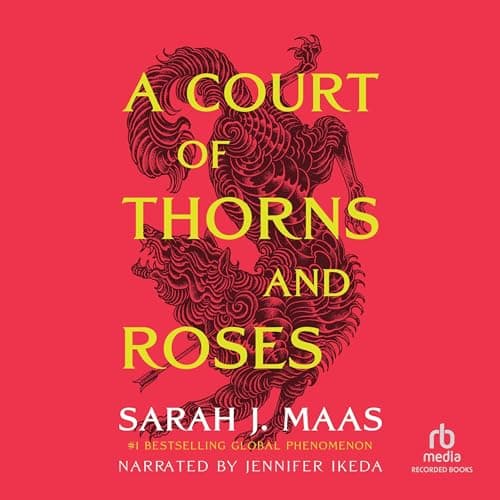
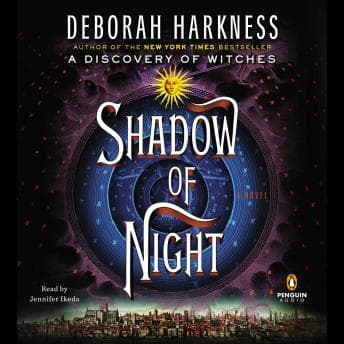
Jennifer Ikeda's performance is why I'd point people to this audio specifically. Her voice has that slight rasp to it, and on a book this emotionally bruised, it works. She brings that same bruised quality to A Discovery of Witches, where the emotional weight of the story actually needs a narrator who doesn't oversell every moment. Feyre's exhaustion sounds lived-in instead of theatrical. Her panic, rage, and those quieter moments of shame all come through with this restrained ache that made me lean in instead of mentally drifting.
And Rhysand? Ikeda gives him a flirtatious edge without tipping into cartoon seduction. It's not some huge alpha-male growl situation — thank God — it's lighter, knowing, almost amused in a way that makes his scenes sparkle against Feyre's grief-heavy interiority. Since this is a single-narrator production with no music or sound effects, all the tension has to come through voice alone. She pretty much pulls it off.
I especially noticed it in two places: that wedding-day sequence before Rhys arrives, where Feyre's internal collapse feels so tight you can practically hear the walls closing in, and the later emotionally vulnerable scenes between Feyre and Rhys, where Ikeda softens just enough to let the tenderness land without draining the tension. She differentiates them more through emotional texture than wildly distinct character voices, which I actually prefer in a long fantasy like this. It keeps the performance intimate.
That said — and this matters — if you need bold, highly theatrical character acting, you may not click with her style. There's a quieter polish to her delivery that some listeners hear as artificial or even slightly robotic. I didn't hear "AI," but I did catch moments where the composure felt a little too neat for the chaos on the page. So if you're someone who wants every side character to sound dramatically different, this may not be your perfect fantasy audiobook. For me, the emotional precision outweighed that by a mile.
Also: listen at 1.0x. This is not a speedrun book. The emotional subtleties, the simmer, the flirtation — they need room.
Who Should Listen (And Who Should Skip)
Pick this up if you like your fantasy romance with actual emotional wreckage attached. If you want a heroine clawing her way back to herself. If the combo of court politics, power shifts, trauma recovery, sexual tension, and dangerous loyalty makes your little reader heart light up like a neon sign.
This is a dedicated-listening book, not a toss-it-on-while-answering-emails book. You can do it on a commute, sure, but only if you don't mind arriving somewhere emotionally compromised.
Maybe skip if you hated Feyre in book one and have no patience for a slow rebuild. Or if toxic relationship dynamics, controlling partners, torture, violence, and PTSD material are hard no's for you. Same goes if you strongly prefer full-cast fantasy or narrators with bigger vocal differentiation.
For me, this is the rare sequel that understands the assignment so completely it makes the first book look like setup. Bigger feelings. Better romantic tension. A sharper emotional thesis. I said something similar about A Court of Thorns and Roses — Ikeda's work there is solid — but honestly that book now reads like a prologue to everything this one does. And an audiobook performance that, for all its quieter choices, knows exactly where the ache lives.
Abuela would have gasped at the romance, judged everybody's decisions, and then absolutely demanded the next one.