
Patterson books are my guilty pleasure and I will not apologize for this.
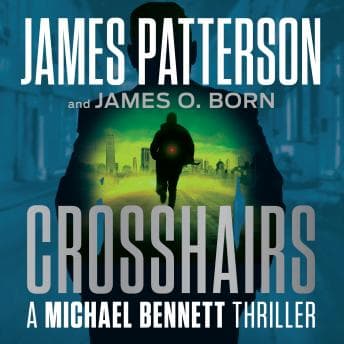
Look, I know. I'm the person who spends forty-five minutes on my podcast dissecting the psychological architecture of Shirley Jackson's prose. But sometimes you want the literary equivalent of a really efficient action movie - something that knows exactly what it is, executes with zero fat, and gets out before it overstays its welcome. Crosshairs is that book. I was shelving returns at the library on a quiet Thursday afternoon with my earbuds in, and I burned through half of it before I realized I'd been putting books in the wrong sections for an hour.
The Sniper You Can't Stop Watching
The setup here is classic Patterson structure - short chapters, constant forward motion, a hook at the end of every scene that makes you feel physically incapable of pausing. But the thing that actually kept me locked in was the Rob Trilling dynamic. Born's law enforcement background bleeds through in how Trilling moves, thinks, and - critically - how his expertise with firearms reads as both deeply competent and deeply unsettling. Bennett's trying to figure out if his new partner is an asset or a threat, and the book keeps you guessing longer than you'd expect from a thriller this lean. I kept flipping my read on Trilling every twenty minutes. Every time I was sure I had it figured out, some new detail would crack my certainty.
At eight hours and change, this thing moves like it's being chased. Which is appropriate, given the subject matter. The sniper precision of the kills early on sets a tone that's less horror and more cold procedural dread - the kind where you realize someone is operating at a level that makes catching them feel almost impossible. That's my favorite flavor of thriller: not gore, not shock, but the slow understanding that the smartest person in the room might be the one doing the killing. Girl on the Train works that same nerve - you spend the whole runtime recalibrating who's dangerous and who's just broken.
Two Narrators, One Investigation
Peter Giles and Will Collyer split duties here, and honestly? The dual narration works better than I expected for a Patterson book. Giles handles the Bennett sections with the kind of steady, streetwise New York energy that Michael Bennett requires at this point in the series - he's been through enough that he shouldn't sound wide-eyed, and he doesn't. Collyer brings something a little more clipped and controlled to the other perspectives, which serves the military precision of the sniper plotline well.
I wouldn't call either performance a revelation - neither narrator is doing anything that made me sit up and rewind to hear a line twice. But they commit. That's rare. They read like they've actually absorbed the pacing Patterson and Born built into those famously short chapters. No dead air. No awkward transitions between the two voices. The handoffs are clean. For a thriller that needs to feel relentless, the narration stays out of the way and lets the momentum do its job.
Where I'll ding it slightly: with the research I've seen, nobody's calling out specific character voices that stuck with them, and that tracks with my experience. The individual characters beyond Bennett don't pop vocally the way they do in, say, a full-cast production. You're getting solid, professional narration - not a performance that haunts you.
Who Needs This (And Who Doesn't)
If you're deep into the Michael Bennett series, you already know the drill and you're probably already listening. If you're new to Bennett, this is actually a decent entry point - you don't need thirteen books of backstory to follow the sniper plot, though some character relationships will obviously land harder with context.
If you want slow atmospheric dread, psychological horror, the kind of thing I normally champion on my podcast - this isn't that. This is a competent, fast thriller that does exactly what it promises. If you scare easily, this won't scare you. If you want a puzzle box that keeps you guessing while you're doing dishes or driving I-5 through the rain, this delivers. Nowhere to Run scratched that exact same itch for me - the kind of audiobook that makes a two-hour drive disappear.
The twist genuinely caught me off guard, which - sixteen books into a series - is worth noting. Patterson and Born earned that one.
Shelved Under: Efficient Thrills
I'm not going to pretend Crosshairs changed my life or kept me up at 2 AM the way a great horror novel does. But I listened to the whole thing in essentially two sittings, I mishelved approximately thirty books because of it, and I'd do it again. Sometimes the best recommendation is the simplest one: it's tight, it's smart enough, and it doesn't waste a single minute of your time. My podcast listeners probably won't hear about this one - it's not my usual lane - but if any of them asked me for a good commute thriller? Yeah. This.