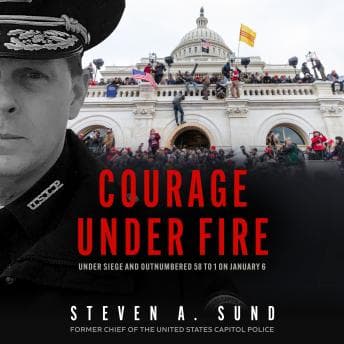

"Three days before the attack, Chief Sund requested the assistance of the National Guard. This request was denied."
That line hit me somewhere around mile marker 12 on the I-10, and I had to pull into a Circle K parking lot because my hands were shaking. Not from fear - from recognition. As someone who's actually worked a code, I know what it feels like to call for backup and hear silence. To be in the middle of chaos, doing everything right, and watching the system fail you anyway. That gut-punch feeling when you realize nobody's coming? Sund captures it with the precision of someone who's relived it a thousand times.
When the Incident Commander Writes the Report
This is a 12-hour listen, and I want to be upfront - it feels like 12 hours. Sund is methodical to a fault. He walks through intelligence briefings, organizational charts, chain-of-command protocols, and security planning with the thoroughness of someone who knows he's writing for the congressional record as much as for the public. The minute-by-minute timeline of the breach itself? Genuinely harrowing. One listener compared it to Black Hawk Down at the US Capitol, and honestly, when Sund describes officers fighting hand-to-hand while being sprayed with bear spray, outnumbered 58 to 1, that comparison doesn't feel like hyperbole. The closest thing I've heard to that kind of ground-level chaos rendered in prose is One Killer Force, though that one's fiction and Sund's version hits harder precisely because it isn't.
But here's where I started arguing with my dashboard: the pacing. The first several hours are dense with bureaucratic setup - meetings about meetings, emails about emails, the organizational structure of Capitol Police intelligence operations. I get why it's there. Sund is building the case that systemic failures, not his leadership, left those officers exposed. And he's right to document it. But there were stretches where I caught myself drifting, which is dangerous when you're driving home at 7 AM after a twelve-hour shift. I bumped it to 1.25x during the administrative sections and dropped back to normal speed once the breach started. Night shift tip: save the attack chapters for when you're alert.
The Man Reading His Own Autopsy
Sund narrates this himself, and that choice matters. His voice isn't polished - he's not an actor, he's a cop who coordinated security for every living president. You can hear where his delivery gets tight, where the anger leaks through when he talks about the Pentagon stonewalling his National Guard requests. There's a rawness when he describes the injuries to his officers - 150 seriously hurt, nine dead - that a professional narrator couldn't fake. He's not performing grief. He's reporting it.
The flip side is that his reading can feel flat during the procedural sections. He reads intelligence assessments and email chains the same way he reads the combat sequences - steady, controlled, factual. Which, look, that's exactly how a career law enforcement executive processes trauma. I recognize that cadence. It's the same voice I use when I'm giving report on a patient who coded and didn't make it. Flat because if you let the emotion in during the details, you can't finish the sentence. But for an audiobook, it means you have to meet him halfway.
What He's Really Saying (And What He's Not)
Let me be direct. This is a man's defense of his own record. He was forced to resign, and this book is his chance to show receipts - and he brings them. Audio recordings, documents, timelines. The case he builds about intelligence failures and the delayed National Guard response is detailed and, frankly, infuriating regardless of where you sit politically.
Some critics call the book politically biased. Some call him a coward. I think both readings miss what this actually is: an incident commander's after-action report dressed up as a memoir. It's the kind of document we write in healthcare after a sentinel event - what happened, what went wrong systemically, and who ignored the warnings. Is it self-serving? Parts of it, sure. He's human. But the documented timeline of his calls for National Guard assistance - and the bureaucratic runaround he got while his officers were being beaten with flagpoles - that's not spin. That's timestamped.
What he doesn't do is grapple much with the broader political context of why thousands of people showed up ready for violence. He stays in his lane - security, intelligence, operational failures. Whether that's discipline or avoidance depends on what you came to this book looking for. I kept thinking about Witch Hunt here — that book swings hard in the opposite direction, wading deep into the political context Sund deliberately sidesteps, and honestly reading them back-to-back would give you whiplash in an instructive way.
Who Needs This in Their Ears
If you work in emergency management, law enforcement, or any field where you've watched bureaucracy fail the people on the ground - this will make your blood pressure spike in a productive way. If you want a comprehensive, source-documented account of the security failures on January 6, this is it.
If you want a fast-paced thriller-style retelling, this isn't that. If you're looking for political commentary or a broader reckoning with what January 6 meant for the country, you'll need a different book. And if you need your audiobook narrators to have range and vocal dynamism - Sund is authentic, but he's not performing.
Carlos asked why I was sitting in the driveway for twenty minutes after I got home. I told him I was finishing a chapter. The truth is I was sitting with that feeling you get after a bad shift - when everything went wrong and you know you did your job, but the system didn't do its. That's what Sund wrote. A bad shift report. The worst one.
My mom would love this. She watches every congressional hearing like it's a telenovela.








![Steve Jobs [unabridged audiobook] audiobook cover](/_next/image?url=https%3A%2F%2Fcovers.audiobooks.com%2Fimages%2Fcovers%2Ffull%2F9788499923406.jpg&w=1920&q=75)