
What if the borders we enforce aren't geographic at all - but perceptual? What if the act of not seeing something right in front of you is the most politically charged thing a citizen can do?
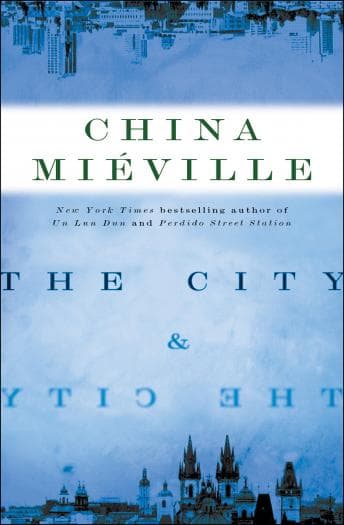
I finished The City & The City last night around midnight, walking the lakefront with Denise while Chicago did that thing it does in late spring where the fog rolls off the lake and the skyline half-disappears. And I thought: this is it. This is Besžel and Ul Qoma. Two cities occupying the same physical space, and citizens trained from birth to unsee the other. Miéville's central conceit hit different out there in the mist, let me tell you.
The Metaphor That Teaches Itself
I've spent twenty years trying to get teenagers to understand how literature works as metaphor. How Orwell's telescreens aren't really about televisions. How Kafka's bug isn't really about entomology. Miéville does something I've never quite seen before - he builds a metaphor so structurally complete that it doesn't need you to decode it. You just live in it.
Besžel and Ul Qoma share streets, share air, share the ground beneath their feet. But citizens of one city must actively unsee the buildings, people, and traffic of the other. Not through technology. Not through magic. Through cultural conditioning enforced by a mysterious authority called Breach. Inspector Borlú, investigating what looks like a routine murder, narrates this world with the tired pragmatism of a cop who doesn't question the system - he just works within it. And that's the knife twist. He's not a rebel. He's a functionary. The horror isn't that the system exists. It's that everyone cooperates.
This reminds me of what Hemingway said about the dignity of movement of an iceberg - seven-eighths underwater. Miéville's political commentary never surfaces as commentary. It's just... the world. You realize somewhere around hour three that you've stopped finding the premise absurd and started finding it familiar. That's when the book has you.
John Lee and the Architecture of Restraint
John Lee narrates this at exactly the right temperature. Cool. Measured. Borlú is Eastern European - the city sits "somewhere at the edge of Europe" - and Lee doesn't overplay the foreignness. He gives Borlú a slight formality in syntax, a careful deliberateness, that feels like a man who thinks in one language and speaks in another. It's subtle work. The prose deserves to be savored, and Lee clearly agrees - he doesn't rush the strange compound words and invented terminology that Miéville loves. Besžel. Ul Qoma. Breach. Orciny. These words need to settle in your ear before they settle in your brain, and Lee gives them room.
Where I wanted more was in the secondary characters. Borlú's Ul Qoman counterpart Dhatt should feel rougher, louder, a different city's cop with a different city's swagger. Lee differentiates them, but not as sharply as I'd have liked. It's a small complaint in what is genuinely excellent narration - the kind where you forget someone is reading to you and start believing someone is telling you.
Why My Students Would Hate This (And Why That's the Point)
Let's talk about what the author is really saying. This is a mystery novel where the mystery is almost beside the point. The murder investigation is competent - Borlú follows leads, interviews suspects, navigates bureaucracy. But Miéville is less interested in whodunit than in the system that makes the investigation possible and impossible simultaneously. There are nationalist groups who want to emphasize the border between cities. Unificationists who want to dissolve it. And then there's the legend of Orciny - a third city hidden in the spaces between the two, in the crosshatched zones where both cities overlap.
My students would hate this. Too slow. Too cerebral. Where's the action? But this is why we still read the classics - or in this case, the books that are becoming classics. I ran into that same student resistance when I wrote up Children of Odin - mythology that demands you sit with it before it opens up, and my instinct was to warn the impatient crowd off that one too. The pacing is a slow burn that rewards patience, and the payoff isn't an explosion. It's a shift in understanding. The narrator understands that pause is punctuation, and Lee deploys silence the way a good actor uses the space between lines.
(I will confess: I tried to explain the premise to Denise and she looked at me like I'd lost my mind. "So they just... don't look at each other?" Yes. Exactly. And it's somehow the most plausible dystopia I've encountered since 1984.)
At ten hours and change, it's the right length. Doesn't overstay. Doesn't rush the ending, which - without spoiling - forces Borlú into a position that reframes everything you thought the book was about. Worth pausing the faculty meeting for. Worth pausing everything for, actually.
Who Gets the Assignment
If you loved Kafka's The Trial or Philip K. Dick's reality-bending paranoia, this is their spiritual successor filtered through a European noir sensibility. If you need action every chapter, skip it. If you listen to audiobooks at 2x speed, you'll miss everything that makes this work. Listen at 1.0x. The author chose those words. Miéville chose every strange, deliberate, brilliant one of them.
The Grade I'd Put in My Own Gradebook
I teach kids that great fiction changes how you see, not just what you see. The City & The City is the rare book that does both - and then asks you to unsee it all. I walked home through Chicago fog and caught myself unseeing the buildings across the street, just for a second, just to feel what Borlú feels. That's the mark of something that got under my skin and stayed there. My students would call that "extra." I call it literature doing its job.