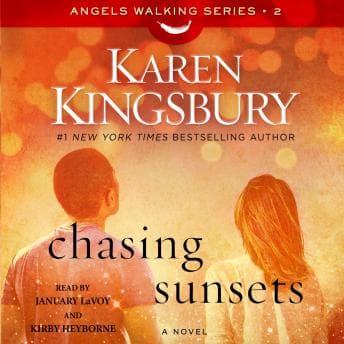

Look, I need to get something off my chest: the opening of this book almost lost me. And I'm a man who teaches seniors to push through the first fifty pages of Moby Dick every single year. The setup — Mary Catherine's backstory, the introduction of her LA life, the roommate dynamic with Sami — it takes its sweet time finding a pulse. I was on my Sunday lakefront walk with Denise, and she actually asked why I kept sighing. I told her it was the wind. It wasn't the wind.
But here's the thing about Karen Kingsbury that I've learned to respect even when I'm not her target audience: she earns her emotional payoffs. She just makes you wait for them.
When the Story Finally Decides to Show Up
Once Mary Catherine's medical diagnosis lands — and I won't spoil it, but the weight of it reshapes everything — this becomes a genuinely different book than the one you started. The first installment in the Angels Walking series was pleasant enough, spiritual comfort food with angel characters who felt a bit like divine customer service agents. Chasing Sunsets pushes harder. Mary Catherine's decision to pull away from Marcus Dillinger right when their romance gains real traction isn't just a plot device — it's the kind of self-destructive sacrifice that people actually make when they're terrified and trying to protect someone they love. Kingsbury gets that psychology right, even if the angel Jag's subplot about wrestling with vengeance feels like it belongs in a different, more ambitious novel that never quite materializes.
The spiritual framework here is going to be the dividing line for listeners. Kingsbury doesn't tiptoe around faith — prayer scenes are frequent, divine intervention is literal, and the characters talk to God like He's in the room. If that's your lane, this will move you. If it's not, you'll feel like you're eavesdropping on someone else's private conversation. I teach Paradise Lost every other year, so I'm comfortable with literature that takes the supernatural seriously. But I'll be honest — the angel mechanics here don't have Milton's rigor. They run on feeling, not theology.
LaVoy and Heyborne Earn Their Paychecks
This is where the audiobook format genuinely elevates the material. January LaVoy handles Mary Catherine with this soft, almost reluctant tenderness — like she's narrating someone who's afraid to want things. It's a specific choice, and it works. When Mary Catherine gets her diagnosis and starts making rash decisions about Marcus, LaVoy's voice tightens just enough that you can hear the character trying to hold herself together. That restraint is harder to pull off than big dramatic crying, and she nails it.
Kirby Heyborne brings warmth to Marcus Dillinger without making him sound like a Hallmark card. There's a scene where Marcus is trying to understand why Mary Catherine is suddenly pushing him away, and Heyborne plays the confusion with genuine frustration rather than wounded-puppy energy. It's a small thing, but it kept Marcus from becoming a cardboard love interest. The narrator understands that pause is punctuation — both of them use silence well, particularly during the spiritual reflection passages, which could easily tip into sermonic if rushed.
The two-narrator structure works cleanly. No jarring transitions, no moments where you forget whose perspective you're in. Simon & Schuster's production is straightforward — no music, no effects, just clean audio and solid performances.
The Kingsbury Question
Here's what I tell my students when they ask why we still read books that don't perfectly align with our worldview: you read to understand how other people experience being alive. Kingsbury writes for readers who see faith as the organizing principle of existence, and she does it with genuine emotional intelligence. Mary Catherine's longing — for purpose, for connection, for a life that matters beyond comfort — is universal even when the framework is specifically Christian. That same ache — wanting connection while believing you don't quite deserve it — runs quietly through Certain Girls, though it arrives through an entirely secular mother-daughter lens. The prose doesn't demand to be savored the way Marilynne Robinson's does, but it's honest and clear and moves with real feeling when it counts.
My students would probably scroll right past this one. But some of their parents — the ones who email me asking for book recommendations at conferences — would find exactly what they're looking for here.
Who This Is For (And Who Should Keep Walking)
If you loved the first Angels Walking book, this is stronger. More emotional stakes, better character work, tighter connection between the human drama and the angel subplot. If you're coming to Kingsbury for the first time, you can start here, but the angel characters will make more sense with Book 1 under your belt.
If inspirational romance with overt Christian themes isn't something you seek out — this won't convert you. No judgment either direction. Know thyself.
The Grade I'd Write in the Margin
I finished this on a Tuesday night while grading sophomore essays about The Great Gatsby. One kid wrote that Gatsby's tragedy is wanting something he can never have. Mary Catherine's tragedy is similar — she wants a life with Marcus but believes her diagnosis makes that impossible. It's not Fitzgerald. But it's doing real emotional work within its genre, and the narration lifts it above the page. Worth the listen if this is your corner of the literary world.