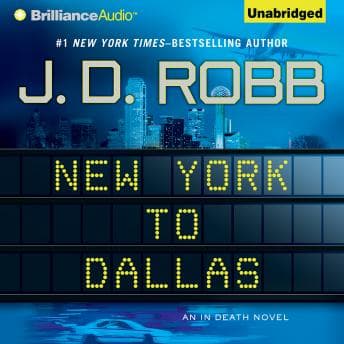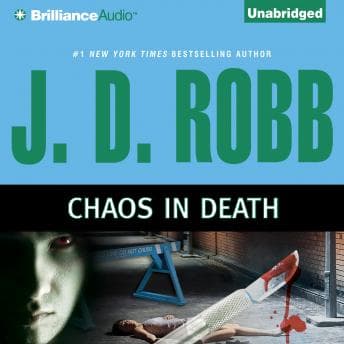

I have a bone to pick with J.D. Robb. Three hours and forty-one minutes is not enough time. I was making dal makhani—the kind that requires actual attention, stirring every few minutes so it doesn't stick—and I finished the audiobook before I finished the dish. That's a problem when you're dealing with a killer who looks like a literal goblin.
Let me explain. The premise here is genuinely fascinating from a psychological standpoint. Medical students—healers, people trained to understand human anatomy with surgical precision—are slicing off ears, noses, and eyes. The killer appears monstrous, green-skinned with a dislocated jaw, and witnesses can barely describe what they saw without sounding unhinged. Research actually shows that when people witness something that violates their expectations of human form, their memories become unreliable, malleable. Eve Dallas is working with sketch artists trying to capture something the human brain refuses to process correctly. That's compelling stuff.
But here's where my psychology brain starts twitching: the motive reveal feels rushed. When you have multiple suspects capable of precise surgical mutilation, you need time to develop the *why* behind each one. What makes someone trained to heal decide to destroy? That transformation—that's the case study I wanted. Instead, we get Eve kicking ass and taking names (which, don't get me wrong, is satisfying) but the psychological depth gets sacrificed at the altar of novella-length pacing.
The Ericksen Effect
Susan Ericksen has been voicing Eve Dallas for so long that she essentially owns the character. Her Irish lilt for Roarke creates an immediate class distinction—you hear money and danger in that accent before he even finishes a sentence. And when she shifts to Chi-Chi's attitude, the vocal posture changes entirely. Ericksen understands that voice acting isn't just about sound; it's about embodying different psychological states.
That said, I noticed something that tracks with what other listeners have complained about: in dialogue-heavy scenes, especially when multiple characters are present, the distinction between voices can blur. There were moments—particularly during Eve's internal monologue versus actual conversation—where I had to rewind because I wasn't sure if she'd said something aloud or just thought it. For a mystery where details matter, that's not ideal.
The emotional delivery, though? Impeccable. When the tension ratchets up around the killer's identity reveal, Ericksen's performance vibrates with urgency. You feel like you're sitting at Eve's shoulder, which is exactly where you want to be.
Healers Who Become Monsters
Eve Dallas exhibits classic hypervigilance patterns—she's a trauma survivor who channels her damage into obsessive case-solving. That's textbook, and Robb writes it well. What I found myself asking: why does the "monster" angle work here when it could easily feel gimmicky? The answer is that the grotesque appearance serves as externalization of internal corruption. These are people who were supposed to heal. Tales of Terror and Mystery plays with similar inversions—respectable figures harboring monstrous secrets beneath civilized veneers. Their transformation into something visibly inhuman mirrors their moral disfigurement.
Psychologically, this tracks. We expect healers to look trustworthy, to have kind eyes and steady hands. When that expectation shatters, it's more disturbing than a stranger's violence. Robb understands human nature here—the betrayal of the healer archetype hits different than random malevolence.
But—and my therapist would have thoughts about this—the killer's psychology gets shortchanged. We get what they did and how, but the internal landscape remains sketchy. In a full novel, there'd be room to explore what rogue science means to someone who started with good intentions. In a novella, we get efficient plot mechanics instead.
Who This Is (And Isn't) For
If you're already deep into the In Death series, this is a no-brainer. Ericksen's consistency across the series means you're getting exactly what you expect: competent, emotionally rich narration of a character you already love. It's comfort food with a side of surgical mutilation.
New to Eve Dallas? Start elsewhere. This is too short to establish the world properly, and you'll miss the accumulated weight of Eve and Roarke's relationship. The sci-fi elements (because yes, this is set in a futuristic New York) get minimal explanation here. If you have trouble distinguishing characters by voice alone, maybe read this one instead—the similar-voice issue isn't severe, but it's present enough to cause confusion during complex scenes.
The Priya Prescription
Look, I finished this while my dal was still simmering, which tells you something about the pacing—it moves. For a quick mystery fix, it delivers. Susan Ericksen remains the gold standard for this series, minor voice-distinction issues aside. But I wanted more psychological meat on these bones. When your premise involves healers becoming monsters, you've got rich territory for exploring how good intentions curdle into cruelty. That exploration gets abbreviated here.
Worth your time if you're a series fan. Worth a credit? Probably not at full price—it's too short for that. Wait for a sale, or catch it on a subscription service. Save your credits for the full-length novels where Robb has room to let the psychology breathe.