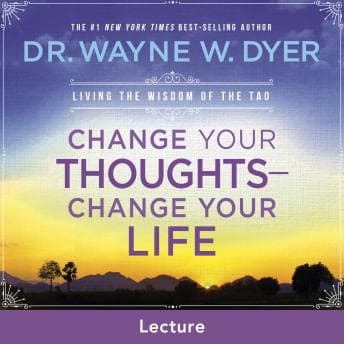

I wasn't planning on listening to this. Let me back up. It was 11:30 PM on a Tuesday, I'd just spent four hours chasing a memory leak through three microservices, and my brain was that specific flavor of fried where you can't sleep but you also can't do anything productive. Kevin was already passed out. I needed something that wasn't another sci-fi series, wasn't a podcast about throughput optimization, and wouldn't require me to track seventeen character names. So I scrolled past my usual queue and landed on Wayne Dyer walking through the Tao Te Ching verse by verse.
I finished it over the next week of commutes. And look - I need to be upfront about something.
This Is Basically a Philosophy Lecture Series With a Self-Help Wrapper
TL;DR: Worth your commute if you're in the right headspace. Not if you want rigorous scholarship.
Here's the deal. This is a live lecture recording, not a studio audiobook. Wayne Dyer spent a year meditating on the 81 verses of the Tao Te Ching, and then he basically gave a talk walking through each one - his interpretation, his stories, his life lessons mapped onto Lao-tzu's words. At 9 hours and 10 minutes, that's roughly 6-7 minutes per verse, which is honestly a pretty good clip.
The format works better than I expected. Dyer reads a verse, unpacks it in plain language, ties it to modern life, moves on. It's structured enough that you can zone out for a few minutes on a crowded 6AM Caltrain and pick back up without being lost. Each verse is basically a self-contained module. If my codebase were this modular, I'd never have production incidents.
But here's where I have to be honest with myself and with you: I'm a systems engineer, not a philosopher. And Dyer's interpretations are... loose. He's not doing textual analysis. He's using the Tao Te Ching as a launching pad for his own wisdom tradition, which borrows from everywhere - Christianity, Buddhism, his own previous books, random anecdotes about his kids. If you're a serious Taoism student, this might drive you up a wall. If you're someone who's burned out and looking for permission to stop optimizing everything (hi, it me), it actually hits different.
Dyer's Voice Is the Actual Product Here
This is author-narrated in the truest sense - it's not Wayne Dyer reading a script, it's Wayne Dyer talking to you. There's a warmth to it that you genuinely can't manufacture in a studio. He has this cadence where he'll make a point, pause, let it breathe, and then come at it from another angle. It's the opposite of every business audiobook that could've been a blog post. He's taking his time, and somehow it doesn't feel padded.
The live recording quality is... fine. Not pristine. You can occasionally hear audience rustling, and the audio levels shift slightly between sections. If you're used to Audible originals with perfect production, calibrate your expectations. But honestly? After five minutes I stopped noticing. His voice has this low-key hypnotic quality that I genuinely understand why people say things like "I love listening to his voice." At 6AM surrounded by other commuter zombies, it felt less like listening to a book and more like having a surprisingly wise uncle explain life to you.
I listened at 1.25x instead of my usual 1.5x. The pauses are part of the experience. Speed it up too much and you lose the meditative quality, which is kind of the whole point.
The ROI on This Audiobook Is Weird
Here's my problem with rating this. As an audiobook, the production is mid. As a reading of the Tao Te Ching, it's an interpretation, not a translation, so purists will have notes. As a nine-hour guided meditation disguised as a lecture series? The ROI is surprisingly high.
Three things stuck with me enough that I actually paused and replayed them during my commute (which I almost never do): his bit on the verse about water being soft yet wearing away stone - he connects it to the futility of forcing outcomes in a way that hit me right in my "I will brute-force this production fix at 2AM" tendency. His take on the verse about knowing when to stop. And his repeated insistence that the Tao is about not doing rather than doing, which is basically the philosophical equivalent of "stop adding features and fix your technical debt."
Did it change my life? No. Did it make my commute feel less like purgatory for a week? Yeah, actually.
Who Gets Value, Who Should Skip
Perfect for: train, bedtime, long walks. Anyone in a burned-out-engineer-seeking-meaning phase (we've all been there). People who want an accessible on-ramp to Eastern philosophy without reading dense academic translations. Ram Dass covers adjacent territory in Be Love Now, though I'd warn you it leans harder into the devotional side - less "permission to slow down" and more "surrender everything," which is a different ask at 6AM on a commuter train.
Skip for: deep work, gym (too mellow), or if you want scholarly Taoism. Also skip if live lecture audio quality bothers you, or if self-help framing around ancient texts makes you twitchy.
My git commit Message for This One
Wayne Dyer made a 2,500-year-old Chinese text feel like advice from a friend. It's not rigorous and it's not trying to be. The live format has rough edges, but his voice carries it. I wouldn't burn my one Audible credit on it - grab it on sale or stream it through your library app. But for what it is? I'm glad my insomnia pointed me here instead of another true crime podcast.