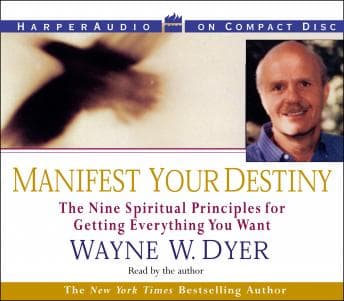

I approached this one with my skepticism fully armed. Manifestation literature tends to trigger my academic gag reflex. The research shows that most self-help in this genre relies on magical thinking dressed up in pseudo-scientific language, and I've read enough to spot the pattern from a mile away.
But here I am, three days post-listen, still thinking about it. Not because Dyer converted me to his worldview, but because he presents something genuinely interesting: a psychological framework disguised as spiritual practice.
The Voice That Disarms Your Inner Critic
Dyer narrating his own work changes everything. At 2 hours and 35 minutes, this is essentially an extended therapy session with a man who sounds like he genuinely believes what he's saying—because he does. There's no performance here, no actor interpreting the material. When he discusses the Nine Spiritual Principles, you're hearing them from the source, delivered with the cadence of someone who's spent decades working through these ideas.
I was cooking biryani (my mother's recipe, which takes approximately forever) when I started this, and something unexpected happened. His voice has this particular quality—unhurried, warm without being saccharine—that made me slow down. I caught myself actually stirring the rice instead of multitasking on my laptop. The research shows that meditation-focused content benefits enormously from author narration because authenticity signals matter for trust-building. Dyer understood this instinctively.
Where Psychology Meets Spirituality (And They Don't Fight)
What makes this character—because yes, I'm analyzing Dyer as a character, it's what I do—compelling is his willingness to acknowledge the ego problem directly. He doesn't pretend enlightenment is easy. The sections on ego-driven decision-making read like case studies I might assign to undergraduates. Are your actions controlled by your ego? Are you weighted down with unresolved troubles? These aren't just rhetorical flourishes. They're diagnostic questions.
The meditation techniques he outlines aren't mystical hand-waving. They're essentially cognitive restructuring exercises with spiritual framing. My therapist would have thoughts about this—specifically, she'd probably recognize the overlap with mindfulness-based cognitive therapy, which didn't become mainstream until years after Dyer was already teaching this stuff.
I found myself asking: why does this work when so much manifestation content feels hollow? I had the opposite reaction to Trump: How to Get Rich, which felt like all shortcuts and no substance. I think it's because Dyer doesn't promise shortcuts. He talks about streamlining your thoughts, not magically attracting wealth. The distinction matters.
The Limitations (Because Nothing Is Perfect)
This isn't a rigorous psychological text. Dyer makes claims about "ancient principles" without citations, and some of the spiritual language will make empiricists uncomfortable. The brevity—under three hours—means you're getting concepts in broad strokes rather than deep dives. If you want evidence-based meditation instruction, this isn't it.
But that's not what this is trying to be. This is a fascinating case study in how self-help authors bridge the gap between academic psychology and accessible spirituality. Dyer had a doctorate in counseling psychology. He knew the research. He chose to translate it into this language because it reaches people who wouldn't pick up a clinical manual.
Who Should Queue This Up (And Who Should Pass)
You'll connect with this if you're curious about meditation but turned off by either the hyper-religious or hyper-secular approaches. If you want someone to talk you through the why of spiritual practice, not just the how. If you're going through something and need a calm voice in your ear that doesn't condescend.
Skip it if you need peer-reviewed sources for everything (I get it, truly). If manifestation language triggers your skeptic alarm so loudly you can't hear anything else. If you're looking for a quick fix—Dyer explicitly says this takes work.
My Clinical Assessment
I went in expecting to write a takedown. Instead, I'm recommending this to my friend who's been struggling with decision paralysis. Not because I think manifestation is real in any metaphysical sense, but because Dyer offers something valuable: permission to slow down and examine why you want what you want.
Psychologically, that tracks. And sometimes that's enough.