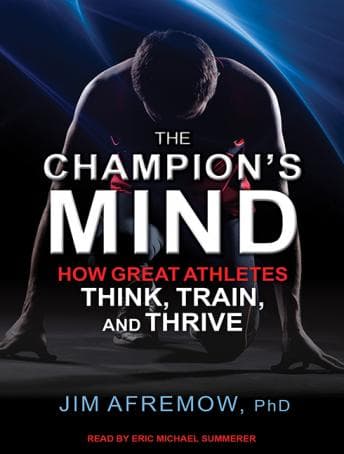

I was halfway through a morning jog along the Charles River when Jim Afremow started talking about the importance of mental imagery, and I actually stopped running to take notes on my phone. Which, if you know me, is saying something. My therapist would be proud that I'm finally integrating exercise with learning, but she'd probably also point out that I was using it as an excuse to stop running.
Here's the thing about sports psychology books: they're either written by former athletes who can't explain why their methods work, or by academics who've never felt the pressure of competition. Afremow sits in an interesting middle ground. He's worked with Olympians, Heisman winners, the whole elite athlete roster, and he actually understands the research behind peak performance. As someone who spends her days analyzing why people do what they do, I found myself nodding along more than I expected.
The Psychology Actually Tracks
What I appreciate most is that Afremow doesn't just throw motivational platitudes at you. The book is structured around actionable cognitive-behavioral techniques—visualization, self-talk restructuring, pre-performance routines. These aren't woo-woo concepts. They're grounded in high-performance psychology research, and he explains them in ways that don't require a PhD to understand. That's the same clarity I appreciated in You Can Read Anyone—practical psychology without the academic gatekeeping. (Trust me, I've read the academic papers. They're not this accessible.)
The chapters on getting "in the zone" and sustaining excellence long-term were particularly compelling from a psychological standpoint. Afremow understands that mental preparedness isn't about being fearless. It's about managing fear productively. That's a distinction a lot of self-help books miss entirely.
But here's where my research brain kicked in: some of the advice feels a bit... generalized? The book promises customizable routines, but the customization is more "fill in your own sport" than truly personalized psychological work. For recreational athletes, that's probably fine. For someone dealing with performance anxiety rooted in deeper issues? This is a starting point, not a solution. For that kind of work, you'd need something like Adult Children of Emotionally Immature Parents, which actually digs into the underlying patterns.
Summerer's Steady Hand at the Mic
Okay, so the narration. Eric Michael Summerer has this pleasing, clear voice that's easy to follow during a workout or commute. His inflections are clean, his tone commanding without being aggressive. For an instructional book like this, straightforward clarity is genuinely what you want.
But—and I say this as someone who studies how delivery affects message reception—the performance lacks that inspirational spark. Sports psychology is inherently about motivation, about pushing past limits, about believing you can do more. Summerer reads it like he's narrating a textbook. Pleasant? Yes. Even? Absolutely. But when Afremow is talking about the fire that separates champions from everyone else, I wanted to feel that fire in the delivery.
It's not bad narration. It's just flat in places where the content begs for energy. I found myself supplying my own enthusiasm mentally, which works fine but shouldn't be necessary. The research actually shows that vocal enthusiasm significantly impacts how motivational content is received and retained. Summerer's approach might work better for the analytical listener who wants information without emotional manipulation. For others, it might feel like getting a pep talk from someone reading off a teleprompter.
Skip This If You Want Transformation Theater
Let's be real. This book is best suited for athletes and coaches who want a solid psychological framework without getting lost in academic jargon. If you're an audio learner—and I increasingly think I am—the format works well for absorbing concepts during training or commuting. The production is clean, no weird background noise or volume jumps.
But if you're expecting a Tony Robbins-style emotional journey, you'll be disappointed. This is more like a really good lecture from a professor who knows his stuff but isn't going to jump on any desks. The information is valuable. The delivery is serviceable. The combination is... fine.
I finished the eight hours feeling like I'd attended a comprehensive workshop. Not transformed, but definitely better equipped. My therapist would probably say that's a healthier expectation anyway. (She's annoyingly right about most things.)
Case Closed, Notes Filed
Would I recommend it? For the right listener, absolutely. Athletes wanting mental training tools without the fluff—this is your book. Coaches looking for frameworks to share with their teams—solid choice. But if you need someone to hold your hand through deep psychological work, or you want a narrator who'll make you want to run through walls? Look elsewhere. Know what you're getting: substance over style, practical over inspirational. Sometimes that's exactly what you need.