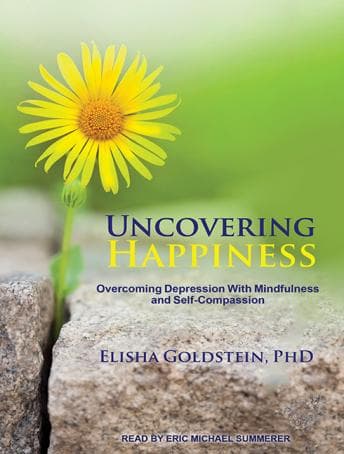

Self-help books about depression make me professionally skeptical. I've read too many research papers, seen too many clients, analyzed too many case studies to accept vague promises about "uncovering happiness." So when I started this audiobook during a solo dinner prep—chopping onions for a dal that would feed me for three days—I had my mental red pen ready.
Dr. Goldstein surprised me. He actually understands human nature.
The Brain as Case Study
What makes this book work is that Goldstein treats the depressed mind the way I treat fictional characters in my research: as a system with patterns that can be mapped, understood, and—crucially—redirected. He's not selling toxic positivity or the kind of "just think happy thoughts" nonsense that makes psychologists want to throw things. The framework here is grounded in actual neuroscience about neuroplasticity and the brain's capacity to build new pathways.
The five "natural antidepressants" he identifies—mindfulness, self-compassion, purpose, play, and confidence—aren't revolutionary concepts individually. But the way he structures their interaction? That's where the research actually shows something useful. He presents depression not as a character flaw or moral failing (my therapist would have thoughts about how often people internalize that message), but as a pattern the brain has learned. And patterns can be unlearned.
I found myself asking: why does this approach work when so many others don't? The answer, I think, is that Goldstein doesn't promise transformation. He promises practice. Small, repeatable interventions that compound over time. It's unglamorous. It's also honest.
Eric Michael Summerer's Steady Hand
The narration here is... appropriate. I mean that as genuine praise, not faint damning. Summerer has this clear, unhurried quality that matches the content perfectly. When you're listening to exercises about self-compassion—and there are many, structured throughout—you need a voice that doesn't feel like it's performing at you. He's not trying to be your motivational coach. He's more like a calm presence reading instructions you actually want to follow.
At just under eight hours, the pacing never dragged for me, though I'll admit I listened during activities that kept my hands busy: cooking, folding laundry, my morning jog through Cambridge when the humidity wasn't unbearable. The production is straightforward—no music, no sound effects, just voice. For this material, that's exactly right. You don't want a soundtrack when someone's walking you through a breathing exercise.
Where It Gets Complicated
Here's my professional hesitation: this book works best for people who are already somewhat functional. Goldstein is clear that severe depression requires professional treatment, but I wish he'd been more emphatic about that earlier. If someone is in the acute phase of a depressive episode—the kind where getting out of bed feels like climbing Everest—the practical exercises here might feel impossibly distant. The book assumes a baseline capacity for engagement that depression actively erodes.
This is a fascinating case study in the gap between knowing and doing. Goldstein provides the knowledge. The doing? That's on you. And that's not a criticism of the book so much as an acknowledgment of depression's cruelest feature: it steals exactly the motivation you need to fight it.
I also noticed the research citations, while present, are sometimes a bit dated. The neuroscience of mindfulness has evolved since this was written. Not enough to invalidate his arguments, but enough that I found myself mentally adding asterisks.
Who This Works For (And Who Should Wait)
If you're in recovery from depression, managing mild-to-moderate symptoms, or supporting someone who is—this is genuinely useful. The exercises are concrete. The framework is psychologically sound. Goldstein's background as a mindfulness practitioner and his clinical experience show in the specificity of his guidance.
If you're currently in crisis? Please, please talk to a professional first. This book can be part of a treatment plan. It shouldn't be the whole plan.
Skip this if you need immediate intervention or if the word "mindfulness" makes you want to scream. But if you're someone who rolls their eyes at mindfulness as a concept—fair, I've been there—Goldstein might actually convince you. He's less woo-woo than you'd expect from someone with a meditation center in Los Angeles. (I know, I know. I was surprised too.)
The Prescription I'd Actually Write
My dissertation committee would appreciate that Goldstein cites his sources. My mother would appreciate that he's practical. And I appreciate that he doesn't promise miracles—just mechanisms. The brain has patterns. Learn them or lose to them. Awaken the Giant Within takes a similar approach to pattern recognition, though Robbins leans harder into the motivational angle than Goldstein does here.
This isn't a book that will fix you. But it might give you tools to start fixing yourself. And honestly? That's more than most self-help offers.