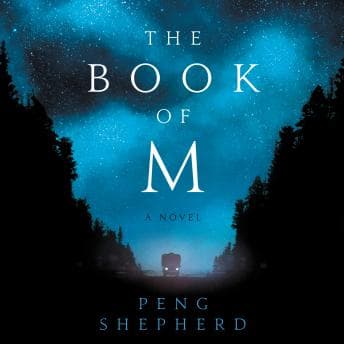

The Book of M is the most D&D premise that isn't actually D&D I've encountered in a long time: people lose their shadows, and then they lose their memories, and then reality itself starts bending around them like a warlock who rolled a nat 20 on a wild magic surge. Peng Shepherd took a concept that could've been a one-session campaign hook and turned it into a 17-hour meditation on what it means to remember someone you love - and what happens when they can't remember you back.
I was deep into a late-night coding session (read: staring at my procedural generation code while actively generating zero progress on my thesis) when I started this one, and I didn't stop until about 3 AM. Which tells you something.
The Shadow Plague Is Not Your Standard Apocalypse
Here's what hooked me as a world-building nerd: the Forgetting isn't just a memory disease. When shadowless people forget something, reality changes to match their broken recollection. Forget what a deer looks like? Congratulations, there's now some mutated horror wandering the Virginia woods that used to be a deer. It's like if the Weave from Forgotten Realms was powered by collective human memory, and someone started unraveling it thread by thread. The magic system is chef's kiss - except it's not really a magic system, it's a consequence system. Shepherd doesn't explain the rules up front. You piece them together as Ory and Max and the other POV characters stumble through a world that's literally rewriting itself. There are deer with no eyes. There's a city that shouldn't exist. There's a cult called the Red King's army that worships the shadowless, and honestly, my D&D group would love this as a villain faction.
The multi-POV structure bounces between Ory searching for Max, Max's own deteriorating journal-style narration as she forgets more and more, a woman named Naz who's an Olympic archer (yes, really, and it works), and a mysterious figure called the One Who Gathers. If you don't like info-dumps, this isn't for you (but you're wrong) - though honestly, Shepherd is more restrained than I expected. The world-building comes through character experience rather than exposition blocks.
Two Narrators, One Devastating Performance Gap
Emily Woo Zeller handles Max's sections, and her reading of Max's slow dissolution is genuinely unsettling. There's this quality to how she narrates the moments where Max realizes she's forgotten something essential - not dramatic, not overwrought, just this quiet devastation that sits in your chest. Her voice gets slightly more detached as Max loses more memories, and whether that's a deliberate performance choice or just how the prose reads, the effect is chilling either way.
James Fouhey does Ory and some of the other perspectives, and... look, he's fine. He's competent. But his male characters kind of blur together. Steven Pacey walked so other narrators could run, and Fouhey is still tying his shoes. Ory and the secondary male characters don't have enough vocal distinction, which is a problem when you're listening at 2 AM and trying to track who's talking in a group scene. I had to rewind a few times during the D.C. sequences where multiple factions are colliding.
The split-narrator format does serve the story well structurally - you always know whose head you're in based on whose voice you're hearing. That's the bare minimum, but it matters when the plot starts weaving timelines together in the back half.
When the World Forgets Itself
The thing that'll stick with me is how Shepherd uses the forgetting as both horror and - this is weird to say - beauty. There's something genuinely moving about the idea that forgetting can create as well as destroy, that a shadowless person misremembering a building could make something entirely new spring into existence. It's creative and terrifying in equal measure. The progression is satisfying in a slow-burn way; you don't get answers quickly, and the climax goes places I didn't predict.
But. The middle third drags. Around hours 7 through 10, there's a stretch where the POV-hopping starts to feel less like building momentum and more like stalling. Naz's storyline in particular spins its wheels before it connects to the larger narrative. I caught myself checking how much time was left, which is never a great sign.
And the ending - I won't spoil it, but it asks you to accept some pretty big leaps that aren't fully earned by the internal logic the book spent 15 hours establishing. If you're a hard magic system person who needs Sanderson-level rules, the finale might frustrate you. I was about 80% satisfied, which is pretty good for a debut. I had a similar reaction to Court of Thorns and Roses - another debut that builds an impressively strange world and then fumbles some of the internal logic right at the finish line when it matters most.
Who Should Wander Into This One
If you loved Station Eleven's quiet apocalypse vibes and wish someone had cranked the weird dial up to about a 7, this is your book. If you're a world-building junkie who wants a premise that actually follows its own implications to strange and dark places, you'll dig it. If you need fast pacing and airtight narration from both performers, temper your expectations on Fouhey's side.
I read this instead of writing my thesis. Dr. Patel, if you're somehow on this website, I was doing research on procedural memory loss. It's relevant. Probably.