Can we talk about cliffhangers for a second? Because I need to lodge a formal complaint.
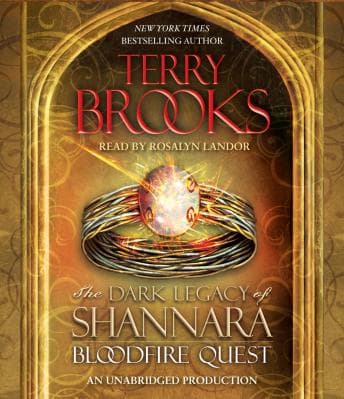
I finished Bloodfire Quest at 2:47 AM - I know the exact time because I immediately checked if I had enough Audible credits for Witch Wraith. (I didn't. The betrayal.) Terry Brooks left me hanging over a metaphorical cliff while the Ellcrys dies and Druids are trapped in a demon dimension, and I'm supposed to just... go to sleep? Shirley gave me that look cats give when they're judging your life choices. She was right to judge.
But here's the thing - I'm not actually mad. Because a cliffhanger only hurts when you care. And somewhere around hour three, when Rosalyn Landor delivered "The Forbidding is bleeding through" with this quiet, bone-tired dread, I realized I cared a lot more than I expected to.
The Forbidding Is Horror Wearing Fantasy's Clothes
I came to Terry Brooks late. Grew up in a house where anything with magic was suspect, so Shannara was contraband I discovered in my twenties. Coming to a massive fantasy series as an adult means you see the craft - you notice what the author is doing. And what Brooks is doing in Bloodfire Quest is darker than I anticipated.
This isn't horror in the gore-and-jump-scares sense. This is horror in the Shirley Jackson sense - the slow realization that something is fundamentally wrong with the world, and it's getting worse. The Forbidding works because Brooks treats it like a living wound, not just a monster prison. The predators hunting the trapped Druids aren't mindless beasts. They're ancient, intelligent, patient. Brooks gives them just enough personality to make them terrifying without over-explaining.
My podcast listeners are going to love this. Finally, fantasy that respects the genre's capacity for dread.
But the real horror? It's back in Arborlon, where the Ellcrys - this sentient tree that's literally the only barrier keeping demons from flooding the Four Lands - is dying. And a young Druid has to choose between her life and becoming the next barrier. That's not action-adventure territory. That's existential dread dressed in fantasy clothing.
It's the kind of dread that lingers the way Keeper of Lost Things does — quiet, accumulating, the horror of something precious being lost and no one able to stop it.Landor Gets It
Let me be clear: Rosalyn Landor elevates this material. I've sat through too many fantasy audiobooks where the narrator treats the genre like it's somehow less serious than literary fiction. They phone it in. They don't commit to the weird names or the emotional weight.
Landor commits. That's rare.
She brings that same total commitment to Girl with the Make-Believe Husband, which I stumbled onto at 1 AM for completely different reasons and stayed for the same reason I stayed here — she makes you believe every single word.Her pacing shifts when the Druids enter the Forbidding - everything gets slightly more tense, more clipped. When she voices the dying Ellcrys, there's genuine weariness. Not melodrama. Weariness. Like she understood that a tree that's been holding back evil for millennia would sound tired, not theatrical. The tonal control throughout nearly thirteen hours is impressive - she knows when to push the tension and when to let scenes breathe.
In a book with multiple POV characters bouncing between dimensions, I never lost track of who was speaking. That's craft.
Middle Book Syndrome? Not Here.
Second books in trilogies are usually where things drag. Setup's done, payoff's coming, so the middle just... exists. Bloodfire Quest doesn't have that problem. If anything, it's better paced than Wards of Faerie. The dual storylines - Druids fighting for survival in the Forbidding, Arborlon slowly dying - create natural tension. When one thread slows, Brooks cuts to the other.
The battle sequences have real weight to them. These aren't victory laps. They're desperate, costly fights against things that shouldn't exist. Brooks has a gift for making magical combat feel dangerous rather than flashy.
Who Gets the Key to the Forbidding
If you've been with Shannara since the beginning, this is Brooks operating at peak form. If you're new? Start with Wards of Faerie. This book assumes you know the world, the rules, the stakes. It doesn't hold your hand.
If you want pure action-adventure fantasy, you'll find it - but you'll also get more. The sacrifice themes, the slow corruption of the barrier between worlds, the young Druid facing an impossible choice... this understands that fantasy isn't about escape. It's about facing the dark things we can't face in reality.
Skip if: You need resolution. This ends mid-crisis. Also skip if you're not okay with violence - the Forbidding creatures don't play nice.
Shirley Was Unimpressed. I Was Terrified.
I listened in the dark. Mistake? Maybe. Worth it? Absolutely. Landor's performance paired with Brooks's increasingly dark vision creates something special. This isn't the Shannara of childhood reading-under-the-covers fantasies. This is grown-up fantasy that remembers what made us afraid of the dark in the first place.
So yes, I'm filing a formal complaint about that cliffhanger. And yes, I'm already queuing up the finale. That's exactly how it should be.