
"You pierce my soul. I am half agony, half hope."
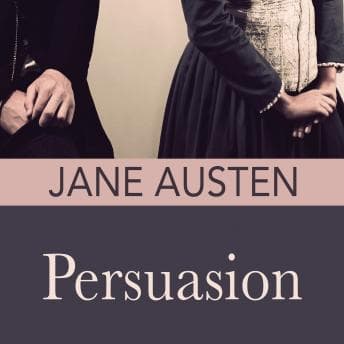
I was sitting on the lakefront bench where Denise and I usually walk together — she was at her sister's this weekend — and Wentworth's letter hit me like it was addressed to me personally. I actually stopped walking. Just stood there, Lake Michigan doing its thing, and Rosalyn Landor reading those words with the kind of restrained desperation that Austen built the entire novel toward. Eight hours of emotional suppression cracking open in a single paragraph.
This is why we still read the classics.
The Quiet Novel That Austen Wrote Last — And Maybe Best
Let me be honest about something I tell my students every year: Persuasion is not the Austen novel most people start with. It's not the witty sparring of Pride and Prejudice. It's not the Gothic send-up of Northanger Abbey. It's the one Austen wrote while she was dying, and you can feel it. There's a gravity here, a tenderness toward second chances that her earlier work doesn't quite reach.
Anne Elliot is 27 — practically ancient by Regency standards — and she carries the weight of a decision she made at 19 like it's a physical thing. She was persuaded (there's the title doing its work) to break off her engagement to Frederick Wentworth because he was poor and untitled. Eight years later, he's a captain with prize money and confidence, and she's fading into the wallpaper of her own family. Her father, Sir Walter, is so vain he literally keeps a copy of the Baronetage on his nightstand to read his own entry. Her sister Mary is a world-class hypochondriac. And Anne just... absorbs it all.
What kills me about this book — and I've taught it three times now — is that Austen gives us an entire novel of two people in the same rooms, at the same parties, walking the same streets in Bath, and they barely speak to each other directly until the final act. The tension isn't in what's said. It's in what isn't. My students would hate this. I love it.
Landor Treats Austen's Sentences Like Sheet Music
Here's what Rosalyn Landor understands that lesser narrators don't: Austen's prose is doing two things at once. There's the surface — polite, mannered, all proper syntax — and then there's the knife underneath. Landor's upper-crust British enunciation is exactly right for the surface, but she modulates her tone so precisely that you catch the irony without her having to wink at you.
Take her Sir Walter. She gives him this preening, self-satisfied lilt that makes every line about his appearance sound exactly as ridiculous as Austen intended. Then she shifts to Anne, and the voice drops — quieter, more interior, like someone who's learned to think loudly because no one lets her speak. The narrator understands that pause is punctuation. Landor leaves breath between Anne's observations, little silences that feel like Anne composing herself before she has to be agreeable again.
I've listened to other Austen audiobooks where the narrator plays it broadly — every character a caricature, every comic moment underlined twice. Landor doesn't do that. She trusts Austen's language to be funny on its own. When Mary complains about her imagined illnesses, Landor reads it straight, and somehow that's funnier. The comedy comes from the precision, not the performance.
At 8 hours and 38 minutes, this is a perfect 1.0x listen. (Yes, I know. My students think I'm a dinosaur. But Austen chose those semicolons and I choose to hear them.) The prose deserves to be savored, and Landor's pacing gives you room to actually sit inside the sentences. Speed this up and you lose the architecture.
Who This Is Really For — And Who Should Wait
If you loved Pride and Prejudice but thought it was a bit young — if you've ever looked back at a decision you made at 19 and felt your stomach drop — this is the Austen novel that was waiting for you. That particular gut-punch of a buried memory resurfacing is something Before I Go To Sleep also does with uncomfortable precision, though in a very different register — worth noting if you're drawn to stories where the past refuses to stay buried. It's her most emotionally mature work, and Landor's narration matches that maturity perfectly.
But I'll be straight: if you need plot momentum, if you want things to happen on every page, Persuasion will test you. The first three hours are slow. Deliberately, beautifully slow, but slow. This is a novel about waiting, and it asks you to wait too. If you're looking for action-packed Regency drama, go grab a Bridgerton adaptation. No judgment. (Some judgment.)
For my fellow teachers — this is the audiobook to recommend to that one student who actually reads. The one who finishes the assignment and asks for more. You know who I'm talking about.
Worth Pausing the Faculty Meeting For
Principal Martinez presented the new attendance tracking software last Thursday. I couldn't tell you a single feature. But I can tell you that Anne Elliot walking through the streets of Bath, hearing Wentworth's name, and feeling everything she'd spent eight years pressing down — that's the kind of moment that makes you forget you're supposed to be a professional. Landor delivered that letter scene with such careful restraint that when the emotion finally broke through, I had to pretend I was moved by the budget surplus projections.
This is Austen's last completed novel, and it reads like a woman who finally stopped being clever long enough to be honest. Landor gives that honesty exactly the voice it deserves.