
I was supposed to be working on my thesis. Like, actually working. Chapter three on procedural dungeon generation was staring at me from my laptop screen, and I had this audiobook queued up as "background noise" while I pretended to be productive. Eight hours later, my thesis document had exactly zero new words, and I was sitting in my apartment surrounded by board games, genuinely misty-eyed over a bone china cup and saucer.
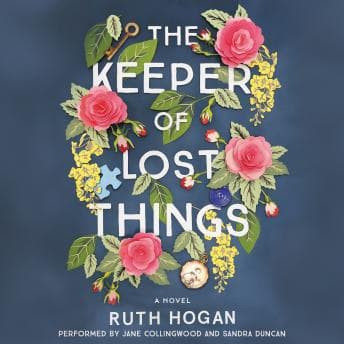
Look, I came into this expecting cozy British fiction—the literary equivalent of a warm cuppa. What I got was something sneakier. Ruth Hogan built a magic system out of mundane objects, and I mean that as the highest possible compliment.
The World-Building You Didn't Know You Needed
Here's the thing about Anthony Peardew's collection of lost things: it operates on rules. Forty years of cataloguing found objects, writing their stories, trying to reunite them with owners. That's not just quirky character work—that's a system. Lime green plastic flower-shaped hair bobbles from Derrywood Park. A bone china cup from Riveria Public Gardens. Each item has a date, a location, a story waiting to be told. My D&D brain immediately started thinking about this as an inventory management quest, and honestly? The progression is satisfying in that same way a good campaign arc is satisfying.
The dual timeline structure—Laura in the present, Eunice in the past—works like parallel plot threads that you know will eventually intersect. And when they do? The ending brought tears, laughs, and smiles, sometimes in the same minute. I'm not usually a crier (unless we're talking the end of Words of Radiance), but Hogan earned those emotional beats.
The dual-timeline payoff reminded me of how Testaments earns its emotional gut-punch by making you wait—two narrative threads converging on a conclusion that only works because the author spent so much time making you care about both sides.Two Narrators, Two Worlds, Zero Confusion
Jane Collingwood and Sandra Duncan split duties here, and it's a smart production choice. Collingwood handles Laura's sections with this grounded, believable energy—she sounds like someone actually recovering from a bad divorce, not performing recovery. Duncan gives Eunice this warm, mature timbre that immediately signals "different era, different woman" without being theatrical about it.
The dual-narrator setup means you never lose track of whose story you're in. When you're listening while allegedly writing a thesis (sorry, Dr. Patel), that clarity matters. The gentle background music in some sections doesn't overpower anything—it's atmospheric without being intrusive.
The Sunshine Situation (Let's Talk About It)
Okay, I have to address this because it's the elephant in the room. Sunshine, the neighbor's daughter who has Down's syndrome, is written with frequent malapropisms played for warmth and humor. Some listeners found this cringeworthy. I get it. The line between "endearing character quirk" and "laughing at someone" is thin, and your mileage will absolutely vary based on your own experiences and sensitivities.
For me, Sunshine felt like a genuine character with agency in the story—she's not just comic relief, she becomes essential to Laura's journey. But I'm also a white dude from rural Georgia whose main exposure to representation discourse is Twitter arguments, so take my read with appropriate salt. If you have personal connections to Down's syndrome representation, you might want to sample before committing.
Who Should Listen (And Who Should Skip)
This is for you if: you want cozy British fiction with actual emotional stakes, you enjoy found-family narratives, you like your magical realism subtle rather than flashy, or you need something gentle but not boring.
Skip it if: you need action, you want hard magic systems with explicit rules (the "magic" here is purely metaphorical), or the Sunshine concerns I mentioned are dealbreakers for you.
At 8 hours 36 minutes, it's a perfect weekend listen. Not the 40-hour Sanderson commitment, but substantial enough to sink into.
Worth Abandoning Your Thesis For?
Look, I'm not saying this book is why chapter three remains unwritten. I'm saying there's a strong correlation, and I regret nothing. Hogan does something clever here—she makes you care about objects the way Anthony does, makes you believe that a lost button or a forgotten photograph carries genuine weight. It's not Sanderson-level world-building, but it's world-building of a different kind. Emotional world-building? Is that a thing? I'm making it a thing.
Collingwood and Duncan make this a genuine listening joy. The production is clean, the pacing works, and by the end you'll want to start cataloguing your own lost things. (I found a D20 behind my bookshelf last week. It's been missing since 2019. I briefly considered writing its story before remembering I have a thesis to ignore.)
My D&D group would probably roll their eyes at this recommendation—not enough dragons, too many feelings—but sometimes you need a palate cleanser between epic fantasies. This is that. It's warm without being saccharine, sad without being devastating, and quietly magical in a way that sneaks up on you.
Now if you'll excuse me, I have a thesis to continue not writing.