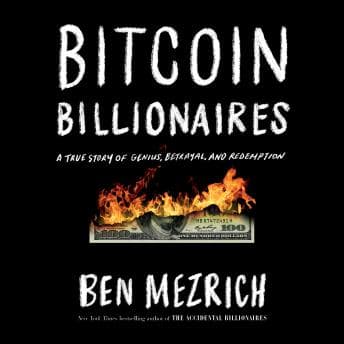

Ben Mezrich is the Michael Bay of business nonfiction. And I mean that as both compliment and criticism.
I finished Bitcoin Billionaires while meal-prepping at midnight - Jenny was asleep, I had six containers of bibimbap components to portion out, and the Winklevoss twins were discovering Bitcoin in Ibiza. The contrast between my parents' approach to wealth building (14-hour days pressing shirts, saving every dollar) and two 6'5" Harvard rowers stumbling into crypto on a party island was... a lot to process while julienning carrots. That tension between inherited hustle and inherited luck is something I kept turning over in my head — it reminded me of what I was wrestling with in Fail Until You Don't: Fight Grind Repeat, where the grind is romanticized in ways my parents would find somewhere between flattering and deeply naive.
Mezrich's Love Letter to the Tall Guys Who Got Zucked
Here's the thing about this book: Mezrich is openly, unashamedly infatuated with Tyler and Cameron Winklevoss. He wrote The Accidental Billionaires, which became The Social Network, which made them famous underdogs. Now he's writing their redemption arc, and he wants you to root for them so badly it borders on hagiography.
The first few chapters rehash the Facebook lawsuit and the $65 million settlement. If you've seen the movie, you can skip to around chapter 5 - thank me later. The story actually gets interesting when they can't find a single VC firm willing to take their money. Silicon Valley has effectively blacklisted them because nobody wants to piss off Zuckerberg. That part rings true. I've seen this dynamic play out with founders who've burned bridges with powerful people. The tech ecosystem is smaller and pettier than people think.
Then they meet Charlie Shrem in Ibiza - this fast-talking Bitcoin evangelist running BitInstant - and the book shifts gears. The Silk Road passages, the early Bitcoin meetups, the brothers buying up roughly 1% of all Bitcoin in existence at around $8 per coin... this is where the real story lives. Chapter 21, where Mezrich introduces the broader crypto elite, is probably the most interesting stretch of the entire book. You get a feel for just how Wild West the whole ecosystem was in 2012-2013.
But Mezrich can't help himself. He writes in this cinematic, scene-setting style - describing what everyone's wearing, the exact cocktail they're drinking, the way sunlight hits the Mediterranean. It reads like a screenplay treatment, which makes sense because that's basically what it is. The problem? At 2.0x speed, these passages still feel padded. The key takeaway is worth the listen. The other 7 hours? Not so much.
Will Damron Brings the Drama (Whether You Want It or Not)
Will Damron's narration is a polarizing choice, and I get why. His voice is genuinely pleasant - warm, clear, good pacing. His facility with dialogue is real; he shifts pitch and phrasing just enough that you can track who's talking without getting confused. When the interpersonal tension ramps up - the brothers versus Shrem, the SEC hearings, the moments where their entire bet looks like it might collapse - Damron leans into it well.
But. There's a theatrical, almost musical quality to his delivery that sometimes oversells the material. Mezrich is already writing at a 9 out of 10 on the drama scale. Damron occasionally pushes it to 11. When you're describing someone ordering coffee before a meeting, you don't need the vocal intensity of a courtroom scene. Some listeners apparently found this annoying. I wouldn't go that far, but I noticed it. At 1.5x or above, it smooths out considerably.
The Consulting Brain Can't Stop Poking Holes
My biggest issue is structural. This book wants to be three things: a revenge narrative, a Bitcoin explainer, and a character study. It's decent at the first, shallow on the second, and too hagiographic for the third. Mezrich never seriously interrogates the brothers' investment thesis beyond "they bought low and it went up." There's no real analysis of risk management, portfolio theory, or why their approach worked when so many other early crypto investors got wiped out.
My parents would've had one question: "What was the plan if it went to zero?" The book never answers that.
Also - and this bugged me - the timeline conveniently ends in November 2017 when Bitcoin hit its peak and the twins became billionaires. On paper. We don't talk about what happened to the price in 2018. That's not a book problem exactly, but it gives the whole narrative a survivorship bias sheen that any honest business thinker should flag.
Who Gets the ROI Here
If you loved The Social Network and want the sequel, this delivers. If you're looking for actual crypto education, read The Bitcoin Standard instead. If you want a business book that respects your intelligence about risk and strategy - Jenny would say I'm being harsh. Jenny is right. But this is entertainment disguised as business insight, and you should know that going in.
It's a fun listen. It's a well-narrated listen. It is not a particularly smart listen. And at 9 hours 37 minutes, it's about 3 hours longer than the story requires.