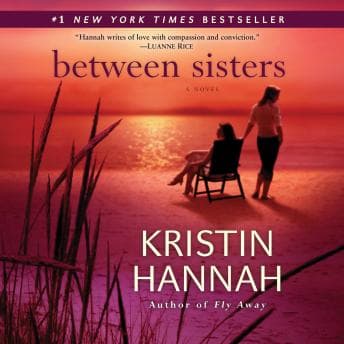

Kristin Hannah knows exactly how to gut you, and she's not subtle about it.
I was walking the lakefront with Denise on a Saturday morning — one of those rare July days where Chicago actually cooperates and gives you a breeze off the water — and somewhere around hour three of this book, I had to pretend I was squinting at the sun. I was not squinting at the sun. I was doing that thing where you blink rapidly and hope your wife doesn't notice you're crying about fictional sisters in the Pacific Northwest.
She noticed.
The Wound That Runs Through Everything
Here's what Hannah does well in Between Sisters: she builds an entire novel around a single childhood decision and lets it metastasize across twenty-five years. Meghann, the older sister, made a choice as a kid that essentially severed her from Claire — and the book never lets you forget it. Every sharp comment Meghann makes as a divorce attorney, every wall she puts up, every man she pushes away — it all traces back to that one moment. Claire, meanwhile, has built a small, careful life in a small town, raising her daughter Ali, and she's about to get married for the first time. The wedding becomes the excuse for these two women to occupy the same room again.
And then there's Mama — their mother, who abandoned them. This reminds me of what Hemingway said about families being the source of all our damage. Hannah doesn't write Mama as a villain, though. She writes her as something worse: a woman who is genuinely incapable of putting anyone before herself, who shows up with charm and good intentions and still manages to make everything about her own pain. That's harder to forgive than outright cruelty, and Hannah knows it.
What surprised me is how much time the book spends in genuine happiness before it pulls the rug. Claire's romance with Bobby Tom, the scenes with little Ali at the campground, the wedding itself — Hannah lets you settle into something warm. My students would hate this. I love it. The pacing is deliberate, almost leisurely for the first half. Some listeners have called it slow, and I get that. But looking back, all that warmth is load-bearing. You need to feel safe before the third act does what it does.
I won't spoil it. But let's talk about what the author is really saying: that sisterhood isn't a feeling. It's a practice. It's the thing you do when you show up at the hospital even though you haven't spoken in years. The prose deserves to be savored in those final hours — Hannah earns her emotional payoff because she puts in the structural work early.
Merlington Knows When to Hold Back
Laural Merlington's narration is solid — not flashy, but smart. She gives Meghann a slightly clipped, professional cadence that softens as the character's armor comes off across the book. Claire gets something warmer, a little more hesitant, which tracks for a woman who's spent her life avoiding conflict. The narrator understands that pause is punctuation — there's a moment near the end, during a hospital scene, where Merlington just... waits. Half a beat longer than you expect. And it lands.
Where the narration stumbles slightly is in the male characters. Bobby Tom and Joe both come through a bit flat — you can tell Merlington is more invested in the sisters' dynamic, which is fair, but it means some of the romantic scenes feel like they're on autopilot. And there are stretches in the middle — particularly some of Meghann's courtroom scenes — where the delivery drifts toward monotone. Not enough to pull you out, but enough that I noticed during a late-night grading session when I needed the audio to carry me.
Still, when it counts, Merlington delivers. The final third is where her performance shines. She handles the medical crisis without melodrama, which is the right call. Hannah's writing is already doing the heavy lifting emotionally; Merlington trusts the text and stays out of its way. That's a narrator who's reading closely.
Who This Is (and Isn't) For
If you loved Firefly Lane — Hannah's other sister/friendship novel — this is its spiritual successor, written a few years earlier and a bit rougher around the edges but arguably more focused. If you need plot twists or fast pacing, this isn't your book. It's character-driven in the truest sense: things happen because people make choices, not because the plot demands them.
Skip it if you have zero patience for family drama or if you need your fiction to surprise you structurally. This follows a fairly conventional arc. Then She Was Gone runs a tighter, more propulsive plot but lands in similar emotional territory — that same reckoning with what families do to each other when no one's paying attention. But sometimes convention works because the emotions inside that structure are real.
At 11 hours and 39 minutes, it's a commitment — but it's the kind of book that rewards you for sitting with it. I listened at 1.0x because the author chose those words, and honestly, the quiet domestic scenes need that breathing room.
Worth Pausing the Faculty Meeting For
Between Sisters isn't Hannah's best novel. It's probably not even in her top three. But it's honest and it's specific about the particular kind of love that exists between sisters who've hurt each other — the love that looks like anger for twenty-five years before it looks like anything else. Merlington's narration is the right fit: steady, emotionally literate, occasionally imperfect. Like the book itself.
Denise asked me what I was listening to when she caught me on that lakefront walk. I told her. She said, "You should call your sister." I did.