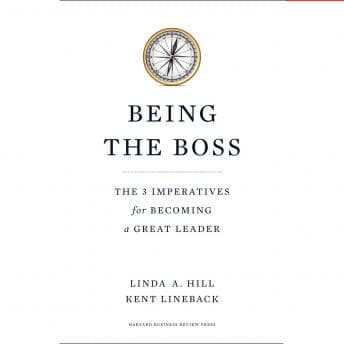

Look, I've been a manager for exactly zero years, but I've been managed by enough terrible bosses to know what bad leadership looks like. So when my skip-level recommended this during a 1:1 (yes, I see what you did there, Marcus), I figured I'd give it a shot. The content? Genuinely useful. The narration? Let's just say I understand why someone in the reviews threatened to jump out a window.
The Framework That Actually Makes Sense
Here's the thing about business books—most of them could be a Medium post. This one... couldn't. Linda Hill is a Harvard Business School professor who's actually studied managers in the wild, and Kent Lineback has the battle scars from decades of real leadership. The "three imperatives" framework (manage yourself, manage your network, manage your team) sounds basic until you realize how badly most new managers screw up all three.
The "manage yourself" section hit different. There's this whole bit about how new managers think their job is to be the best individual contributor who also happens to have reports. Wrong. Your job is to make OTHER people successful, which means letting go of the thing that got you promoted in the first place. As an IC who occasionally fantasizes about the management track, this was a solid reality check.
The network section is basically "office politics isn't evil, it's how things actually get done." Which—yeah. I wish I'd had Networking for People alongside this; it tackles the same relationship-building stuff but from an introvert's perspective. I've watched enough senior engineers fail at this to know it's true. The book breaks down how to build relationships up, down, and sideways in your org without feeling like a manipulative weasel. Practical stuff.
The Narrator Situation (Oof)
Okay, so Erik Synnestvedt. His voice is fine. Clear enunciation, consistent pacing. But here's the problem: he reads this like he's narrating a compliance training video. Eight and a half hours of the same. exact. tone.
I listen at 1.5x normally, bumped this to 1.75x, and honestly that helped. The faster pace adds some energy that the narration lacks. But there were still stretches on my morning commute where I'd zone out completely—not because the content was boring, but because there was zero variation to keep my brain engaged.
The book has these great case studies and stories about real managers making real mistakes. On paper, that's compelling stuff. But Synnestvedt delivers a story about a manager having a career-defining crisis with the same energy as reading a grocery list. Frustrating, because the material deserves better.
Where the Three Imperatives Actually Pay Off
The team management section is where I got the most value. There's this concept of creating a "we" out of a bunch of "I's"—basically, how do you forge a real team identity when everyone's focused on their own career trajectory? The book walks through setting expectations, giving feedback, handling conflict. Stuff that seems obvious until you actually have to do it.
I appreciated that the authors don't pretend management is easy or that there's a magic formula. They're honest about the fact that becoming a good leader is a painful, iterative process. Most people never get there. That's... weirdly comforting? At least when my future reports hate me, I'll know it's normal.
The case studies are genuinely useful—real scenarios with real trade-offs. Not the sanitized "here's how a perfect manager handled this perfectly" garbage you get in most business books. These are messy situations where there's no clean answer.
The ROI Calculation
Bottom Line: Worth your commute if you're a new manager or thinking about becoming one. The content is solid, research-backed, and practical. Wall Street Journal named it one of the five best business books for your career in 2011, and it holds up.
But—and this is a real but—the narration is going to test you. I'd honestly recommend sampling before you commit. If you can handle monotone delivery (or if you're a 1.75x listener like me), the content payoff is worth it. If you need an engaging narrator to stay focused, maybe grab the physical book instead.
Perfect for: new or aspiring managers who want a research-backed framework, not just war stories. Train commutes, gym cardio, anything where you can zone back in easily. Skip if: you need vocal variety to stay engaged, or you're looking for quick tactical tips rather than a complete mental model shift. The narration will lull you into a false sense of productivity while you absorb nothing.
I finished this in about 5 commutes, and I've already started applying some of the framework thinking. That's more than I can say for most business audiobooks. Just... maybe keep some coffee handy.