
Bottom line: If you manage people and haven't read this, you're probably wasting everyone's time in one-on-ones. Listen to it.
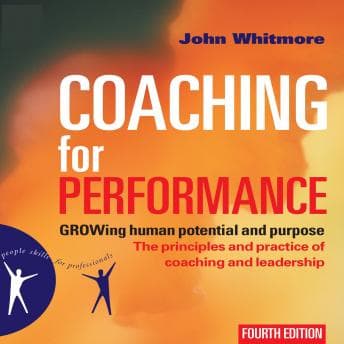
Now that we've established the verdict, let me explain why I'm being so blunt. Coaching for Performance has sold half a million copies because it actually works. Sir John Whitmore essentially wrote the operating manual for how to stop telling employees what to do and start asking questions that make them figure it out themselves. Revolutionary concept, I know.
Here's what surprised me: the audiobook format actually improves on the print version. Erik Synnestvedt reads this like a competent consultant presenting to the board—no theatrics, no wasted words, just clean delivery of the GROW framework (Goals, Reality, Options, Will) at a pace that respects your intelligence. I listened during my morning commute and found myself mentally rehearsing coaching questions at red lights. Dangerous? Possibly. Effective? Absolutely.
Whitmore's central argument is simple: most managers are terrible at developing people because they default to telling instead of asking. Who Moved My Cheese? takes a different approach to workplace behavior change, but both books share the same frustration with managers who resist simple solutions. The GROW model gives you a structure for fixing that. Goals first, then Reality check, then Options exploration, then Will to act. It's not complicated, but Whitmore spends seven hours showing you exactly how to screw it up and how to get it right.
The examples from business and sports keep things grounded. No abstract theory here—just practical application. Synnestvedt's steady narration suits this perfectly. You're not being entertained; you're being trained. His clear enunciation means you can actually absorb concepts while driving, walking, or pretending to exercise.
Fair warning: Whitmore occasionally makes claims that would benefit from more data backing them up. He was a pioneer, and pioneers sometimes mistake conviction for evidence. But the core methodology has been validated by decades of practitioners, so I'm willing to forgive some rhetorical enthusiasm.
The production quality is clean—no audio issues, no distracting edits. At seven hours, it's efficient. Whitmore doesn't repeat himself unnecessarily, which I appreciate more than you know after suffering through business books that could have been blog posts.
Anyone expecting a narrative should skip this. It's instructional content. If you want drama, go listen to a thriller. If you want to stop being the manager who talks at people for an hour and calls it "coaching," this delivers.
The International Coach Federation gave Whitmore their President's Award for lifetime achievement. After listening, I understand why. He didn't just teach techniques—he advocated for treating people like they have brains and might actually use them if you stopped micromanaging.
I finished this audiobook three weeks ago. Last Tuesday, I caught myself using the Reality questions in a one-on-one without even thinking about it. My direct report solved her own problem in ten minutes. That's the ROI right there.