
"Bullet holes through his clothing. Horses shot out from under him."
That line hit me somewhere around mile twelve of my drive home after a brutal night shift - we'd had three traumas roll in back to back, and I was running on adrenaline and vending machine coffee. I almost missed my exit because I was genuinely locked in on Washington getting his horse killed under him at the Battle of the Monongahela and just... getting on another one. Like a lunatic. Like the kind of patient we'd call a miracle and then lecture about risk-taking behaviors.
The Founding Father Gets the Action Hero Treatment
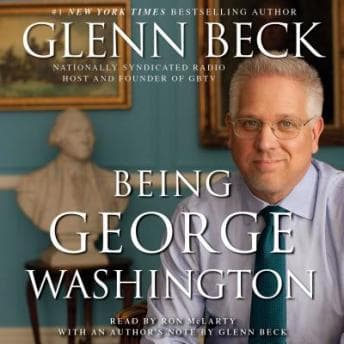
Look, I'll be upfront: Glenn Beck is a polarizing figure, and I went into this expecting to yell at my dashboard for different reasons than usual. But here's the thing - this isn't really a political book. It's Beck doing something I didn't expect: writing George Washington like he's the protagonist of a historical thriller. The Valley Forge chapters genuinely got to me. Men starving, frostbitten, dying of dysentery and typhus, and Washington choosing to stay with them instead of retreating to comfort. As someone who's actually worked a code on a patient everyone else had given up on, I understand something about that stubborn refusal to quit. Beck captures that quality in Washington pretty effectively.
The crossing of the Delaware section reads like a heist movie setup - the planning, the impossible weather, the fact that Washington basically bet everything on one night. And Yorktown? The trenches, the siege, the sheer grinding patience of it? That part I listened to while making breakfast for the kids, and my daughter asked why I looked so intense while scrambling eggs.
But - and this is a real but - Beck can't help himself sometimes. There are stretches where he pulls out of the historical narrative to draw direct lines to modern politics, and those sections feel like getting a lecture when you came for the story. The Constitutional Convention scenes are interesting on their own merits, but when Beck starts editorializing about what Washington would think about today's America, it pulled me right out. I don't need the author telling me what to feel about the Founders. I'm a grown woman. Let me draw my own conclusions.
Ron McLarty Earns His Keep
Ron McLarty does solid, professional work here. He's got this steady, authoritative delivery that works for historical narrative - think trusted uncle telling you family stories, not a professor reading notes. The emotional scenes land because McLarty knows when to pull back and when to push. The Valley Forge sections, where he's describing soldiers wrapping their feet in rags, leaving bloody footprints in the snow - his voice gets quieter there, not louder, and that restraint is what makes it hit. He gives Washington a certain gravity without making him sound like a marble statue, which is exactly the point Beck is trying to make.
Where McLarty really shines is in the dialogue-heavy sections. He differentiates between Washington and his contemporaries enough that you're not confused, though I wouldn't call the characterizations wildly distinct. It's more like different registers of the same instrument. For an eight-hour listen, he keeps the energy consistent without dragging.
The Accuracy Question (Because You Know I'm Going to Ask)
This is not a scholarly biography. If you're looking for David McCullough-level rigor, this isn't it. Beck takes some creative liberties with reconstructing scenes and dialogue that a historian would side-eye pretty hard. I went down a similar rabbit hole of 'wait, is this actually true?' with Chronicles of Canada Volume 01 - The Dawn of Canadian History, though that one leans so dry it makes Beck look like a screenwriter by comparison. Some of the Washington mythologizing feels a little thick - the man was impressive enough without the embellishment. I didn't yell at my dashboard over medical inaccuracies this time (wrong genre), but I did mutter "citation needed" more than once.
That said, the broad strokes are accurate, and Beck does something genuinely useful: he makes Washington feel human. The sections about Washington's insecurities about his education, his temper that he worked to control, his mistakes - those rang true and actually made me like the guy more. My mom, who loves anything about American history because she studied for the citizenship test like it was boards, would eat this up. (She still thinks I should've been a doctor, but she'd approve of this book.)
Who Gets the Prescription and Who Should Skip
If you want a page-turning, accessible introduction to Washington that reads more like an adventure story than a textbook - and you can tolerate some editorial commentary - this is a solid listen. Night shift approved for the drive home. It kept me alert and engaged, which after twelve hours on the floor is saying something.
If Beck's voice as an author bothers you on principle, or if you want rigorous academic history, save your credit. You already know if you're in that camp.
Carlos asked why I was talking about the Continental Army over breakfast. I told him I was having a moment. He poured me more coffee and didn't ask questions. That man knows me.





![Steve Jobs [unabridged audiobook] audiobook cover](/_next/image?url=https%3A%2F%2Fcovers.audiobooks.com%2Fimages%2Fcovers%2Ffull%2F9788499923406.jpg&w=1920&q=75)