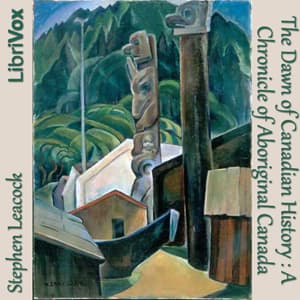

"The Indian...lived his life in the environment which nature gave him."
That line hit me about forty minutes in, and I had to pause. Not because it was profound—it's actually pretty basic—but because of what surrounded it. Stephen Leacock, writing in 1914, describes Indigenous peoples with the casual racism of his era, and as someone who spent years working alongside Indigenous interpreters in theater-level operations, the contrast between Leacock's armchair anthropology and the actual people I've known is... stark.
Let me cut to the chase: this is a historical document more than a history book. Worth knowing that distinction before you commit even two hours.
When Your Source Material Is the Problem
Leacock was a McGill economics professor, not a field historian. You can hear it in how he treats First Nations peoples—as subjects to be categorized rather than cultures to be understood. The "casually racist language" warning isn't hyperbole. He uses terms and frameworks that made me wince more than once during my morning drive through Austin traffic.
But here's the thing—and this is where my perspective differs from most reviewers—there's intelligence value in primary sources, even flawed ones. Understanding how educated Canadians viewed their own history in 1914 tells you something about the colonial mindset that shaped policy for the next century. Narrative of the Life of Frederick Douglass offers the opposite perspective—what it's like to be on the receiving end of that institutional mindset. I've read enough after-action reports from that era to recognize the tone. Leacock writes about Indigenous peoples the way my grandfather's generation wrote about anyone who wasn't them. Same detached observer voice I noticed in Killing Kennedy—history written about people rather than with them.
The actual historical content? Thin. This is a "chronicle" in the loosest sense—more like a survey course lecture than a deep dive. You get ice ages, migration theories, brief sketches of various nations, and then Europeans show up. At two hours and change, Leacock can't give you much more than outlines.
The LibriVox Lottery
Here's where I need to be honest about what I don't know. LibriVox uses volunteer narrators, which means quality varies wildly between projects—and sometimes between chapters of the same book. The research I've got doesn't flag specific narrator issues, but one listener called it "sometimes annoying" without elaborating.
My experience? The production is what you'd expect from volunteer work. Clean enough, but no professional polish. No sound effects, no musical interludes—just voices reading text. For a free audiobook, that's the deal you're making.
I listened at 1.25x (my standard) and found the pacing acceptable. The prose is formal, academic, early-twentieth-century stiff. Speeding it up actually helped—made it feel less like a lecture and more like a briefing.
The "Pleasant Blend" Problem
One reviewer called this "a pleasant blend of facts with myths and legends." That's generous. What Leacock actually does is present European interpretations of Indigenous oral traditions without much critical framework. He's working from secondary sources, filtered through the biases of his time.
For present-day listeners, that creates a weird experience. You're not really learning about Aboriginal Canada—you're learning about what a 1914 Canadian academic thought about Aboriginal Canada. Those are very different things.
Is there value in that? Sure, if you're studying historiography or Canadian intellectual history. If you want actual Indigenous perspectives on Indigenous history, look elsewhere. This ain't it.
Who Should Deploy—And Who Should Stand Down
Canadian history completists who want to understand how the narrative was constructed. Students of colonialism who need primary source examples of period attitudes. Anyone curious about Leacock beyond his humor writing. And honestly? It's two hours and free—if you're stuck in a waiting room or have a short commute, you could do worse.
Who should skip: Anyone looking for accurate, respectful Indigenous history. Anyone who needs polished production. Anyone who'll be frustrated by dated language and frameworks.
Mission Assessment
Worth your time? Conditional yes. This is reconnaissance, not the main operation. You're gathering intel on how Canadian history was told a century ago, not learning that history properly. Approach it as a historical artifact and you'll get something out of it. Approach it as education and you'll be disappointed—or worse, misinformed.
Ranger slept through most of this one. Can't say I blame him. But I finished it, and I'm not sorry I did. Sometimes you need to read the old maps to understand why the new ones look different.
Free on LibriVox. That's the right price point.





![Steve Jobs [unabridged audiobook] audiobook cover](/_next/image?url=https%3A%2F%2Fcovers.audiobooks.com%2Fimages%2Fcovers%2Ffull%2F9788499923406.jpg&w=1920&q=75)