
Look, I need to get something off my chest before we dive in: why does every fantasy novel insist on giving us a protagonist who's basically a petulant twelve-year-old with a chip on his shoulder the size of Westminster? Nathaniel spends half this book being insufferably arrogant, and I found myself muttering "oh, come ON" into my steering wheel more than once during my morning commute.
But here's the thing—and this is where Simon Jones earns every bit of his Golden Voice status—I couldn't stop listening.
Revenge Fantasy Meets British Political Satire
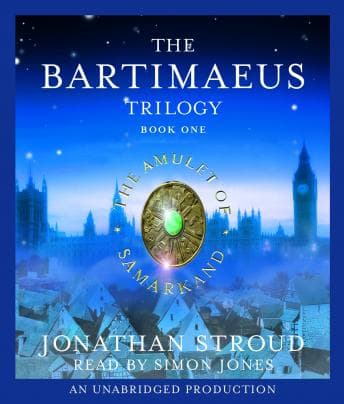
The Amulet of Samarkand is the first book in Jonathan Stroud's Bartimaeus Trilogy, and it's a peculiar beast. Set in an alternate London where magicians run the government through their control of summoned demons (called djinn, afrits, and imps), the story follows young apprentice Nathaniel as he summons the ancient and powerful djinni Bartimaeus to steal a magical amulet from the magician who publicly humiliated him. It's a buddy comedy where neither buddy actually likes each other.
Simon Jones and the Art of Five-Thousand-Year-Old Sarcasm
Simon Jones absolutely transforms this audiobook into something special. His Bartimaeus is perfection—dripping with five-thousand-year-old sarcasm, world-weary wit, and just the right amount of theatrical menace. When Bartimaeus drops one of his trademark snarky observations about human stupidity, Jones delivers it with such impeccable timing that I actually laughed out loud on the highway. The other drivers probably thought I was losing it.
What really sets this production apart is how Jones handles the book's unique structure. Stroud wrote Bartimaeus's chapters in first person with extensive footnotes—yes, footnotes in a fantasy novel—where the djinni offers sardonic commentary, historical asides, and general complaints about being summoned by a child. Lesser audiobook productions have apparently cut these footnotes entirely (a crime against literature, if you ask me), but Jones weaves them into the narration so naturally they feel like asides. It's like having a very old, very powerful, very annoyed spirit whispering sarcastic commentary directly into your ear.
The contrast between Bartimaeus and Nathaniel couldn't be sharper, and Jones nails both. His Nathaniel is all clipped ambition and barely-contained rage—a boy trying desperately to sound like the powerful magician he wants to become. There's something almost painfully real about how Jones captures that adolescent mix of vulnerability and arrogance. As someone who works with young people, I recognized that voice immediately. It's the kid who's been hurt and has decided the only way forward is to become untouchable.
A British Empire That Never Fell
The world-building here is genuinely clever. Stroud has created a society where the British Empire never fell because magicians maintain control through their demon servants. Parliament is full of scheming sorcerers, commoners are second-class citizens, and the whole system runs on exploitation—of humans and spirits alike. It's dark stuff dressed up in wit and adventure, and Jones's warm but dramatic delivery keeps you engaged even when the political machinations get dense.
At thirteen and a half hours, this is a substantial listen, but the pacing rarely drags. Jones knows when to speed through action sequences and when to let quieter moments breathe. The production quality is crystal clear—no background hiss, no weird audio jumps, just professional work throughout.
About That Annoying Protagonist
I will say this: if you need to love your protagonist immediately, you might struggle. Nathaniel is not designed to be likeable, at least not yet. He's a product of a cruel system, and Stroud doesn't let him off the hook for the choices he makes. But that's what makes the dynamic with Bartimaeus so compelling. The djinni sees right through Nathaniel's pretensions, and their reluctant partnership crackles with tension and dark humor.
The book does contain some fantasy violence and genuinely dark themes—murder, political assassination, and the casual cruelty of powerful people toward those beneath them. It's marketed as kids and family, but I'd call it solidly young adult. Younger listeners might miss some of the satirical edge, though they'll still enjoy the adventure and Bartimaeus's endless complaints about his working conditions.
Who's Going to Love This (And Who Should Skip)
If you want witty fantasy with genuine satirical bite and a narrator who can make footnotes entertaining, this is your next listen. Skip it if you need an immediately likeable hero or prefer your fantasy without political scheming.
Clear Your Commute Schedule
Simon Jones has apparently ruined other audiobooks for some listeners, and I understand why. His performance here is the gold standard for fantasy narration—distinct voices, emotional range, and comedic timing that elevates already excellent source material. That same kind of narrator-as-game-changer quality shows up in Wired for Love, where the right voice can make complex material feel like a conversation with a trusted friend. By the end, I'd completely forgiven Nathaniel for being annoying because I was too busy being impressed by how Jones made me care about a sarcastic five-millennia-old spirit and his irritating young master.
This is exactly what audiobooks should be: a performance that adds something the text alone can't provide. You're going to want to keep listening.