
"I'm not a criminal. I'm a victim."
Kyle McAvoy says this somewhere around the three-hour mark, and I actually paused my jog to laugh. Not because it's funny—it's genuinely not—but because it's such a perfect encapsulation of the psychological defense mechanism we call externalization. Here's a guy who made choices, bad ones, and now he's reframing his entire identity around victimhood to justify the morally bankrupt path he's about to take. My therapist would have thoughts about this character.
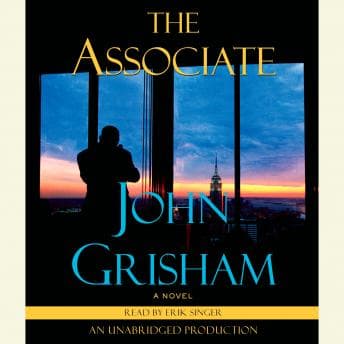
Look, I've read enough Grisham to know the formula. Bright young lawyer. Dark secret. Powerful forces. Cat and mouse. But what makes The Associate interesting—at least from where I sit—is how it functions as a case study in coercion and moral compromise. Kyle isn't stupid. He's Yale Law Journal editor-in-chief, for crying out loud. And yet he walks right into a trap that any first-year psychology student could see coming. Why? Because shame is a more powerful motivator than fear. The blackmailers don't threaten his life first. They threaten his reputation, his father's opinion of him, his carefully constructed identity. That's smart villainy.
The Psychology of a Cornered Rat
What Grisham gets right—and I'll give him credit here—is the gradual normalization of unethical behavior. Kyle starts by telling himself he's just gathering information. Then he's just accessing files he technically has permission to access. Then he's just... well, you see where this goes. It's textbook moral disengagement. Bandura would have a field day. Each small transgression makes the next one easier, and before you know it, you're so deep in that turning back feels impossible.
But here's where the book frustrated me: Kyle never really interrogates his own complicity in the original incident. The "dark secret" from college—involving a possible sexual assault—is treated more as a plot device than as something Kyle genuinely grapples with. We get his anxiety about exposure, sure. But where's the guilt? The self-examination? He's more worried about what people will think than about what actually happened. The protagonist exhibits classic avoidance patterns, but the narrative doesn't seem to recognize this as a character flaw. It's just... there.
Erik Singer Brings the Paranoia
Okay, so the narration. Erik Singer does something interesting with Kyle's internal monologue—he makes it sound genuinely paranoid without tipping into melodrama. The pacing matches Kyle's mental state: clipped and anxious when he's surveilling the office, slower and more contemplative during the rare moments of quiet. The character differentiation is solid too. Baxter Tate, the drug-addled trust fund disaster, sounds appropriately wrecked. The corporate lawyers all blend together in that deliberate, interchangeable way that I think is actually the point.
Some reviewers found Singer's tone too dramatic. I didn't have that experience, honestly. If anything, I thought he showed restraint. When you're narrating a story about a guy who's basically living in a spy thriller he didn't sign up for, a little tension in the voice makes sense. Though I'll admit—around hour seven, during yet another scene of Kyle sneaking around the law firm, I did zone out a bit. That's not entirely on Singer. The middle section just... drags.
Where the Narrative Loses Steam
Here's the thing about legal thrillers: the procedural stuff needs to earn its page time. And some of these scenes—the detailed descriptions of document review, the billing practices, the hierarchy of associates—feel more like Grisham showing off his research than serving the story. I get it. Big law is soul-crushing. The billable hour is a form of institutional torture. But I don't need three chapters to understand that.
The supporting cast is a mixed bag. Dale, the cubicle-mate, is set up as this mysterious figure who might be more than she seems. Second Wife does a better job with this kind of setup—when a character seems too perfect or too mysterious, the payoff actually lands. And then... not much happens with that. Baxter Tate is more interesting, honestly. His spiral is the kind of character study I wish the book spent more time on. What makes someone with every advantage destroy themselves? Now that's a question worth exploring.
My Professional Opinion (Take It or Leave It)
Probably wouldn't listen again. But I don't regret the time I spent with it. At 10 hours and change, it's a decent companion for a week of commutes. The production quality is clean, Singer is engaging, and Grisham knows how to keep pages turning even when the plot is spinning its wheels.
Who's this for? If you loved The Firm and want more of that "young lawyer in over his head" energy, you'll find it here. Who should skip? If you're looking for deep character psychology or moral complexity—the kind where protagonists actually reckon with their choices—temper your expectations. Kyle McAvoy is a protagonist who things happen to, more than a protagonist who drives the action.
By the end, I found myself asking: why does Kyle really make the choices he makes? The book gives us surface answers—fear, blackmail, survival. But the deeper why? That stays frustratingly out of reach. Grisham understands human nature in broad strokes. The mechanics of coercion, the corruption of institutions, the way power operates. But the interior life of his characters? That's where I wanted more. Still, for a thriller, it does its job. I just wish it had done more.