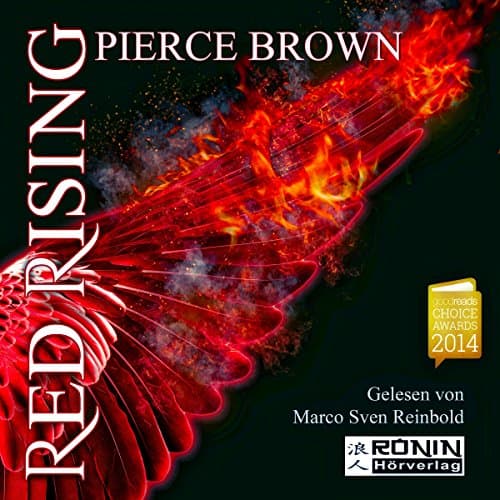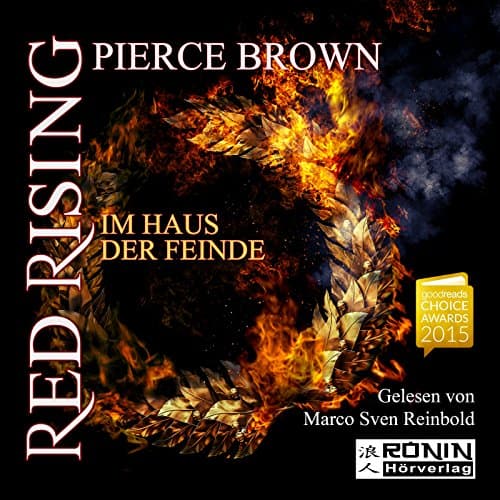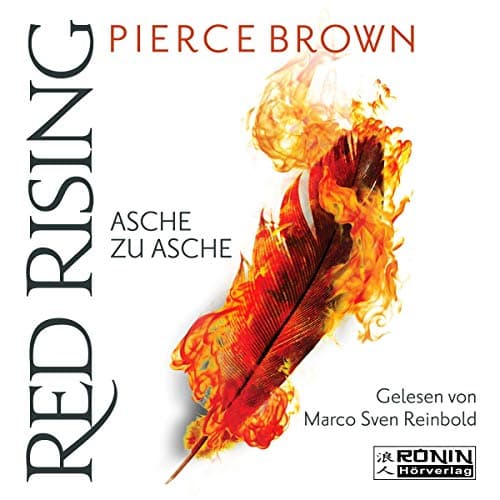

What happens when you win the revolution but lose the peace?
I was sitting in the break room at 2:47 AM, half a turkey sandwich in one hand, phone propped against my thermos, and Darrow was bleeding out - again - somewhere on Mercury while I tried not to think about Jamal's parent-teacher conference I'd have to hit on four hours of sleep. Twenty-six hours of audiobook. That's not a casual listen. That's a commitment, like signing up for overtime you didn't ask for but can't say no to.
The Revolution Lied and Darrow's Paying the Tab
Pierce Brown did something here that most sci-fi authors don't have the guts to do. He took his golden boy hero from the first trilogy and broke him. Not in some dramatic, cinematic way - in the slow, grinding way that real life breaks people. Darrow spent three books fighting a color-coded caste system, tearing Gold supremacy apart with his bare hands, and now? Ten years later, he's stuck in an endless war that his revolution kicked off. The freedom he promised? It ain't free. People are dying. His family is fracturing. And the man who thought he could save everybody is starting to realize he can't even save himself.
That hit different on a Tuesday night in a warehouse where I've been supervising the same routes for fourteen years. The warehouse taught me more than college - and one thing it taught me is that the people who start things rarely stick around to clean up the mess. Brown actually gets that. Darrow's not some untouchable action figure anymore. He's tired. He's making bad calls. He's holding on to a version of himself that doesn't exist anymore. Real blue-collar weight right here - not the work itself, but the burden of being responsible for things you can't control.
Reinbold Carries 26 Hours on His Back
Here's the thing about Marco Sven Reinbold - this is the German narration, so if you're expecting Tim Gerard Reynolds from the English version, recalibrate. Reinbold's emotional delivery is where he earns his paycheck. When Darrow's world is collapsing - and it collapses a lot - you can hear it in the voice. The exhaustion, the barely-held-together fury. There's a rawness to how he handles Darrow's internal monologue that kept me locked in even at 3 AM when my eyelids were fighting gravity.
I ran this at 1.6x because the clock is always ticking, and honestly? At 26 hours, you almost have to. Some of the battle sequences drag at normal speed - there's a LOT of military maneuvering, fleet movements, political chess. At 1.6x it flows like it should. The quieter moments between Darrow and the people he loves (or used to love) - those hit just as hard sped up. Reinbold's pacing is consistent enough that you don't lose the emotional beats even when you're pushing the speed.
I will say this - with a cast this massive, some secondary characters blur together vocally. Gold commanders start sounding alike after hour fifteen. But the main players - Darrow, Mustang, Sevro - they stay distinct enough that you always know who's talking.
Brown Respects the Cost of War
What kept me coming back shift after shift is that Brown doesn't glamorize the fighting. People lose limbs. People betray each other not because they're evil but because they're scared. There's a sequence where Darrow has to make a call that will get good people killed no matter which option he picks, and Brown doesn't let him off the hook with some clever third option. He just has to choose and live with it.
Jamal and Malik would call this fake as hell if the heroes never got hurt - but they do. Badly. And the book doesn't rush past it. You sit in the aftermath. You feel the cost. That's what separates this from the power-fantasy stuff that fills up the sci-fi shelves. Neil Gaiman does something similar in American Gods: The Tenth Anniversary Edition — gods who won their wars centuries ago are now broke, forgotten, and working graveyard shifts, and the cost of that fall lands just as heavy.
The world-building is massive - we're talking multiple planets, factions within factions, technology that would make your head spin. But Brown grounds it in human relationships. Father and son. Husband and wife. Brothers in arms who aren't sure they're on the same side anymore. Strip away the starships and the razor weapons and it's about people trying to hold things together when everything's falling apart.
Who Gets on This Forklift (And Who Walks)
If you burned through the original Red Rising trilogy and want to see what happens when the revolution's bill comes due - this is your book. If you've never read Red Rising, do NOT start here. You'll be lost before the first hour is up. And if you need your sci-fi wrapped up neat with a bow? This is book four of what became a six-book series. There's a cliffhanger. You've been warned. Skip it if you're not ready to go all-in on a series that'll eat your next few months.
Clocking Out
Twenty-six hours. I listened through three full shifts, two drives home in the F-150 with the heat blasting, and one Saturday morning while Malik watched cartoons and I pretended to be awake. 1.6x and still had me gripping the wheel. Pierce Brown built something here that respects the people who fight the wars and asks the question nobody wants to answer - what do you owe the world when the world owes you everything and pays you nothing? From the warehouse floor straight to you: this one's worth the hours.