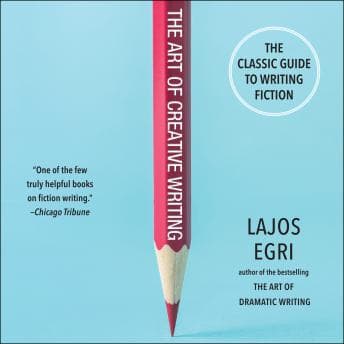

Look, I need to get something off my chest about writing craft books. They all promise to unlock the secrets of storytelling, and most of them are just repackaged advice from other craft books that were repackaged from even older craft books. It's turtles all the way down. So when I finally got around to Lajos Egri's The Art of Creative Writing - a book my grad school professor mentioned approximately 47 times - I was prepared to be underwhelmed.
I was wrong. Mostly.
The Ghost of Writing Instruction Past
Egri wrote this in the 1960s, and you can feel it. The examples sometimes land with a thud in 2024. Some of his psychological reasoning feels like it wandered in from a mid-century cocktail party where everyone's smoking and making sweeping generalizations about human nature. One listener I came across called it "rather silly," and honestly? I get it. There are moments where Egri sounds less like a writing teacher and more like your uncle who's had two martinis and suddenly has opinions about the female psyche.
But here's the thing - and I tell my students this about reading Hemingway or Fitzgerald - you have to meet old texts where they are. Strip away the dated examples, ignore the occasional condescension, and what you're left with is something genuinely valuable.
Why Character Is Everything (According to a Hungarian Man Who Was Right)
Egri's central argument is deceptively simple: every story lives or dies on the credibility of its characters. Not plot. Not theme. Character. Everything else flows from there.
I've been teaching literature for two decades, and I've watched countless students try to write stories that are essentially elaborate plot machines with cardboard cutouts moving through them. Egri would have hated those stories. He spends the bulk of this book drilling into human motivation - why people do what they do, how they change under pressure, what makes a fictional person feel real enough that a reader forgets they're fictional.
This isn't revolutionary advice in 2024, but Egri articulates it with a clarity that most modern writing books lack. He's not interested in vague encouragement. He wants you to understand the mechanics of character development the way an engineer understands bridge construction. Stress. Strain. Breaking points.
Dennis Kleinman Does the Heavy Lifting
Now, about the actual audiobook experience. Dennis Kleinman narrates with this clear, pleasant voice that makes even Egri's more pompous passages go down smoothly. The man has good pacing - he understands that instructional content needs room to breathe. I listened to chunks of this while grading essays at 11 PM (my wife Denise was asleep, the apartment was quiet, and I was pretending I wasn't falling behind on my stack of papers), and Kleinman's delivery kept me engaged even when my eyes were glazing over from student comma splices.
I couldn't find much about Kleinman's background online, but based on this performance, he's got a real gift for making didactic material feel conversational. That's harder than it sounds. Bad narrators turn craft books into lectures. Kleinman turns this into something closer to a conversation with a knowledgeable friend - even if that friend occasionally sounds like he's judging you.
Who This Is (and Isn't) For
Listen to this if you're serious about understanding character motivation. If you're a student of craft who wants to read the sources that influenced modern writing instruction. If you can tolerate some outdated attitudes in exchange for genuine insight.
Skip it if you want contemporary writing advice with diverse examples. If older books that haven't aged gracefully frustrate you. If you're after quick, actionable tips rather than deep analysis.
Worth Seven Hours of Your Life?
I'm giving this a solid rating because the core content is genuinely useful, even essential for certain writers. But I'm not calling it a must-listen because you need to come prepared. Know what you're getting into. Egri was brilliant about character. He was also a product of his time. I've seen that same tension between brilliant insight and dated perspective in 48 Laws of Power - another book where you have to separate the valuable framework from the occasionally problematic delivery.
At just under seven hours, it's not a huge commitment. I'd recommend 1.25x speed if you're already familiar with craft concepts - Kleinman's pacing is good but the content can drag in spots. If you're newer to writing instruction, keep it at 1.0x and actually absorb what Egri's saying about motivation and conflict.
My students would probably hate this. Too old-fashioned, too slow, too many references they wouldn't recognize. But for those of us who believe the classics still have something to teach - even the flawed ones - this is worth your time. Just go in with your eyes open.