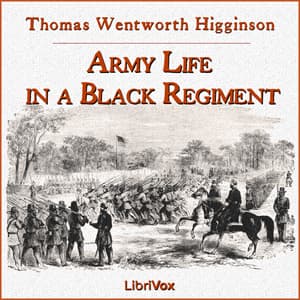

"We, this regiment, have established an era in the history of the war."
That line hit me somewhere around hour three, driving back from a client meeting in Houston. Higginson wrote those words in 1862, and I had to pull over for a minute. Twenty-five years in uniform, three combat deployments, and I'd never read a firsthand account of commanding the first Black regiment in the U.S. Army. That's a gap in my education I'm almost embarrassed to admit.
A White Colonel's Honest Reckoning
Let me cut to the chase: Thomas Wentworth Higginson was an abolitionist minister who took command of former slaves and turned them into soldiers. This isn't a sanitized history textbook version of events. This is a man writing in real-time about the men he led—their courage, their quirks, their songs, their superstitions, their absolute determination to prove they could fight.
What struck me hardest was Higginson's genuine surprise at his own prejudices. He expected to find men broken by slavery. Instead, he found soldiers who learned drill faster than white recruits, who showed initiative under fire, who had more invested in the outcome of this war than anyone else in uniform. The man had the intellectual honesty to document his own assumptions being demolished, page by page.
The combat accounts are solid—not dramatized Hollywood nonsense, but the real texture of Civil War operations in the South Carolina and Florida coastal regions. Nighttime raids up rivers. The constant threat of capture meaning something far worse than a POW camp for these men. Higginson understood what his soldiers faced if taken prisoner, and you can feel that weight in how he writes about their bravery.
The Songs That Survived Slavery
Here's something I wasn't expecting: Higginson was an amateur ethnographer. He transcribed the spirituals and work songs his men sang around campfires. These weren't the polished versions you might hear in a church choir—these were raw, syncopated, sometimes haunting verses that emerged from the fields and the suffering. He tries to capture the rhythm, the call-and-response structure, the way certain words got stretched or swallowed.
For a 19th-century white minister, the man showed remarkable respect for what he was witnessing. He knew he was documenting something that might otherwise be lost. And he was right. That kind of careful observation—watching people closely enough to see past your own assumptions—is exactly what Talking to Strangers explores, though Gladwell's looking at modern contexts instead of Civil War campfires.
FNH Behind the Mic
FNH delivers a straightforward reading—nothing fancy, no dramatic flourishes. For a historical memoir like this, that's probably the right call. You don't need theatrical performance when the material carries this much weight. The pacing works for the 8+ hour runtime, though I'd recommend 1.25x if you're used to modern audiobook production. The 19th-century prose has some long passages that benefit from a slightly quicker clip.
I'll be honest—I couldn't find much specific feedback on this narrator, so I'm working from my own ears here. Clean audio, clear enunciation, professional delivery. Not a performance that'll win awards, but it doesn't get in the way of the content.
Who Should Listen (And Who Should Stand Down)
If you're a military history person who thinks you know the Civil War, this will fill gaps you didn't know you had. If you're interested in the Black experience in America, this is primary source material from a critical moment. If you want to understand how institutional change happens in the military—slowly, painfully, with individual commanders pushing against resistance—Higginson documented that process in real time.
Skip this if you need action every chapter. There are combat sequences, but there's also a lot of camp life, administrative frustrations, and Higginson's philosophical observations. This is memoir, not thriller.
Content warning: This is war, and it's honest about violence. But more than that, it's honest about slavery—what it did to people, what they carried with them into uniform, what they were fighting to end.
End of Mission
Ranger slept through most of this one, but I didn't. Higginson wrote something that matters—a document of men proving their humanity to a nation that had denied it, led by an officer honest enough to record his own education. It's not a perfect audiobook experience, but the source material is essential for anyone who wears or has worn the uniform.
Worth your time? Absolutely. This is the kind of history that should be required at West Point and Annapolis. The fact that it isn't tells you something about how we teach military history.







![Steve Jobs [unabridged audiobook] audiobook cover](/_next/image?url=https%3A%2F%2Fcovers.audiobooks.com%2Fimages%2Fcovers%2Ffull%2F9788499923406.jpg&w=1920&q=75)