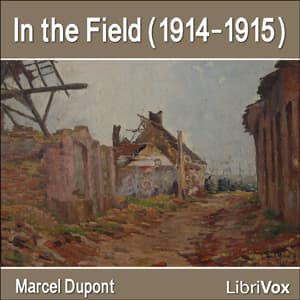

I expected something polished. What I got instead was mud and blood and the kind of honesty that makes you forget you're listening to someone who died sixty years ago.
Marcel Dupont wasn't trying to write literature. He says so himself in the opening—he's just a "modest Lieutenant of Chasseurs" recording what he saw. And that's exactly why this works. There's no heroic framing, no grand narrative about the meaning of war. Just a man watching his corner of the Western Front and writing it down. I finished grading a stack of junior essays on All Quiet on the Western Front last week, and honestly? Dupont's firsthand account hit harder than anything my students wrote about Remarque. That raw authenticity is something I found in Educated: A Memoir too—no polish, just the truth of what happened.
The Quiet Authority of Witness
What strikes you immediately is the restraint. Dupont doesn't dramatize. When he describes an advance or a retreat, there's this almost clinical precision—but underneath it, you feel the weight. The fear. The exhaustion. This is memoir as primary source, and it reminds me of what Hemingway said about writing true sentences. Dupont doesn't seem to know he's doing anything remarkable. He's just... telling you what happened. Game has that same unaware power—someone just living their truth without realizing they're creating art. That modesty becomes its own kind of authority.
The prose deserves to be savored, even in translation. Five hours isn't long, but it covers the first year of the war—August 1914 through 1915—and you feel every month of it. The rhythm of attack and waiting, the gradual erosion of certainty. My students would hate this. They'd call it slow. I love it.
FNH's Serviceable Reading
Here's where I have to be honest. FNH—whoever they are—gives a clear, steady narration. The pacing is consistent. You can follow everything. But this is a LibriVox recording, and it sounds like one. The French phrases get mangled occasionally. Names of towns, military terms, the little linguistic details that would anchor you in 1914 France—some of them come out awkward. Not ruinous. Just... noticeable.
I listened at 1.0x because the author chose those words, and I wanted to hear them properly. But I'll admit the delivery is flat in places where emotion might have lifted the material. There's no performance here, no interpretation. FNH reads the text. That's it. For a memoir this understated, maybe that's appropriate. Or maybe a more dynamic narrator could have found the heartbreak buried in Dupont's matter-of-fact sentences. Hard to say.
Who Should Listen (And Who Should Skip)
If you're looking for the audiobook equivalent of a Ken Burns documentary—sweeping, emotional, scored—skip this. If you want action-packed war narrative with clear heroes and villains, definitely skip this.
But if you teach history. If you love primary sources. If you've ever wondered what it actually felt like to be a junior officer in the French army watching the old world collapse in real time—this is worth your five hours. It's free on LibriVox, which helps. You're not spending a credit on this; you're just spending attention.
I listened during a long Saturday walk along the lakefront with Denise. She was doing her own podcast thing in her earbuds, and I was in 1914 France, watching a lieutenant try to make sense of artillery and orders and men dying around him. The Chicago wind off the lake felt almost appropriate. Cold. Indifferent. The world going on while someone else's world ends.
Class Dismissed
Dupont's memoir isn't going to change your life. It's not trying to. But there's something valuable about hearing a voice from the trenches that hasn't been filtered through a century of interpretation. No thesis. No argument. Just: this is what I saw. This is what we did. This is how it felt to be there.
The narrator limitations keep this from being a must-listen. But as a document, as a piece of history you can absorb while walking or driving or pretending to pay attention to budget presentations—it's quietly powerful. The kind of book that stays with you not because it shouted, but because it whispered something true.






![Steve Jobs [unabridged audiobook] audiobook cover](/_next/image?url=https%3A%2F%2Fcovers.audiobooks.com%2Fimages%2Fcovers%2Ffull%2F9788499923406.jpg&w=1920&q=75)