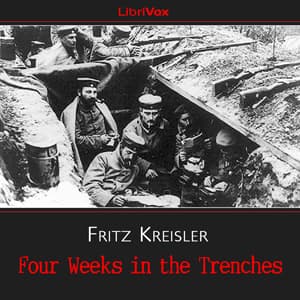

Let me cut to the chase: I expected another sanitized war memoir from some officer who spent most of his time behind the lines. What I got instead was a world-class violinist describing how he bayoneted a man and then couldn't stop thinking about the calluses on the dead soldier's hands.
Fritz Kreisler wasn't some armchair general dictating memoirs from a leather chair. This was a concert violinist—one of the most celebrated musicians of his era—who found himself as a lieutenant in the Austro-Hungarian army on the Eastern Front in 1914. The disconnect between his former life and his new reality creates something genuinely unsettling. Here's a man whose fingers were insured for fortunes, now gripping a rifle in Galicia.
When Artists Go to War
What sets this apart from the mountain of WWI memoirs I've consumed is Kreisler's perspective. He notices things a career soldier wouldn't think to mention. The quality of silence between artillery barrages. The way exhaustion makes time elastic. He describes the strange camaraderie of men who know they're probably going to die—not with the bravado you'd expect, but with this quiet, almost musical observation.
At just over an hour, this isn't a comprehensive war history. It's a snapshot. Four weeks. That's it. But those four weeks include hand-to-hand combat, watching friends die, and the peculiar guilt of surviving when others don't. Kreisler was wounded and discharged, which is the only reason this account exists at all.
The Narrator Situation
Here's where I have to be straight with you—FNH delivers a serviceable reading, but there's nothing remarkable about it. This is a LibriVox recording, which means volunteer narrator, which means you're getting competence rather than artistry. The audio is clean enough, no major issues, but don't expect the kind of performance that elevates the material. For a free audiobook, it does the job. For a paid production? You'd want more.
The text itself carries the weight. Kreisler's prose is surprisingly modern and direct—no Victorian flourishes or excessive formality. He writes like he's talking to you across a table, which makes the horror land harder when it comes.
The Eastern Front's Forgotten Chaos
I've read plenty about the Western Front. Verdun, the Somme, all of it. The Eastern Front gets criminally overlooked, and this account reminds you why that's a problem. Noble Woman: The Life-Story of Edith Cavell gave me a similar perspective on WWI's forgotten corners—the execution of a nurse doesn't make headlines like the Somme, but it mattered just as much. Different terrain, different tactics, different kind of chaos. Kreisler describes cavalry charges—actual cavalry charges—alongside modern artillery. The collision of 19th-century warfare with 20th-century weapons is something he captures without trying to make a point about it. He just reports what he saw.
There's a moment where he talks about the transformation that happens to men in combat—how civilization peels away and something older takes over. Radium Girls describes a different kind of transformation—watching women's bodies betray them while their employers lied about the danger. I've seen that shift. I've felt it. Reading accounts from 1914 and recognizing the same psychological reality from Fallujah... that's the kind of thing that makes war literature matter.
Worth Your Time? Here's the Debrief
At 76 minutes, this is barely a commitment. I listened to it during a drive to a client meeting in Houston—Ranger was in the back, ears perked during the combat sequences. (He's got good instincts.)
Who should listen: Anyone interested in WWI beyond the usual British/French perspective. History buffs who want primary sources. Veterans who appreciate honest accounts of combat psychology. Musicians, actually—there's something fascinating about a virtuoso describing violence.
Who should skip: If you want comprehensive history, this isn't it. If you need polished production values, look elsewhere. If you're expecting action-movie pacing, adjust your expectations.
Mission Assessment
This is a historical document more than entertainment. It's brief, it's honest, and it captures something true about what war does to men—even men whose hands were made for Beethoven, not bayonets. The production is bare-bones, the narrator adequate, but the source material has weight.
For a free LibriVox recording of a public domain text, you're getting exactly what you'd expect. For the content itself—the actual words Kreisler wrote—it's worth your 76 minutes. Ranger approved, though he fell asleep during the philosophical parts. Can't blame him. He's more of an action guy.







![Steve Jobs [unabridged audiobook] audiobook cover](/_next/image?url=https%3A%2F%2Fcovers.audiobooks.com%2Fimages%2Fcovers%2Ffull%2F9788499923406.jpg&w=1920&q=75)