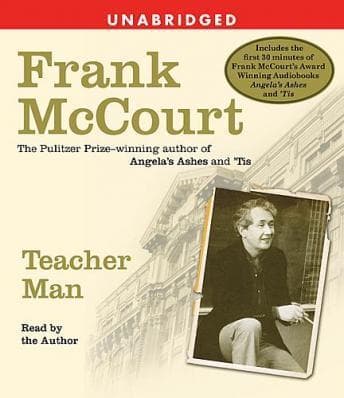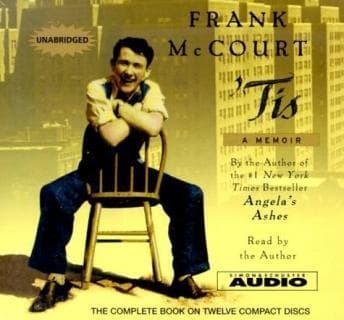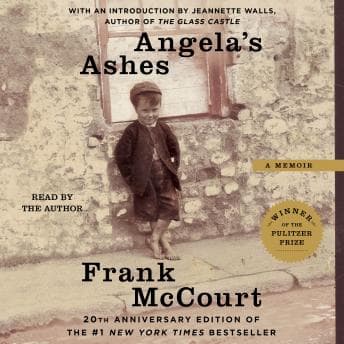

Fifteen hours. That's how long Frank McCourt sits in your ear, telling you about the worst childhood you've ever heard described with such devastating wit. And somehow—somehow—you don't want him to stop.
Look, I've listened to a lot of memoirs. Business leaders, athletes, celebrities with ghostwriters who probably did all the heavy lifting. Most of them feel like extended LinkedIn posts. 10% Happier is one of the few that doesn't—Dan Harris narrates his own mess with the same kind of unflinching honesty. This? This is something else entirely.
When the Author IS the Audiobook
Here's what makes this different from every other memoir in my library: Frank McCourt reading his own words isn't a gimmick. It's the entire point. The man taught English in New York City for decades, and you can hear it—that teacher's rhythm, the way he knows exactly when to pause, when to let a line breathe, when to twist the knife with perfect comic timing.
His Irish accent isn't performed. It's lived. When he voices his father Malachy—exasperating, drunk, spinning tales of Cuchulain while the children starve—you hear generations of complicated love in that voice. When he becomes young Frank, begging for a pig's head for Christmas dinner, there's no pity in it. Just matter-of-fact survival.
I've seen plenty of author-narrated audiobooks fall flat. Writers aren't actors. But McCourt? He's a storyteller in the oldest sense. The kind my grandmother would've recognized. The kind my parents were too busy working to become.
The Slow Burn That Earns Its Length
I'll be honest—the first hour or two, I was skeptical. The pace is deliberate. There's no three-act structure, no "inciting incident" in chapter one. It's just... life. Miserable, grinding, Irish Catholic life in the slums of Limerick.
But here's the thing about listening at 2.0x speed: even I slowed down for this one. McCourt's prose has a rhythm that demands you hear it properly. The lack of quotation marks, the run-on sentences that mirror a child's breathless observations—it works in audio in a way it might not on the page.
And the humor. Good lord, the humor. This man watched siblings die, wore rags for diapers, and still manages to make you laugh at the absurdity of it all. Not despite the tragedy—because of it. That's not a writing technique you learn in an MFA program. That's survival.
What My Parents Would Recognize
I kept thinking about my mom and dad while listening. Different continent, different circumstances, but that same immigrant hustle. That same "we don't complain, we just work" mentality. McCourt's mother Angela, keeping children alive on nothing while her husband drinks away whatever pennies come in—that's not a character study. That's a portrait of every parent who ever chose their kids over their own sanity.
Business books love to talk about resilience. Grit. The entrepreneurial mindset. They package it with frameworks and case studies and TED talk anecdotes. McCourt just lived it. No framework. No five-step process. Just: you survive, or you don't. And if you survive, maybe you tell the story.
The Hard Parts
I won't pretend this is easy listening. The poverty is relentless. The alcoholism is infuriating. There are moments involving the Church that made me pause my run and just... stand there for a minute. If you're looking for something light for your commute, this ain't it.
But if you want something that'll stick with you? That'll make you think about your own family, your own luck, your own stories? This is the one.
(Jenny asked why I was so quiet after finishing it. I didn't have a good answer. Still don't.)
Who This Is For (And Who Should Skip)
If you've got immigrant parents, working-class roots, or any complicated feelings about family and faith—this will hit different. Skip it if you need plot momentum or can't handle sustained bleakness, even when it's laced with dark humor.
Worth Every Minute
Fifteen hours is a commitment. I know. But McCourt earns every minute. This isn't a Pulitzer Prize winner because critics wanted to feel literary—it's a Pulitzer winner because it's true. Painfully, beautifully, hilariously true.
The audiobook isn't just the best way to experience this story. With McCourt's own voice guiding you through Limerick's lanes, it might be the only way. When he died in 2009, we lost the chance to hear new stories. But we've got this one. And honestly? It's enough.
Skip the business book you were planning to start. This teaches you more about resilience than any leadership manual ever could.