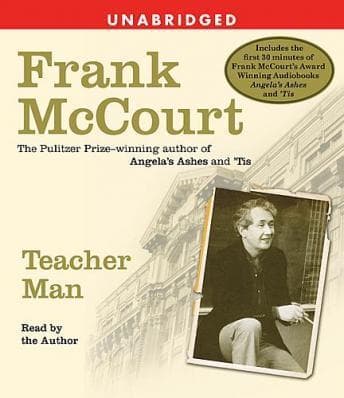

I was grading essays at 11 PM—the usual stack of half-hearted five-paragraph themes about symbolism in The Great Gatsby—when I put on Teacher Man. Big mistake. Suddenly I'm laughing so hard my wife comes in asking if I've finally lost it. Twenty years in the classroom, and here's Frank McCourt putting into words every frustration, every small victory, every moment of sheer absurdity I've lived through but never quite articulated.
Look, here's the thing about McCourt reading his own work: it's not polished. Some reviewers mention he sounds like he has marbles in his mouth, and honestly? They're not wrong. That Irish brogue gets thick sometimes, especially when he's rolling through a story at full speed. But I wouldn't trade it for the most pristine professional narration in the world. This is a man who stood in front of teenagers for thirty years. You can hear it. You can hear the classroom in his voice. That same authenticity—someone who lived the story narrating their own truth—is what makes Open Book so compelling.
When the Author IS the Performance
There's something almost sacred about hearing McCourt tell his own stories. His imitations of students—the wise guys, the dreamers, the ones who challenged him at every turn—are priceless. This isn't an actor interpreting a character. This is a man remembering. The pauses aren't scripted. The laughs that creep into his voice aren't performed. When he talks about a student who finally got it, who finally wrote something real, you hear the catch in his throat.
The 2007 Audie Award for Biography/Memoir wasn't charity. McCourt earned it by doing what great teachers do: making you feel like you're the only person in the room, even when you're walking the lakefront with earbuds in, pretending to exercise.
My students would probably zone out. Too slow, they'd say. Where's the plot? But that's the point. Teaching doesn't have a plot. It has moments. It has the kid who throws a sandwich at you and the kid who quotes your words back at you ten years later. McCourt gets this. He lived it.
The Messy Truth About Teaching
This isn't Angela's Ashes. If you're coming in expecting that same gut-wrenching poverty narrative, you might feel like the focus has loosened. Some listeners call it repetitive, even a rant at times. And yeah, McCourt circles back to certain frustrations—the bureaucracy, the parents who don't show up, the administrators who've never taught a class in their lives. But that's teaching. It IS repetitive. The same battles, different kids, year after year.
What McCourt does brilliantly is show how storytelling became his weapon. He'd lose the class with traditional lessons, then win them back with a tale from Limerick. He figured out what every good teacher eventually learns: you're not teaching content. You're teaching yourself. You're using who you are to reach who they might become.
The warmth here is genuine. McCourt doesn't pretend he was a perfect teacher. He talks about the days he phoned it in, the lessons that bombed, the moments he wanted to walk out and never come back. That honesty? That's what makes this required listening for anyone who's ever stood in front of a classroom wondering if any of it matters.
Who Gets an A, Who Should Drop the Course
Teachers will feel seen in a way that's almost uncomfortable. Non-teachers will finally understand why we come home exhausted and still somehow love the job. Skip this if you need tight narrative structure or crisp audio production—McCourt's voice can get mumbly, and you might catch yourself rewinding a few times.
Class Dismissed
I finished this one during a particularly brutal stretch of parent-teacher conferences. Denise asked why I kept smiling at my phone. I told her Frank McCourt just reminded me why I do this. Why we all do this.
Listen at 1.0x—the man chose those words, those pauses, and they deserve to land properly. The production is clean, nothing fancy, just Frank in a booth telling you about his life. And anyone who's ever wondered how a sixty-six-year-old retired teacher became a Pulitzer Prize winner will get their answer: he spent thirty years learning how to tell a story, one unruly classroom at a time.
This is why we still read the classics. Because sometimes the classics are still being written by guys who taught high school English and figured out that the best stories are the true ones, told with a little Irish lilt and a lot of hard-won wisdom.