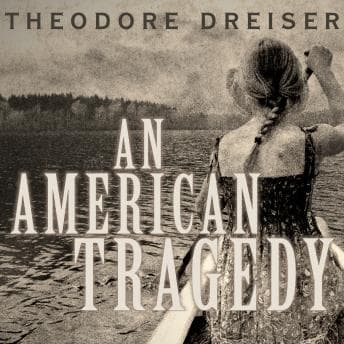

I'm going to start with a complaint. Thirty-four hours. Thirty-four hours and seventeen minutes of Theodore Dreiser's prose, and somewhere around hour twelve I found myself muttering at my phone like a man losing his grip on reality. "Get to the point, Theodore. For the love of God, get to the point."
But here's the thing about Dreiser that my students would never understand—and frankly, neither did I until I committed to this marathon during a particularly brutal stretch of grading sophomore essays on The Great Gatsby. The man isn't being wordy for sport. He's building a case. Like a prosecutor who refuses to leave a single piece of evidence unexamined, Dreiser constructs Clyde Griffiths's downfall with such meticulous, almost obsessive detail that by the time tragedy strikes, you realize you've been watching a man drown in slow motion for thirty hours. And you couldn't look away.
The Naturalist's Burden (Or: Why This Book Feels Like Homework That Matters)
This reminds me of what Hemingway said about prose being architecture—except Dreiser didn't get that memo. His prose is more like... municipal planning documentation. Every street corner of Clyde's life gets surveyed, measured, and catalogued. The poverty of his childhood. The cheap glamour of the hotel where he works as a bellboy. The factory. The lake. The courtroom. Dreiser doesn't trust you to imagine the social machinery grinding Clyde down—he shows you every gear, every cog, every tooth.
And it works. Frustratingly, it works.
Dan John Miller understands this. His narration is appropriately didactic, which sounds like criticism but isn't—not entirely. Dreiser wrote a novel that reads like a sociological study with a pulse, and Miller delivers it that way. He shifts tone with the text, moving from the desperate internal monologue of Clyde to the cold procedural language of the trial scenes. The characters became genuinely real to me through both author and narrator working in concert.
But. (There's always a but with a thirty-four hour audiobook.)
When Miller gave us Sandra Finchley's baby-talk affectations—faithful to the text, I'll grant him that—I wanted to throw my phone into Lake Michigan. I was walking the lakefront with Denise when that voice first appeared, and she asked if I was having a medical episode. I was not. I was simply experiencing Dreiser's satirical portrait of upper-class frivolity rendered in audio form. It's accurate. It's also deeply irritating.
When the Climax Arrives Like a Coroner's Report
Here's my confession: the climax of this story—the actual tragedy, the moment everything Dreiser has been building toward finally arrives—lands with less emotional punch than it should. Miller narrates it with the same measured, documentary tone he uses throughout, and while that's consistent, it means the devastating turn feels almost... clinical. Some listeners have said they never got a sense that something truly tragic was happening. I understand that criticism. I felt it too.
And yet.
The prose deserves to be savored, even when it's testing your patience. Dreiser published this in 1925, based on an actual murder case, and the questions he raises about American ambition—about how we create the very monsters we condemn—haven't aged a day. My students would hate this. The length, the repetition, the refusal to rush toward spectacle. I love it. Not despite those qualities, but partly because of them.
This is why we still read the classics. Not because they're easy or entertaining in the Netflix sense, but because they force us to sit with uncomfortable truths. Clyde Griffiths is a pathetic man. He's also a product of a society that taught him to want things he could never legitimately have. Dreiser doesn't let you off the hook by making him sympathetic or monstrous—he's both, and neither, and entirely recognizable.
Who Can Handle Thirty-Four Hours of Dreiser
Listen to this if you want to understand what naturalism actually means in American literature. If you've seen *A Place in the Sun* and want to know what Montgomery Clift's character was really thinking. If you can commit to a long, slow burn and emerge on the other side feeling like you've genuinely learned something about how this country works.
Skip it if you need a quick thriller, if you want a narrator who performs emotional urgency rather than trusts the text to provide it, or if you can't tolerate the occasional baby-talk voice. (I'm still not over it.)
I finished this audiobook at 11 PM on a Tuesday, grading papers forgotten on my desk, and I sat there for a long moment just... processing. It's not a comfortable experience. It's not supposed to be. But if you loved *Sister Carrie*, this is its spiritual successor—bigger, darker, more ambitious. If you've never read Dreiser at all, maybe start there first. Or if you want something that explores similar themes of nature versus nurture but with actual wolves, White Fang might be more your speed—though it's still London, so don't expect brevity.
The Professor's Final Grade
The narrator deserves credit for stamina if nothing else. Thirty-four hours of controlled, consistent delivery is no small feat. Miller won't make you weep, but he'll make you think. And sometimes that's enough.