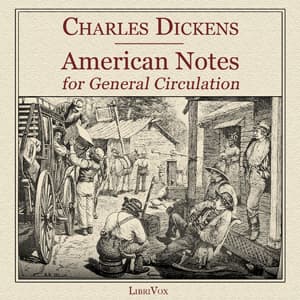

Let's be real for a second: Charles Dickens was the original "this meeting could have been an email" guy.
I picked this up because I wanted to hear a British literary giant roast 19th-century America. I expected sharp wit. I got that. But I also got the first hour of the book, which is essentially Dickens complaining about a boat. 11 hours total? I cranked this up to 2.5x speed immediately. Time is money, and Charlie is spending it like he's on an expense account he doesn't have to justify.
(Jenny saw me grimacing during the opening chapters while I was doing the dishes and asked if I was listening to quarterly earnings calls again. I told her, "No, just a Victorian travel blog that needs an editor.")
The Victorian Consultant's Report
Here's the thing—once Dickens actually lands in Boston, the ROI on this listen goes way up. Think of American Notes not as a travel diary, but as a brutal due diligence report on a distressed asset called "The United States."
He walks into prisons, asylums, and factories with the energy of a McKinsey partner looking for operational inefficiencies. And honestly? He finds them. His commentary on the sanitary conditions (or lack thereof) and the American habit of spitting tobacco everywhere is gold. My parents ran a dry cleaning business for thirty years; if Dickens had seen the stains they dealt with, he would've written a horror novel instead of Oliver Twist. Hard Times shows Dickens applying that same forensic eye to British factory conditions—turns out he wasn't just roasting Americans.
But it's not all hygiene checks. The section on slavery is heavy. It's the "red flag" in the audit. He drops the humor and goes straight for the throat. Necessary, but a harsh gear shift from his complaints about bad manners. It feels disjointed—but maybe that's the point. America was disjointed. Narrative of the Life of Frederick Douglass doesn't have that tonal whiplash—it's unflinching from page one.
Matt Addis and the Narrator Roulette Problem
I listened to the version anchored by Matt Addis. I couldn't find much on his background, but the guy understands the assignment. He nails that specific tone of "polite British condescension" that Dickens is famous for. You can practically hear the eyebrow raise in his voice.
However—and this drives me crazy—some versions of this audiobook are a patchwork of different readers. It's like a conference call where people keep hopping on and off the line with different microphone qualities. If you get a version that switches narrators, it kills the momentum. Addis is great, but if the production quality dips or the voice changes, I'm out. It disrupts the flow state.
The Bottom Line (Over Espresso)
Is this essential reading? For a business operator? No. For a history buff who wants to hear a famous author trash-talk a young nation? Absolutely. Skip this if you need tight pacing or practical takeaways—Dickens meanders like he's billing by the hour.
It's a mixed bag. The insights are sharp, but the pacing is all over the place. It drags. It sprints. It meanders. If this were a slide deck, I'd send it back with notes to cut 30% of the fluff. But since it's Dickens, we call it "atmosphere."
Bottom line: Skip the first hour. Start when he hits American soil. And for the love of efficiency, listen at 2.0x speed. You won't miss anything critical, and you'll get the best insults in half the time.








![Steve Jobs [unabridged audiobook] audiobook cover](/_next/image?url=https%3A%2F%2Fcovers.audiobooks.com%2Fimages%2Fcovers%2Ffull%2F9788499923406.jpg&w=1920&q=75)