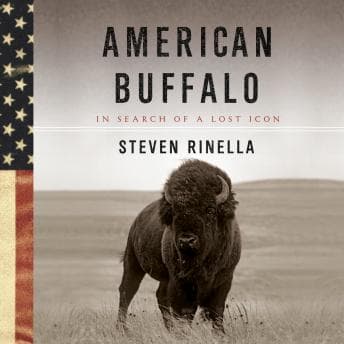

So there I was, 6:47 AM on the Caltrain, barely conscious, and Steven Rinella is describing how he's rafting buffalo meat down an Alaskan river while grizzly bears stalk him from the shore. I missed my stop. Worth it.
Look, I don't hunt. I've never held a rifle. My idea of wilderness survival is finding a coffee shop with outlets. But this book grabbed me by the collar and wouldn't let go, and I think it's because Rinella does something really clever - he uses his buffalo hunt as a framework to basically teach you 14,000 years of North American history without you realizing you're learning.
The Info Dump That Actually Works
Here's my thing with nonfiction audiobooks: most of them could've been blog posts. (You know the type - one good idea stretched across 8 hours with increasingly desperate examples.) American Buffalo is the opposite problem, if you can call it a problem. Rinella packs SO MUCH into 7 hours and 42 minutes. The Bering Land Bridge. Buffalo jumps where Native Americans ran herds off cliffs. A bone charcoal factory in Detroit that turned millions of buffalo skeletons into fine china. A depressed buffalo named Black Diamond who became the model for the American nickel and then got slaughtered in a Manhattan meatpacking district.
It's a lot. I won't lie - there were moments where I was like, okay Steve, I get it, buffalo bones were everywhere. But then he'd pivot back to his hunt, describe the snow and the cold and the weight of the meat on his raft, and I'd be hooked again. The structure is basically: adventure, history lesson, adventure, history lesson. If you're the type who hates tangents, this might drive you nuts. But if you're like me and your brain is basically a distributed system that processes information in parallel anyway, it works.
When the Author IS the Narrator
Rinella narrates this himself, and - okay, I'm spoiled by Ray Porter, we all know this - but he's genuinely good. He's got this laconic, cowboy-adjacent delivery that fits the material perfectly. Not performative. Not trying to be a capital-N Narrator. Just a guy who's been cold and hungry on a mountain telling you about it.
The thing about author-narrated books is they can go either way. Sometimes the author has no business being behind a microphone (looking at you, every tech founder memoir ever). But Rinella's a storyteller by trade - MeatEater on Netflix, The Wild Within on Travel Channel - so he knows how to hold attention. There's a warmth there. When he describes finding that first buffalo skull that started his whole obsession, you can hear the wonder in his voice. It's not manufactured.
I listened at 1.25x, which felt right. His natural pace is deliberate without being slow, so speeding up too much would've killed the vibe.
The Hunting Thing
I should address this because I know some people will skip based on the premise alone: yes, there's hunting. Yes, he kills a buffalo. If that's a hard no for you, I respect it, but you'd be missing something interesting. Rinella doesn't treat hunting as sport or trophy-collecting. He treats it as this ancient human activity that connects him to thousands of years of people who did the same thing on the same land. There's a reverence there that surprised me.
The hunt itself is genuinely harrowing. Hypothermia, grizzly bears, sketchy rafting conditions. At one point I was stress-listening on the train like it was a thriller. My seatmate definitely noticed. That same edge-of-your-seat tension showed up in Man-Eaters of Tsavo, though honestly that one didn't stick with me the way this did.
Perfect For: Train, Gym. Skip For: Deep Work
This is a solid commute book. You can zone out for a minute during a history tangent and pick back up without losing the thread. The adventure sections will wake you up if you're fading. Not great for focused work because you'll actually want to pay attention.
The ROI on this audiobook is high if you're interested in American history, ecology, or just want to understand why buffalo are such a loaded symbol in this country. 40 million animals reduced to a few hundred in less than a century - that's a story about us as much as it's about them.
Listen if: you want history that doesn't feel like homework, you're curious about hunting culture without the bro energy, or you just need something gripping for your commute. Skip if: animal death is a dealbreaker or tangent-heavy structure makes you twitchy.
Would I listen again? Probably not cover to cover, but I'd revisit the hunt sections. And I've already recommended it to Kevin, who's now threatening to take up hunting. What have I done.





![Steve Jobs [unabridged audiobook] audiobook cover](/_next/image?url=https%3A%2F%2Fcovers.audiobooks.com%2Fimages%2Fcovers%2Ffull%2F9788499923406.jpg&w=1920&q=75)