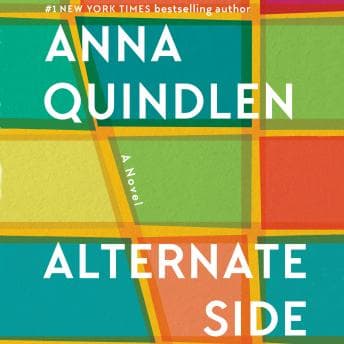

Can we talk about how Anna Quindlen made me feel personally attacked about my own neighborhood dynamics? I'm sitting in my minivan in the garage (my sacred 45 minutes of silence before the chaos resumes inside), listening to these Upper West Side people fight over PARKING SPOTS like their lives depend on it. And I'm thinking—wait, didn't I get weirdly territorial last week when someone parked too close to my driveway? Quindlen, you didn't have to come for me like that.
When Your Dead-End Street Becomes a Crime Scene
Here's the setup: Nora Nolan lives on one of those impossibly charming NYC blocks where everyone knows everyone, the kids grow up together, and there's a tiny parking lot that functions as the neighborhood's status currency. It's cozy. It's insular. Basically a small town dropped into Manhattan. Then violence shatters the bubble, and suddenly all these "we're basically family" neighbors are revealing exactly who they've been all along.
What I loved—and I mean genuinely loved, not just "this was fine" loved—is how Quindlen captures the way we build our lives around convenient fictions. Nora thinks she knows her neighbors. She thinks she knows her marriage. She thinks she knows herself. The incident on the block (I won't spoil it, but it involves the handyman everyone relies on) becomes this catalyst that forces her to actually look at what's been there all along.
The class dynamics hit different when you're a mom who left a career. Nora's watching the divide between the people who own the brownstones and the people who fix them, and there's this uncomfortable recognition of how we're all complicit in systems we don't like to examine too closely. Quindlen doesn't preach about it—she just shows you, and lets you squirm.
Ellen Archer Gets the Assignment
Ellen Archer narrates, and she's got that warm, intelligent voice that works perfectly for Nora's interior monologue. There's a wryness to her delivery that captures Quindlen's observational humor without overselling it. When Nora's being self-aware about her own privilege and blindspots, Archer walks that line between self-deprecation and genuine insight.
I will say—and this is my one real complaint—there were moments during group conversations where I lost track of who was speaking. The neighbors all have distinct personalities on the page, but vocally they can blur together a bit. Not a dealbreaker, but I did have to rewind a couple times during the dinner party scenes. (Which, to be fair, might also be because Sophie woke up mid-nap and I was listening while simultaneously negotiating a toddler crisis.)
The pacing is... deliberate. Some people are going to call it slow. I'd call it realistic. This isn't a thriller—it's a character study of a woman and a marriage and a community at a turning point. If you need constant plot momentum, this might frustrate you. But if you're okay with a book that unfolds like real life—gradually, with lots of small moments that add up to something bigger—it works.
The Marriage Stuff Will Make You Think
Nora and Charlie have been married forever. They have the twins in college, the established routines, the comfortable silences that might actually be uncomfortable silences if you looked too closely. Quindlen writes long marriage with such specificity—the way resentments calcify, the way you can love someone and also feel profoundly alone next to them, the way a crisis can either bring you together or crack you wide open.
I finished this during a combination of nap times and car-garage sessions over about a week, and honestly? It stayed with me. Not in a "sobbing at school pickup" way, but in a "staring at my husband over dinner wondering what we're not saying to each other" way. Which is maybe more unsettling.
At 7 hours 41 minutes, it's the perfect length for a week of fragmented listening. Nothing groundbreaking happens—Quindlen isn't trying to shock you. She's trying to make you see ordinary life more clearly. And she does. That same kind of clear-eyed observation about women's lives and choices runs through My Brilliant Friend, though Ferrante's version is grittier and spans decades.
Who This Is (and Isn't) For
This is a book for women of a certain age who've made certain choices and sometimes wonder about the roads not taken. It's for anyone who's ever looked around at their carefully constructed life and thought "is this it?" Not in a dramatic way. Just in a Tuesday afternoon kind of way. Skip it if you want plot-driven suspense or can't handle a slow burn.
My book club would love this (if I ever have time for book club again). It's the kind of book that generates actual conversation—about class, about marriage, about the stories we tell ourselves about our own lives.
Car Time Approved
Not groundbreaking, but sometimes you don't need groundbreaking. Sometimes you need a smart, observant novel that sees you a little too clearly.