
I'll be honest - I started this one at a faculty meeting about standardized testing benchmarks. Principal Martinez was forty minutes into a slide deck that could've been an email, and I was forty minutes into a serial killer case in Las Vegas. One of these things held my attention. I'll let you guess which.
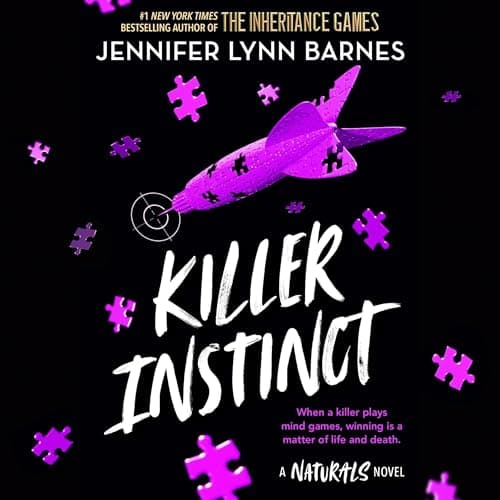
Jennifer Lynn Barnes is doing something sneaky with this series, and by book three, I've figured out her game. She's writing what looks like a YA thriller on the surface - teenage FBI consultants, Vegas casinos, coded tattoos on dead bodies - but underneath she's running a legitimate psychology seminar. Barnes has a Ph.D. from Yale in cognitive science, and it shows. The way Cassie profiles people isn't hand-wavy TV magic. When she walks through a crime scene and starts building behavioral models based on the killer's method changes - different weapon, different approach, but the same obsessive numerical signature - Barnes is actually teaching readers how criminal profiling works. My students would hate this. I love it.
The Numbers Game Behind the Murder
Let's talk about what Barnes is really saying with the structure here. Three casinos. Three bodies. Three days. The killer tattoos strings of numbers on victims' wrists, and the code-breaking element turns this into something closer to a puzzle box than a standard whodunit. What impressed me is that Barnes doesn't cheat - the clues are planted early enough that a careful listener can start assembling the pattern before the Naturals do. I caught a piece of it around hour five, during a scene where Cassie cross-references the numerical sequences with casino floor layouts, and felt that rare satisfaction of being ahead of the protagonist for exactly two minutes before Barnes pulled the rug out from under me. Again.
The rotating kill methods are the real hook, though. Most serial killer fiction gives you a signature and milks it. Barnes strips that comfort away. Each murder is public - happening right under casino surveillance - yet the killer ghosts every camera. That impossibility drives the tension in a way that's genuinely clever rather than just gimmicky. By the time you're processing the logistics of how someone commits murder in the most surveilled buildings on earth without appearing on a single feed, you're doing exactly what Barnes wants: thinking like a profiler.
Cassie Hobbes and the Weight of Inherited Trauma
Here's where the book gets personal, and where it elevated itself above the previous two entries for me. Cassie's mother's cold case breaks open in the middle of an active serial investigation, and Barnes doesn't take the easy road of making that a subplot. It's THE plot - the emotional one, anyway. The way Cassie compartmentalizes her mother's case while profiling a killer is the same way any of us compartmentalize personal grief while doing our jobs. (I graded twenty-three essays the week my father passed. You just do it. You hate yourself a little, but you do it.)
The team dynamics have genuine wear on them by book three. Michael and Dean aren't just love-triangle furniture anymore - their friction with Cassie feels earned, rooted in three books of accumulated loyalty and betrayal. The scene where the team splinters over whether to pursue Cassie's personal lead or stay focused on the active case - that argument felt lived-in, not manufactured for drama.
Amber Faith at the Poker Table
Amber Faith narrates at a steady, controlled clip that works well for the procedural elements. She handles the profiling monologues - where Cassie slips into second-person to inhabit a killer's perspective - with the right amount of detachment. It's clinical without being cold. Faith understands that pause is punctuation, and there are moments during the code-breaking sequences where she lets a beat of silence land before a revelation that genuinely heightened the impact.
That said, the male characters blur together vocally more than I'd like. Michael's sardonic edge and Dean's brooding intensity should sound distinctly different in the ear, and they don't always. It's serviceable, not standout. For a cast this tight-knit, where relationships carry so much weight, I wanted more vocal differentiation.
Who Gets a Seat at This Table (And Who Should Fold)
If you loved Truly Devious or burned through The Inheritance Games, this is its spiritual successor on the darker side. You get a genuine puzzle, real psychological framework, and a protagonist who earns her deductions rather than stumbling into them. The trade-off? It's book three of a series, and Barnes doesn't hold your hand with recaps. Walking in cold would be like starting Middlemarch at Book Six - technically possible, deeply inadvisable.
If you need standalone mysteries or can't tolerate YA relationship dynamics woven through your crime fiction, this will frustrate you. Skip it. I had a similar reckoning with Dispossessed: A Novel - another book where the emotional architecture kept interrupting what I thought I came for, until I realized the interruptions were the point. The love triangle isn't dominant, but it's there, and it does take up real estate.
The Assignment I'd Actually Give My Students
Nine hours and nineteen minutes. I finished it during a Sunday lakefront walk with Denise, who kept asking why I was muttering "the numbers" under my breath like some kind of conspiracy theorist. Barnes stuck the landing on this one - the final reveal recontextualizes enough of the earlier evidence to make a relisten genuinely rewarding. Sometimes the books that look like teen beach reads are running deeper games than anyone gives them credit for. Worth pausing the faculty meeting for. Definitely.