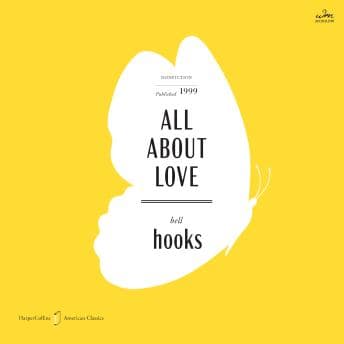

I need to get something off my chest: I am so tired of business books and self-help books telling me to "lead with love" while defining love as some vague warm feeling you get after a good quarterly review. bell hooks would eat those books alive. And honestly? She kind of did.
I was up late last Tuesday - Jenny was already asleep, I was on my laptop pretending to finalize a deck for a founder who can't decide if he's building a SaaS company or a lifestyle brand. Decided to put this on instead of doomscrolling. Six hours and ten minutes. At 2.0x, that's basically three hours. I finished it in two sittings, which for a non-business book is practically a standing ovation from me.
Love As a Verb Is the Strategy Nobody Teaches
hooks' central argument hit me like a freight train: love is not a feeling, it's a practice. She pulls from M. Scott Peck's definition - love as the will to extend oneself for one's own or another's spiritual growth - and builds an entire framework around it. And here's what got me: this is what my parents did instinctively. Now it has a TED talk. My mom didn't say "I love you" growing up. Korean parents in the '90s in Koreatown didn't do that. But she pressed shirts until her hands cracked because she wanted me to have choices she never had. hooks would call that love as action, love as commitment, love as discipline. She'd be right.
What surprised me is how directly hooks calls out the ways we're taught to confuse abuse, control, and cathexis (her word for obsessive attachment) with actual love. She doesn't dance around it. Chapter 3 on honesty and chapter 5 on spirituality are where the real density lives - she argues that a culture built on lies cannot sustain love, and that we've stripped the sacred out of connection and replaced it with consumption. I've seen this play out in startups, honestly. Founders who say they "love" their teams but won't have a hard conversation. That's not love. That's avoidance wearing a hoodie.
The Part Where I Disagree (Jenny Would Say I'm Being Harsh. Jenny Is Right.)
Look, hooks is brilliant. But there are stretches - particularly in the middle chapters on community and mutuality - where the argument circles back on itself. The same point gets restated with different anecdotes but not necessarily deeper analysis. At 6 hours and 10 minutes, this book is lean by most standards, but even so, there's maybe 4.5 hours of truly distinct material. Some listeners have flagged pacing issues and I get it - chapters 6 through 8 felt like they were building to something that never quite arrived with the force of the opening.
Also - and this is a personal thing - hooks leans heavily on her own therapy and spiritual practice as evidence. That's valid, but I kept wanting more structural analysis. How does lovelessness manifest in policy? In institutions? She gestures at it but doesn't always follow through. For someone who spent eight years at McKinsey, I wanted the framework to be tighter. But then again, maybe that's my problem, not hers.
January LaVoy Knows What She's Doing
January LaVoy's narration is measured and clear - she reads hooks with the kind of steady authority that lets the ideas breathe without overselling them. There's a warmth in her delivery that never tips into sentimentality, which is exactly what this material needs. She handles the more personal passages - hooks writing about her own childhood, her father's violence, her struggle to unlearn domination as love - with restraint that actually makes them hit harder. No dramatic pauses for effect. Just clarity. I appreciated that.
No sound effects, no music, no production gimmicks. Clean audio, single narrator, just the text. Exactly right for this kind of work.
Who Gets the Most Out of This
If you run a team - any team - and you've ever said "we're like a family here" without interrogating what that actually means, this book will make you uncomfortable in useful ways. If you grew up in an immigrant household where love was labor and sacrifice but never named, hooks will give you language for something you've always known but couldn't articulate. That alone is worth the listen.
Skip this if you want tactical advice. There are no 7 steps. No frameworks with acronyms. hooks is doing philosophy, not consulting. Shonda Rhimes takes a looser, more personal swing at that same territory in Year of Yes — no frameworks there either, though hooks is doing something considerably heavier than a year of saying yes to dinner invitations.
The ROI on Three Hours of Your Life
Bottom line: This is not a business book. But it's more useful than 80% of the business books in my Audible library. hooks argues that love - real love, practiced love - is the foundation that everything else is built on. Relationships, communities, organizations. Strip it away and you get what we have: a lot of efficient systems full of miserable people. I've built enough strategy decks to know she's onto something. The key takeaway is worth the listen. Some of the middle chapters repeat themselves, but the opening and closing sections are as sharp as anything I've heard this year.
My parents never read bell hooks. But bell hooks understood my parents.