
"Strong, believable characters remind us that our present political conflicts are mild in comparison to our own past."
That line from another listener stuck with me because it's the truest thing anyone's said about this book. I finished it around 0200, sitting on the back porch with Ranger while Linda slept. Couldn't turn it off. Not because Patterson's writing is particularly elegant - let's be honest, it's Patterson - but because the subject matter grabbed me by the throat and wouldn't let go.
This Isn't Your Daddy's Alex Cross Novel
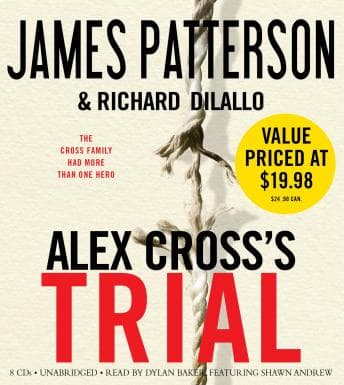
Let me cut to the chase: if you're picking this up expecting Alex Cross hunting serial killers through D.C., abort mission. Alex barely shows up. The book's framed as a story Nana Mama passed down through the family, set in 1906 Mississippi. Your actual protagonist is Ben Corbett, a white lawyer who served under Teddy Roosevelt in the Spanish-American War, now sent back to his hometown of Eudora to investigate Klan activity.
And here's the thing - the setup works. I've seen this scenario play out in slightly different forms through my own career. The idea of being sent back to a place you know, where people remember you as a kid, and having to investigate the very power structure you grew up under? That tension is real. Patterson and DiLallo get that dynamic right. Ben's caught between loyalty to his roots and the ugly truth staring him in the face, and the courtroom scenes where he tries to bring justice in a system designed to prevent it - those hit hard. That tension between duty and personal history is something The Affair handles with similar weight - Reacher returning to a place where the mission gets complicated by the ground he's standing on.
But it's still Patterson. Which means the chapters are about three pages long, the prose is stripped to the bone, and character development gets sacrificed on the altar of pace. The lynching scenes are visceral and don't pull punches, but some of the emotional beats feel rushed. You'll get a moment of genuine horror followed by what amounts to "and then Ben felt bad about it" before we're racing to the next plot point. I wanted to sit with the weight of those moments longer.
Dylan Baker Carries More Than His Share
The author clearly did their homework on the period, but it's Dylan Baker's narration that does the heavy lifting. His Southern dialect work is genuinely impressive - he shifts between poor Black characters, white Mississippi gentry, and Northern politicians without losing the thread. You can hear the social hierarchy in his voice choices, which is exactly what a book about segregation needs.
His Theodore Roosevelt, though? That's where it gets interesting. Some listeners love it, some find it veering into old-time radio territory - a bit caricatured. I'm somewhere in the middle. It felt slightly over the top the first time Roosevelt appeared, like Baker was doing an impression rather than inhabiting the character. But honestly, everything I've read about TR suggests the man was basically a caricature of himself, so maybe it's more accurate than it sounds.
Where Baker really earns his pay is the tense sequences. The Klan scenes, the investigations, the moments where Ben realizes he's in genuine danger - Baker's pacing and emphasis ratchet the tension up exactly right. I caught myself gripping the steering wheel harder during a couple of those stretches, and Ranger lifted his head in the back seat like he could feel the room change.
Where It Lost Me (A Little)
This is where it lost me: the framing device feels thin. Alex Cross supposedly heard this story from Nana Mama and "pledged to tell it to the world." Okay, fine. But the connection between Abraham Cross - the historical ancestor - and the main narrative feels more like a marketing decision than a storytelling one. They slapped "Alex Cross" on the cover because that's the brand. Abraham Cross is important to the story, absolutely, but you could've called this book "Ben Corbett's Trial" and lost nothing except sales figures.
Also - and this is minor but it bugged me - nine hours for a Patterson novel feels about two hours too long. The typical Patterson pace that works in a six-hour listen starts to feel repetitive at nine. Some of the middle section circles back on itself, covering ground we've already walked.
Who Should Saddle Up
Worth your time? Here's the debrief: if you're interested in historical fiction that deals honestly with American racial violence, and you can handle a Patterson-level prose style applied to serious subject matter, this is worth a listen. Baker's performance elevates the material significantly. If you're a die-hard Alex Cross fan looking for the usual formula, you'll be confused and possibly annoyed.
Content warning that matters: the depictions of lynching and racial hatred are graphic. Not gratuitous, but graphic. Patterson doesn't look away, and neither should you, but know what you're walking into.
Mission Debrief
It's an odd book. Patterson writing historical fiction about the Klan in 1906 Mississippi sounds like a fever dream, but it mostly works - largely because Baker's narration provides the gravity the prose sometimes lacks. Not the best Alex Cross book because it's barely an Alex Cross book. But as a standalone piece of historical fiction about an ugly chapter in American history? Ranger approved this one. Conditionally.