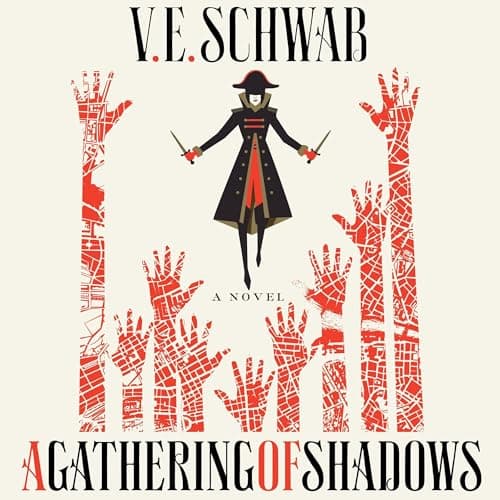

Can we talk about narrator recasting for a second? Because nothing quite prepares you for the whiplash of finishing A Darker Shade of Magic with Steven Crossley's British narration and then pressing play on book two to hear two very American voices telling you about multiple versions of London. It's like ordering a gin and tonic and getting handed a perfectly good whiskey sour. There's nothing wrong with whiskey sours. But you were ready for gin.
Okay, rant over. Mostly. Because once I adjusted—and it took a solid couple of hours during a long Saturday walk—Michael Kramer and Kate Reading do earn their place in this story. Kramer especially brings real gravity to Kell's chapters, and by the time the Element Games kicked off, I'd mostly stopped mentally comparing him to Crossley. Mostly.
A Gathering of Shadows picks up four months after the shadow stone crisis. Kell is wallowing in guilt. Rhy is pretending he's fine (he's not). Lila Bard has done what Lila always does—disappeared onto a pirate ship and started teaching herself magic she absolutely should not be touching. Red London is gearing up for the Element Games, an international magic tournament designed to be both entertainment and diplomacy. And somewhere in the background, Black London is waking up.
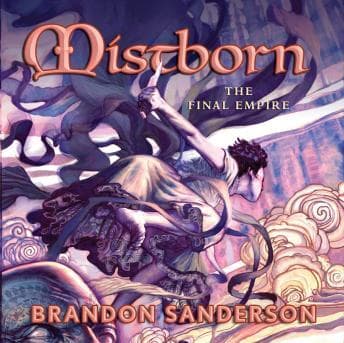
The tournament arc is the engine of this book, and it's genuinely fun. Schwab writes creative magical combat that stays inventive without becoming a slog of blow-by-blow descriptions. If you've read the tournament-style sequences in something like The Final Empire, there's a similar energy—competition as both spectacle and character revelation. But Schwab is doing something sneakier. The Element Games are the shiny distraction while she assembles something much darker in the margins. Horror elements creep in slowly, almost politely, while you're busy enjoying duels and disguises. It's a structural gamble that pays off, though it means the first third of the book moves at a more deliberate pace. You need to be okay with that. This is not a background-listening audiobook—I tried folding laundry during the opening chapters and had to rewind twice. Schwab generally demands that kind of attention—I ran into the same wall with The Fragile Threads of Power, where the density of her world-building punishes any attempt at half-listening.
Now, the narration specifics. Kramer handles Kell, Rhy, and Holland. His Kell has genuine emotional weight—the guilt, the frustration with royal obligation, the buried longing for Lila. His Holland is creepy in the right ways. Reading takes Lila and Ojka. Kramer's range across character types is something I've noticed across his work—he brought that same quiet menace to very different material in Grace of Kings, where he's juggling an entire cast of generals and warlords without losing track of who's who. Reading is a skilled performer, but her voice codes as someone in her mid-thirties minimum, and Lila is supposed to be a scrappy young street thief with more knives than social graces. It's not a dealbreaker, but it's a persistent gap between what you're hearing and who the character is on the page.
The dual narrator format splits cleanly along POV chapters, which works well most of the time. But here's where things get awkward: when Kramer voices Lila in Kell's chapters, she doesn't sound like Reading's Lila. And Reading's version of Kell doesn't match Kramer's. In a story where these two characters are on a collision course, those inconsistencies are noticeable. It's like watching two different shows that occasionally cut to each other.
Where the audio format genuinely earns its keep is in Schwab's world-building. The descriptions of Red London during festival preparations, the contrast between magic-saturated and magic-starved worlds, the texture of these parallel cities—both narrators handle this material well. When you're walking through Red London's streets at tournament time, you feel the atmosphere. Schwab writes place like other authors write action, and hearing it performed gives those passages a weight they might not have on the page.
Character-wise, this is Lila's book to steal, and she does. Her arc from stowaway to tournament competitor keeps the middle section alive when the main plot is still gathering momentum. Rhy also gets real depth here—his relationship with Kell becomes more complicated and more interesting, less hero-worship and more genuine friction between two people who love each other and are terrible at showing it.
I need to flag the ending. This book closes on a genuine cliffhanger—not a gentle "the story continues" fade-out but a gut-punch that will have you scrambling for book three. If unresolved endings make you furious, have A Conjuring of Light ready to go. This is a middle book that fully embraces being a middle book.
At sixteen hours, this is a substantial listen. The pacing rewards patience. Once the tournament begins and the darker threads start pulling tight, it's hard to step away. Schwab trusts her audience enough to let tension build naturally rather than manufacturing false urgency, and that confidence produces a second installment that feels essential rather than transitional. The production itself is straightforward—no sound effects, no music, just two experienced narrators. It won't dazzle you with audio tricks, but it stays out of its own way.
Who Should Listen (And Who Should Skip): If you loved A Darker Shade of Magic and can weather a narrator swap, this is an easy recommendation—tournament fantasy with real teeth beneath the spectacle. Skip the audiobook (grab print instead) if American narrators voicing a London-based fantasy will gnaw at you for sixteen hours, or if you need your series to maintain vocal continuity between installments.