
Look, I know what you're thinking. "Tom, you're the guy who spent 45 minutes explaining the magic system in Mistborn to a girl who just wanted a drink refill. Why are you listening to a corporate thriller?"
Because I needed a break. Seriously. My brain is fried from debugging this procedural dungeon generation code (Dr. Patel, if you're reading this, the code is... coming along great). I needed something that wasn't 50 hours long or filled with unpronounceable names. I saw "David Baldacci" and thought—okay, my dad reads this stuff on the beach. Let's see what the normies are up to.
Turns out Baldacci's got range—End Game proved he can juggle multiple POVs without losing momentum.
And honestly? It's basically a dungeon crawl. But instead of a crypt, it's a Manhattan skyscraper. And instead of goblins, it's hedge fund managers. (The goblins are nicer.)
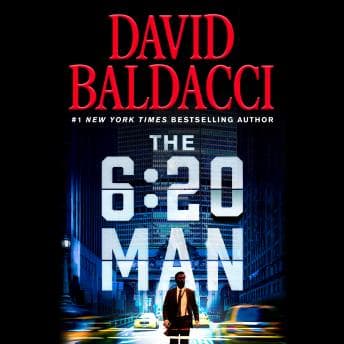
Here's the setup: Travis Devine. Ex-Army Ranger. Now he wears a cheap suit and rides the 6:20 train to crunch numbers. He's basically a Level 15 Fighter who decided to multiclass into Accountant for some reason. Terrible build optimization, if you ask me. But then his ex-girlfriend turns up dead in the office storage room, and suddenly we're in a murder mystery.
The Voice Acting Party
Let's talk about the audio, because that's the only reason I stuck around. Zachary Webber plays Devine, and the guy has pipes. He does that gritty, "I've seen things" voice without sounding like he's gargling gravel. He nailed the vibe of a guy who can kill you with a pencil but is currently worried about an Excel spreadsheet error.
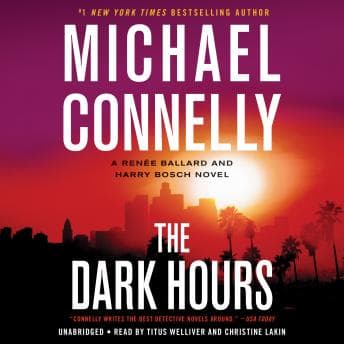
But the real win here is the multi-cast. We've got Christine Lakin and Mela Lee handling the other parts. Thank the Maker. Lakin especially killed it—same energy she brought to Dark Hours, where she nailed that tough-but-vulnerable detective vibe. There is nothing—and I mean nothing—worse than a deep-voiced dude trying to do a "sultry female lead" voice. It ruins the immersion faster than a Nat 1 on a Stealth check. Here, the dialogue actually flows. It sounds like a radio play.
(Side note: Why don't more fantasy audiobooks do this? GraphicAudio does it, but standard productions are still stuck in the dark ages. Steven Pacey is a god, but even he has limits.)
The Dungeon (But Make It Corporate)
The plot? It moves. It's got that "turn the page" energy. I listened to the whole thing while painting my Warhammer minis (Space Marines, obviously) and didn't zone out once. The corporate corruption stuff is terrifyingly plausible. It's a world where money is the magic system, and everyone is a warlock selling their soul for a 1d10 cantrip of cash.
However—and we have to be real here—Devine makes some choices that made me yell at my phone. For a guy who was special ops or whatever, his Wisdom score is shockingly low. He walks into traps that my D&D group would've spotted from a mile away. There's a moment where he trusts someone he clearly shouldn't, and I just groaned. "Roll for Insight, Travis! You failed!"
Also, the "finance bro" dialogue can get a little thick. If you don't care about stocks or trading, your eyes might glaze over for a minute. But usually, right before it gets too boring, someone gets punched or blackmailed, so it balances out.
Who's Rolling Initiative?
If you're burnt out on 1,000-page fantasy epics and need a palate cleanser that involves modern-day rogues in suits, give it a shot. The production quality is crisp, the voices are distinct, and it's shorter than the prologue of a Sanderson novel. Skip it if you need your protagonists to pass every Wisdom save—Devine's tactical blunders will drive you nuts.
Tom's Saving Throw
Is it high art? No. Is it deep literature? Nah. It's popcorn. But sometimes you don't want a seven-course meal; you just want a greasy burger. This is a very tasty burger.
Now, if you'll excuse me, I have to go explain to my advisor why my thesis has made zero progress this week.