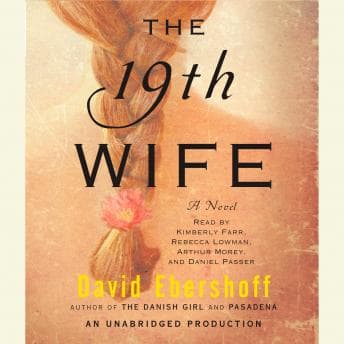

What happens to identity when the very community that shaped you decides to erase you?
I was three hours into this book, standing over a pot of dal that I'd completely forgotten to stir, when I realized I'd stopped thinking about dinner and started thinking about attachment theory. Specifically about Jordan Scott — a young gay man expelled from his fundamentalist polygamist sect — and how Ebershoff had constructed what is essentially a textbook case study in identity disruption without ever making it feel clinical.
Here's the setup: two timelines, two outcasts. Ann Eliza Young, the historical 19th wife of Brigham Young, who walks away from the most powerful man in Mormonism to crusade against polygamy in 1875. And Jordan Scott, a fictional 20-year-old in present-day Utah, pulled back into the fundamentalist world that rejected him when his father is murdered. Both narratives are about what happens when faith becomes a cage — and what it costs to pick the lock.
The Psychology of Staying (and Leaving)
The protagonist exhibits classic patterns of what researchers call "identity foreclosure" — Jordan never chose his beliefs; they were assigned to him. And when the community expelled him, it didn't just reject his behavior. It erased his entire framework for understanding the world. What makes this character compelling is that Ebershoff doesn't write Jordan as someone who simply "escaped" a cult. He writes him as someone still tangled in it. The anger, the longing, the way he can't stop translating the world through the language of a faith he no longer holds. Psychologically? That tracks. Hard.
Ann Eliza's sections are a different animal entirely. Written as a kind of fictional memoir, her voice carries the careful construction of someone building a public narrative — which is exactly what the historical Ann Eliza did. She was performing victimhood for political audiences while also genuinely suffering. That tension between strategic self-presentation and authentic pain? This is a fascinating case study in how women have always had to package their trauma for public consumption just to be believed.
I found myself asking: why does Jordan really go back? The murder mystery is the surface answer. But Ebershoff plants something subtler — the gravitational pull of belonging, even to a place that wounded you. My therapist would have thoughts about this character, and most of them would involve the phrase "anxious attachment."
Four Voices for Two Centuries
The four-narrator cast — Arthur Morey, Daniel Passer, Kimberly Farr, Rebecca Lowman — is ambitious for a reason. The book isn't just two timelines. It's multiple document types. Wikipedia-style entries, court transcripts, personal letters, memoir chapters. Having distinct voices anchor different textual modes keeps you from drowning in the structural complexity. The shift between narrators signals a shift in perspective and era, which at 19 hours, you desperately need.
Some listeners find the narrator switching confusing, and I get that — there's a brief adjustment period where you're training your brain to associate voice with timeline. But once it clicks (took me about 90 minutes), it becomes the scaffolding that holds the whole ambitious thing together. The research actually shows that multi-narrator productions can either clarify or confuse, and here it mostly clarifies. Several readers have said they enjoyed the audiobook more than the print version, and honestly? I believe it. The structural gymnastics of this novel almost demand someone sorting the pieces for you. Arthur Morey's narration grounds the modern sections with a steadiness I also appreciated in Sea of Tranquility.
That said — 19 hours. I won't pretend every hour earns its keep. The historical sections occasionally drift into the kind of detailed period exposition that made me check how much dal I had left to stir (answer: none, it was burning). The modern mystery moves with purpose. Ann Eliza's crusade sometimes luxuriates in its own research. There's an imbalance, and you feel it around hour 10.
Who Should Enter This Particular Compound
If you care about character motivation and want a book that treats faith not as a punchline but as a genuine psychological force — the kind of thing that can make a woman marry a man she doesn't love and call it devotion — this is your book. If you're drawn to how coercive systems replicate themselves across generations, the dual timeline structure makes that argument beautifully without ever becoming a lecture. (Well. Mostly.)
If you're here strictly for a tight murder mystery? You'll get one, but you'll also get a 19th-century lecture tour, some epistolary interludes, and Wikipedia entries that Ebershoff invented for the novel. Patience required.
People who need every character to be likable should bail. The author understands human nature, and that means understanding that people in coercive systems are complicated — victims and perpetuators sometimes in the same breath.
Case Closed, Notes Filed
The 19th Wife is doing something genuinely difficult: using two timelines separated by 130 years to argue that the psychology of control doesn't evolve. It just changes costumes. The murder mystery gives it momentum. The historical narrative gives it weight. And the four-narrator audiobook format gives you just enough structural scaffolding to hold both stories without collapsing under them.
It's not perfect. It's long, and it occasionally loves its own research a little too much. But the character work — the way Jordan can't stop reaching for a community that burned him, the way Ann Eliza builds a public self out of private wreckage — that's where it lives. Standing in my kitchen at midnight with burnt dal and a finished audiobook, I thought: this is what narrative psychology looks like when a novelist does it instead of an academic.
Better than my papers, honestly. But don't tell my committee.