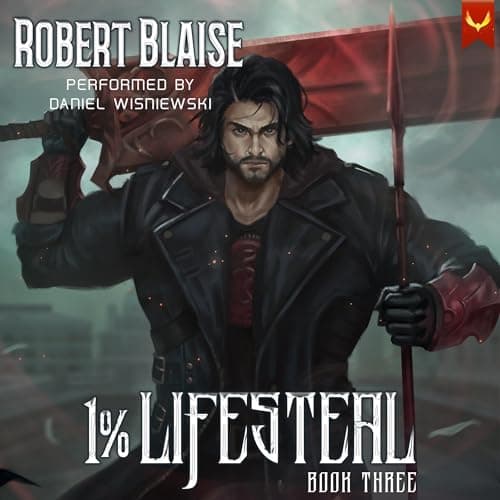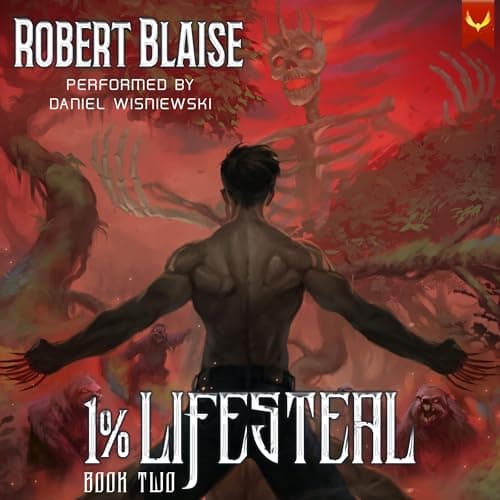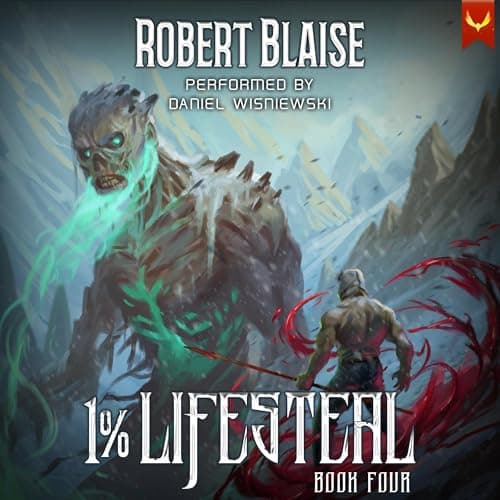
What does it cost a working kid to stop being the one who gets stepped on?
I was at the kitchen table around eleven, my daughter asleep down the hall, doing the monthly math on her college fund (the spreadsheet never looks as good as I want it to), when I started 1% Lifesteal. Freddy Stern is a twenty-one-year-old cashier who has been orphaned twice and has spent ten years keeping his head down and stacking money. His dream is to save enough to buy his way into becoming an archhuman. Not earn it. Not get chosen. Buy it.
I put the pen down for a minute after that one.
Power you pay for out of a cashier's paycheck
That setup is what hooked me, more than the fights. Robert Blaise drops this story two hundred years after a reality-breaking apocalypse, and the world that rebuilt itself didn't get fairer. It got a price tag. People with money get strong. People running a register save for years and hope. Any guy who's watched the rich client's house go up faster than the family that's been waiting six months knows that system.
Then Freddy nearly dies and walks out with 1% Lifesteal. It's a weird, almost insulting little talent on paper - one percent? - but it compounds. Every dead enemy makes him a bit stronger, and no matter how bad he gets torn up, his body puts itself back together. I respect a power built like a good foundation. Small, boring, and it holds everything you stack on it.
But the book is smart about the bill coming due somewhere else. The body heals. The rest of him doesn't, not really. Every time Freddy gets another look at how rotten archhuman society is underneath, he gets a little harder and a lot more ruthless. That's the real story here, and it hit me harder than I figured a LitRPG would. Watching a kid who did everything right turn cold just to survive, by the back half down in Faralethal's mines? That one sits with a dad.
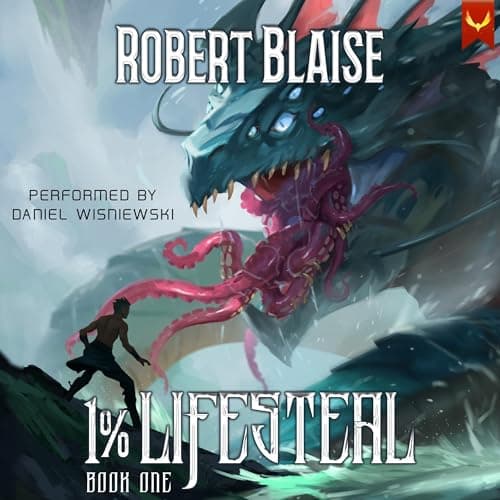
Fair warning: the opening stretch isn't the power-fantasy launch the cover suggests. It takes its time showing you Freddy's grind before the talent shows up. I didn't mind, since the grind is the point. But if you came for instant stat screens, you'll be checking your phone.
One voice carrying 16h 36m of hurt
Daniel Wisniewski narrates solo, and his read is clean. Clear diction, easy to follow on a long drive, and he knows when to ease off and let a hard moment land instead of punching through it. That matters, because this book swings between brawler action and some real emotional damage, and a narrator who only had one gear would've flattened it. He doesn't.
He's not going to win over everybody, though. His read is plain and even, more steady foreman than stage actor, and if you like LitRPG narrators doing big character voices, he'll sound underpowered. If his read does work for you, he's also on 1% Lifesteal, Volume 4, so you can stay with Freddy's story in the same voice. I'd sample five minutes before you spend the credit. I ran it at 1.25x and it held up fine. Any faster and the quieter parts start losing their weight.
Where it comes up short
This is Book One from Aethon, and it reads like a series opener. It's setting up later books, so not every thread gets closed. And it plays by LitRPG rules. Weak-to-strong climb, a brawler MC who won't back down, a unique system to learn. If The Primal Hunter or Road to Mastery never did it for you, a sharper premise won't change your mind about the genre.
The moral side is where the build gets ambitious. Does the book fully earn every ruthless turn Freddy takes? Mostly. A couple of times I wanted one more beat of him sitting with what he'd done before the next fight. Small gripe.
Who should clock in on this one
If you like progression fantasy with an actual class chip on its shoulder, and a hero who pays for every inch in ways a healing bar can't fix, this is your book. You're giving up a quick start and a tidy ending in exchange for a world that feels honestly unfair. If you want your LitRPG light and cheerful, or you're tired of dark apocalypse settings, keep driving. Same if you need a full arc wrapped up in one book.
Spend the credit
I closed the spreadsheet that night thinking about Freddy saving up, dollar by dollar, for a shot the rich kids get handed. Blaise understands that kind of grind, and he understands that surviving it costs you something. That's why I'm in for Book Two. Spend the credit.