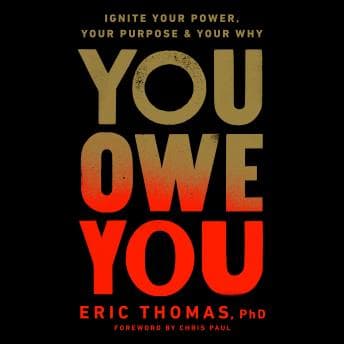

Look, I have a complicated relationship with motivational self-help. 10% Happier is one of the few that actually earned my trust, probably because Dan Harris is as skeptical as I am. As someone who studies why people do what they do for a living, I'm always a little suspicious of books that promise to unlock your potential through sheer willpower and mindset shifts. The research on behavior change is way more nuanced than most of these books acknowledge. So when I started You Owe You during my morning jogs through Cambridge, I was prepared to be annoyed.
And honestly? I was annoyed. But also... moved? It's complicated.
The Psychology of the Pep Talk
Here's what Eric Thomas gets right that a lot of motivational speakers miss: he's not selling you a fantasy version of yourself. He's selling you accountability. The central premise—that you owe yourself the effort to become who you're capable of being—is actually pretty solid from a psychological standpoint. Self-determination theory backs this up. Intrinsic motivation, the kind that actually sticks, comes from feeling autonomous and competent. Thomas is essentially saying: stop waiting for external validation and start building internal drive.
What makes this character—and yes, I'm analyzing him like a case study, because that's what I do—compelling is his origin story. Homeless as a teenager, failing in school, dealing with systemic barriers as a young Black man in America. He's not preaching from some ivory tower. The man lived the struggle. When he talks about switching the script on victimhood, it's not the usual bootstrap nonsense. It's more nuanced. He's saying: acknowledge the obstacles, then refuse to let them define your ceiling.
My therapist would have thoughts about his approach to self-talk. Mostly good ones, I think. The neuroscience behind self-talk is fascinating—something I wish more motivational books would actually dig into.
Where the Message Gets Muddy
Okay, so here's my issue. And it's the same issue I have with basically every book in this genre. There's a lot of fire, a lot of energy, a lot of "wake up and take control"—but the practical application is... thin. One listener nailed it when they said it's "generic self help stuff with tons of filler and not much to actually help you attain what it says." Harsh, but not entirely wrong.
Thomas talks about finding your why, stretching toward your potential, giving up good for great. These are solid concepts. But the research actually shows that motivation without systems is just enthusiasm with an expiration date. I kept waiting for the frameworks, the specific strategies, the how behind the what. Sometimes they came. Often they didn't.
The book washes away excuses—I'll give it that. But it doesn't always replace them with actionable next steps. If you're someone who already knows what to do and just needs a kick in the pants to do it, this will work. If you're genuinely lost and need a roadmap? You might finish feeling inspired but still directionless.
Two Voices, One Mission
Now, the narration. This is where the audiobook format really earns its keep. Eric Thomas himself narrates portions, and Cary Hite handles the rest. The combination works surprisingly well. Thomas brings that raw, preacher-adjacent energy—the kind you'd expect from someone who's addressed locker rooms and boardrooms and prison yards. Hite keeps things grounded, clear, compelling without overdoing it.
I couldn't find much about Hite's background online, but based on this performance, he knows how to hold emotional space without making it feel performative. The pacing is solid. Nothing dragged during my runs, which is saying something because I'm pretty much always looking for excuses to stop running.
The production is clean. No weird audio issues, no volume inconsistencies. Professional work.
Who Needs This Wake-Up Call (And Who Doesn't)
The protagonist of this book—the reader Thomas is writing for—exhibits classic patterns of learned helplessness mixed with untapped potential. If that sounds like you, this might hit different. If you're in a rut, making excuses, waiting for permission to start, Thomas will absolutely call you out. Sometimes that's exactly what people need. But if you're looking for evidence-based strategies for habit formation or detailed frameworks for goal achievement, skip this one. It's a motivational sermon, not a psychology textbook. (Don't tell my students I said that like it's a bad thing—sometimes sermons are exactly what the moment requires.)
I found myself asking: why does this work for so many people when the content isn't particularly novel? And I think the answer is delivery. Thomas has a gift for making you feel like he's talking directly to you, like he sees through your excuses. That's a rare skill. It's why he's worked with elite athletes and executives. The man understands human nature—specifically, the part of human nature that needs to be shaken awake.
Case Study: Closed
Would I listen again? Probably not. But I might recommend it to someone stuck in victim mentality. Sometimes the right message at the right time from the right voice changes everything. This could be that for someone. Just don't expect it to replace actual strategy with pure inspiration.