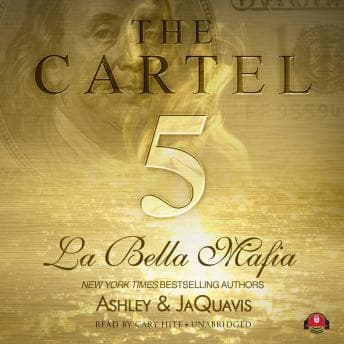

Look, I'll be honest with you. When I started this one during a particularly brutal stack of sophomore essays on The Great Gatsby—the irony of grading papers about American wealth while listening to a Miami drug empire saga was not lost on me—I expected pulpy entertainment. What I got was something more complicated.
The Cartel series has never pretended to be Faulkner. Ashley and JaQuavis aren't writing for my AP Lit students (though several of them have definitely read these books under their desks). But here's the thing about genre fiction that my grad school professors never understood: when it works, it works on its own terms. And Diamonds Are Forever mostly works.
The Diamond Dynasty Keeps Its Throne
By book four, you're either in or you're out with this family. Breeze stepping into the queen position after surviving what should have killed her—there's something almost Shakespearean about it. The wounded princess becomes the power behind the throne. Zyir locking down Miami's streets while Young Carter tries to escape the life entirely... this is the classic tension of every crime saga. You can't leave. The blood follows you home.
What I appreciate about Ashley and JaQuavis is their understanding of pacing. At just over seven hours, they don't waste your time. The "unexpected visitor" that shakes up Carter's retirement? It lands because they've built four books of family loyalty and betrayal. You feel the weight of that knock on the door.
My students would hate this comparison, but it's giving me echoes of Greek tragedy. The sins of the fathers. The impossibility of escaping your name. The Diamonds didn't choose the empire—they inherited it, and now they're stuck perpetuating it. Exodus: A Novel of Israel wrestles with that same inherited burden—a people trying to escape their past while being defined by it.
Cary Hite: A Narrator Who Mostly Gets It
Here's where I have to be fair to both the narrator and the critics. Cary Hite understands this world. He's narrated the series, he knows these characters, and when he's in the pocket—delivering dialogue, building tension—he's genuinely good. One listener called him "talented" and said he "truly defined Ashley and JaQuavis' work of art." That's not nothing.
But.
The screams. I need to talk about the screams.
There are moments in this book—violent, serious, life-or-death moments—where a character screams and it sounds... well, unintentionally funny. One reviewer admitted it made them laugh during scenes that were absolutely not meant to be comedic. And once you notice it, you can't un-notice it. It's like when my students point out a weird word in a poem and suddenly that's all you can see.
It doesn't ruin the audiobook. But it does pull you out occasionally. For a series built on high stakes and brutal consequences, those moments of accidental comedy undercut the tension.
Who's Getting an A, Who's Getting Excused
If you've listened to Cartel 1-3, you're getting this regardless of what I say. And you should—the series rewards loyalty, and this installment delivers on the promises of the earlier books. New to the series? Don't start here. Go back to the beginning. The Diamond family history matters, and you'll miss half the emotional weight jumping in at book four.
If you need your crime fiction to be literary with a capital L, this probably isn't for you. But if you understand that genre fiction can be compelling, propulsive, and emotionally satisfying on its own terms—give it a shot.
Content warning for the cautious: violence, abuse, language, sexual content. This is a drug cartel saga. It's not sanitized.
Mr. Williams Puts Down His Red Pen
I finished this at 11:47 PM, essays half-graded, Denise already asleep. And I sat there for a minute thinking about what makes a story worth telling. Ashley and JaQuavis aren't winning literary awards. They're doing something arguably harder—they're keeping readers hooked across multiple books in a genre that could easily become repetitive.
The prose won't make you pause to admire a sentence. But the plotting is tight, the family dynamics are genuinely complex, and Cary Hite—screams aside—delivers a performance that serves the material well.
Is it Middlemarch? No. But I wasn't listening to it during Principal Martinez's budget presentation to improve my mind. Sometimes you want entertainment that moves, that doesn't apologize for what it is, that respects your time.
Diamonds Are Forever does that. Worth the credit if you're already invested. Worth the curiosity if you're not.