
"Breathing in, I know I am breathing in. Breathing out, I know I am breathing out."
Thich Nhat Hanh says this somewhere in the first hour, and I actually stopped grading Keisha's essay on The Great Gatsby to just... breathe. For maybe thirty seconds. Which doesn't sound like much until you realize I haven't done that deliberately since 2019.
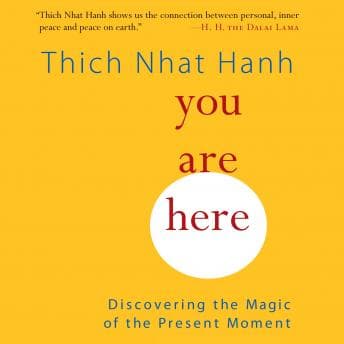
I came to this audiobook sideways. Denise has been on a mindfulness kick since her sister's divorce, and she left this playing on the kitchen speaker one Saturday morning. I was making coffee, half-listening, already mentally drafting my lecture notes on Hemingway's iceberg theory. And then Thich Nhat Hanh—through Lloyd James's steady narration—said something about how we spend our lives running toward the future or running from the past, and we forget that we're already home.
I sat down with my coffee and didn't get up for an hour.
What Hemingway Would've Called "The True Thing"
Here's what struck me as an English teacher who's spent two decades analyzing prose: Thich Nhat Hanh writes with the same economy that Hemingway preached but rarely achieved. No ornamentation. No showing off. Just direct transmission of ideas refined over decades of practice.
The book is structured as an introduction to Buddhist mindfulness, but it listens more like a conversation with a wise grandfather who happens to have spent sixty years as a Zen monk. The concepts aren't complicated. Breathing. Walking. Eating. Being present. But the simplicity is deceptive. This reminds me of what Hemingway said about writing one true sentence—Thich Nhat Hanh writes hundreds of them, and each one lands differently depending on what you're carrying that day.
At under four hours, this isn't a comprehensive Buddhist text. It's a primer. An invitation. And honestly? That's exactly what most of us need. My students would hate this—too slow, too quiet, nothing happens. I love it.
Lloyd James: Peaceful or Patronizing?
Lloyd James presents a genuine dilemma. His voice is calm, measured, exactly what you'd want for contemplative material. He doesn't try to perform the text—he simply delivers it, which feels appropriate for a book about presence and simplicity.
But I understand the criticism. There's a cadence to his reading that can tip from "peaceful" into "patronizing" depending on your mood. Around the second hour, when he's explaining the concept of interbeing for the third time, I caught myself thinking, "Yes, I understand, you can move on now." Whether that's the narration or the repetitive nature of mindfulness teaching itself, I genuinely can't say.
I listened at 1.0x because—well, you know my position on this—the author chose those words, and speeding up a meditation teacher feels like missing the point entirely. But I'll admit: some passages tested my patience. Which, in retrospect, might be exactly the point.
When the Buddha Meets the Faculty Meeting
I finished this book during Principal Martinez's quarterly budget presentation. (Sorry, Linda. But you'd understand if you'd read The Miracle of Mindfulness.) And here's the thing—I actually paid more attention to the meeting afterward. Not because I was suddenly enlightened, but because Thich Nhat Hanh had spent four hours reminding me that whatever's in front of me deserves my presence.
The practical exercises are genuinely useful. Breathing techniques. Walking meditation. The "pebble meditation" for children that I'm absolutely stealing for my freshman English class when they're too wired to focus on To Kill a Mockingbird. This isn't abstract philosophy—it's a manual. A short one, but functional.
Who This Is (and Isn't) For
If you're looking for deep Buddhist scholarship or complex meditation techniques, keep scrolling. Thich Nhat Hanh is deliberately accessible here, which means experienced practitioners might find it too basic. But if you're a stressed-out teacher who forgot how to breathe somewhere around year fifteen—or anyone else drowning in the noise of modern life—this is a gentle hand on the shoulder.
The prose deserves to be savored. The narrator mostly serves it well, with occasional moments of over-earnestness that may or may not bother you. At four hours, it's a commitment you can make in a weekend of grading or a few lakefront walks.
Mr. Williams's Final Bell
Denise has already moved on to his other books. I'm still sitting with this one, breathing in, breathing out, trying to remember that I'm already home.
When I do eventually follow Denise into the deeper catalog, Heart of the Buddha's Teaching is apparently where the real scholarship lives—same author, considerably more homework.My mom will probably fall asleep during this episode too. But I think Thich Nhat Hanh would say that's perfectly fine.